

Scientists And Historians Explain The Mysterious Death Myth About Eclipses
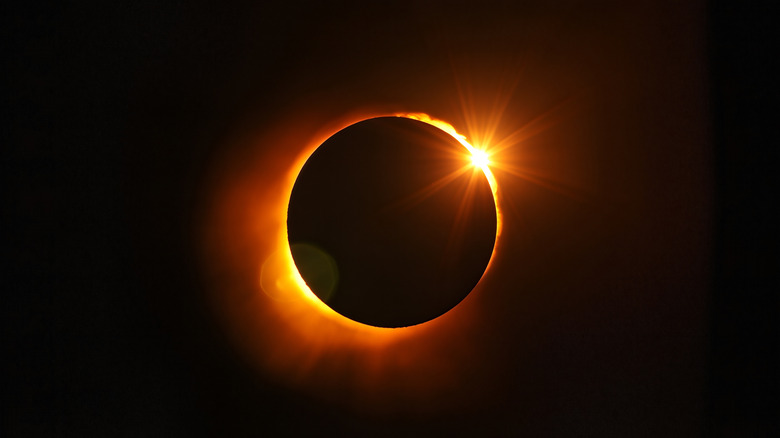
Eclipses in the modern day are an exciting, media-obsessed event. Whether a lunar eclipse, where the earth moves between the sun and the moon, or a solar eclipse where the moon moves between the sun and the earth, as the event nears, people rush out to purchase their eclipse glasses and warn everyone they know not to look directly at it. In centuries gone by, however, eclipses were a frightening phenomenon, and often considered to be an omen of death.
Without the astronomy knowledge that we now collectively have, it is easy to see how terrifying an eclipse could be. The sun suddenly disappearing in the middle of the day and turning the world dark for a few minutes would be more than unsettling, and when a tragic event happened soon after, the eclipse was bound to get the blame. According to astrology — not to be confused with astronomy — eclipses are closely tied to the fate of rulers, from ancient kings to modern day presidents. The fact that Donald Trump was born during a lunar eclipse has done nothing to settle these superstitions in the present day, and the 47th president's fate becomes a hot topic every time the astronomical phenomenon is approaching.
Understandably these predictions made rulers a little uneasy, and in 1581, Queen Elizabeth went as far as to outlaw the use of astrology to predict the death of a monarch. In ancient Mesopotamia, as priests and ancient scientists became capable of predicting when an eclipse may occur, they came up with the clever ploy of replacing the real king with a substitute until the eclipse had passed.
The tragedies that coincided with eclipses
One of the reasons that the eclipse omens prevailed throughout history was the coincidental tragedies that happened during or close to one. In a time where science was not fully understood, it would have been difficult to argue logic when the occasional ruler or influential figure dropped dead after astrologers predicted it. Even if the timing wasn't perfect, the fear and mystery surrounding an eclipse was enough to make coincidences seem like a foreshadowing coming true.
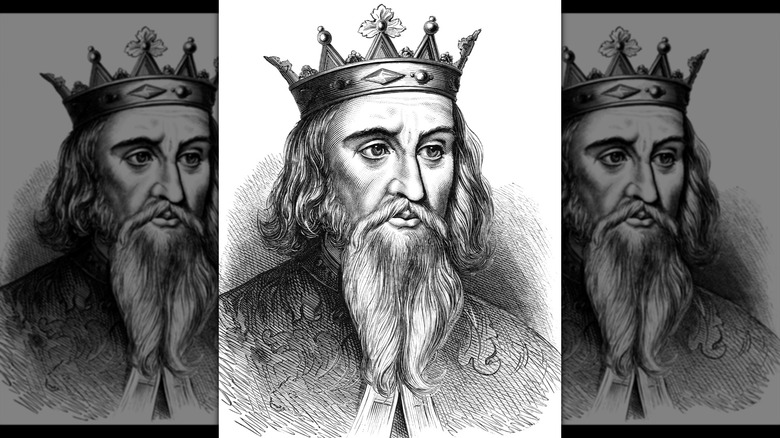
One famous example is King Henry I, who lived during the 12th century. His death is often reported as coinciding with an eclipse, and as he left for France the day before the event, there was a fear that the darkening of the sky was a warning of the king being in danger. Henry never returned to England, thus proving the prophecy correct. However, the important part of the story that is missing is that he died two years after the eclipse happened, following a short illness.
Events such as these are a form of confirmation bias. Once people believed that an eclipse would cause death and tragedy, they began to notice events that coincided with the timing. In a similar vein to the frequency illusion, once people started to look for connections, they experienced the bizarre phenomenon in which they would see them everywhere. What is not reported, is every time there was an eclipse throughout the centuries where no tragedy seemed to take place. A more compelling case could be made for the unfortunate story of King Mongkut, for whom the occasion of the eclipse may have in fact played a part in his death.
The eclipse that did play some part in a king's death
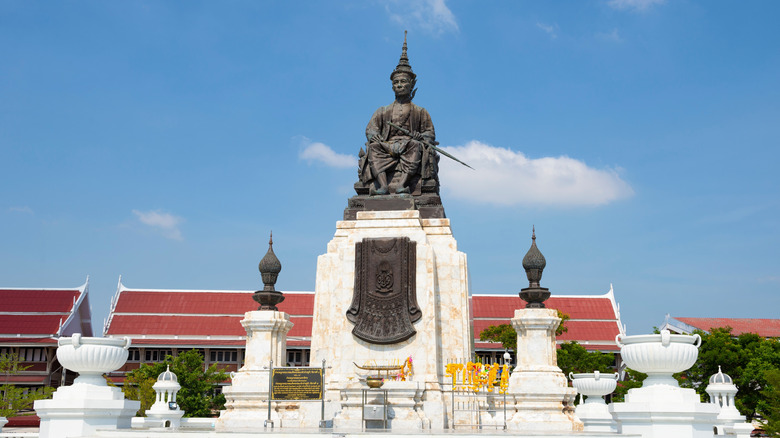
King Mongkut of Siam, who ruled from 1851 until 1868, was fascinated with astronomy. His obsession led him to travel to a remote village to see the most exciting astronomy event of his life — a total solar eclipse. He predicted the timing and length of the eclipse with incredible precision, even outperforming French astronomers, who were off by two seconds. Mongkut watched the event in awe, but was bitten by a mosquito at some point during the trip, and died of malaria a few weeks later. While the eclipse itself didn't directly fulfill the omen warned to him by royal astrologers, it is possible the "false dusk" caused by the eclipse was to blame for the mosquito activity that evening.
King Mongkut's ironic eclipse-adjacent death gave more fuel to the superstitions surrounding eclipses, since remaining at home in fear, as his astrologers had advised, could have saved him from the deadly mosquito bite. The claims behind the dangers of an eclipse, however, are supernatural, rather than biological, but events that fit nicely into the pattern are always likely to cause a stir. Even the 2026 death of King Harald V of Norway got superstitious tongues wagging, occurring as it did within half an hour of a lunar eclipse.
"Even today, superstitions are still in our imagination," said Jim Holstein, collections manager of physical geology at the Field Museum (via WTTW News). Predictions of death and tragedies are thankfully now mostly considered to be superstition, and the only part of you likely to be in danger during an eclipse is your retina.