

Not Cataracts, Not Glaucoma: Scientists Say This Eye Condition Is A Quiet Health Warning
Cataracts and glaucoma are among the most common eye conditions related to age, with early symptoms requiring diagnosis and treatment to help prevent vision loss progression. Glaucoma is caused by optic nerve damage from fluid buildup, and is a frequent cause of vision loss in adults over 60, per the American Academy of Ophthalmology. Cataracts (which egg yolks might prevent) can also lead to vision loss and are common with age, but these develop gradually and may cause early symptoms such as blurry vision. Other eye phenomena can be linked to other primary causes, and not your vision at all. Such is the case with Horner syndrome, a rare disorder that doesn't directly affect vision, but some of the underlying causes are serious (and even potentially life-threatening). Any suspected cases of Horner syndrome require immediate medical care.
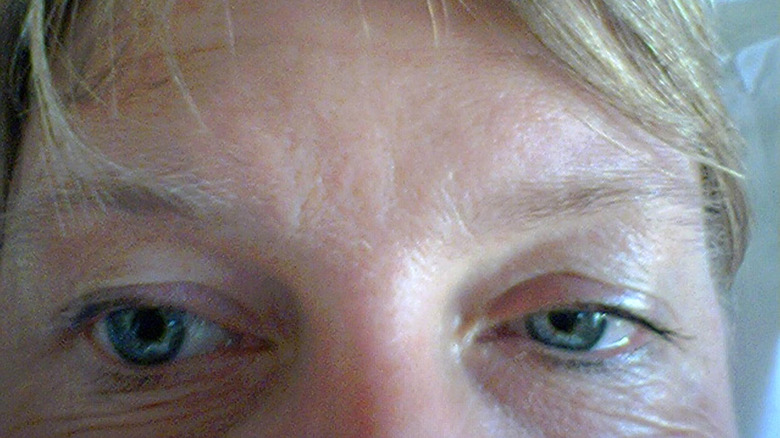
The National Library of Medicine estimates that Horner syndrome affects about 1 out of every 6,000 people. It's caused by paralysis of nerves around your eye and the side of your face. These types of nerves are part of your autonomic nervous system, which is responsible for involuntary movements such as pupil dilation. Notably, Horner syndrome is marked by three key clinical signs: drooping of your upper eyelid (ptosis), a lack of facial sweating, and an unusually small pupil (miosis). These symptoms also impact one side of your face only, says the Cleveland Clinic.
Possible causes (and types) of Horner syndrome
Unlike cataracts and glaucoma, Horner syndrome can develop at any age. Most cases are acquired, meaning you are not born with it. According to Medline Plus, only 5% of Horner syndrome cases are congenital. Such cases may also run in families, but researchers have not yet found any genes connected with this disorder.
There are three different cervical sympathetic nerve pathways that can have problems and lead to acquired Horner syndrome. Cleveland Clinic notes the three main types of Horner syndrome are central (first order), preganglionic (second order), and postganglionic (third order).
Central types involve nerve damage along the path between your hypothalamus and through the spinal cord, which may be caused by spinal cord injuries, blocks in blood flow, tumors, and inflammation of the brain (encephalitis) or the meninges around your brain and spinal cord (meningitis). Preganglionic Horner syndrome is caused by nerve damage between the chest and carotid artery from traumatic injuries or tumors. Postganglionic types involve the nerve pathway along your eye, middle ear, and neck, and may be triggered by injuries, middle ear infections, or migraine. A carotid artery aneurysm is also associated with postganglionic Horner syndrome, which can disrupt the flow of blood to the cervical sympathetic nerves and lead to damage. It's possible to have carotid artery problems at birth that might lead to Horner syndrome, but this is rare.
How Horner syndrome is treated, and can you prevent it?

A doctor may suspect Horner syndrome based on physical signs, but more information is needed to make a definitive diagnosis. If the situation isn't life-threatening, they may refer you to an ophthalmologist, who can run tests with medicated eye drops to measure pupil reactions between your eyes as possible signs of Horner syndrome–related nerve damage. If a tumor is suspected, an imaging test can help determine the type and location. Horner syndrome can also be idiopathic, where nerve damage and associated symptoms develop with no known family history or obvious causes.
A diagnosis may involve ruling out other potential causes of nerve damage, including stroke, nervous system conditions, thyroid dysfunction, and nutritional deficiencies. For this reason, a doctor will likely order a combination of blood and imaging tests. Treatment for Horner syndrome focuses on identifying and managing the underlying cause. As such, there is no single treatment for this rare syndrome. Once the underlying cause is treated though, the signs of Horner syndrome will fade, too. Most causes of Horner syndrome cannot be prevented, although you can take measures to reduce your risk of developing nerve damage from traumatic injuries.