

If You're Under 50, A Gray Ring Around Your Cornea Could Signal Health Troubles
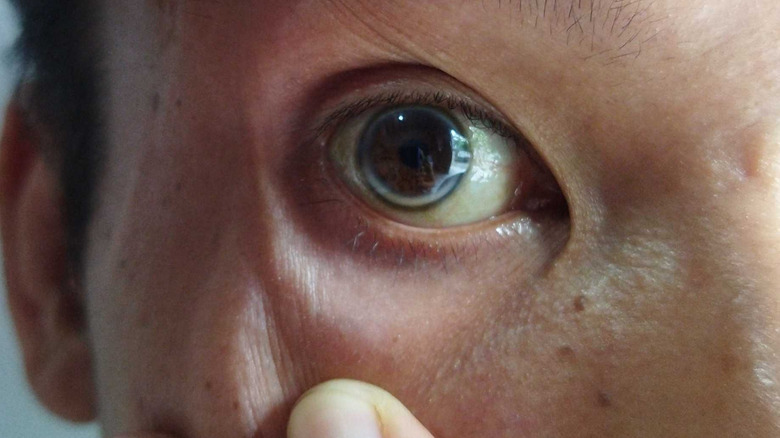
Each part of your eye is critical in supporting healthy vision, and the cornea is no exception. The cornea is the dome-shaped outer protective layer of your eye that light first contacts, and it's responsible keeping out germs and debris. Occasionally, diseases or problems can develop in the cornea that can impact your vision, and there's no doubt that your eyes start aging faster after a certain age. Certain features may also develop around the cornea, including gray rings called corneal arcus, that are common in adults starting around middle age. According to the Cleveland Clinic, this is known as arcus senilis in people over the age of 50. While normally harmless, grayish rings that show up when you're younger than 50 may be linked with arcus juvenilis, and requires further evaluation.
Corneal arcus doesn't actually mean there's a problem with a cornea in the eye, and it isn't linked to any corneal disease. The grayish rings (and sometimes white or light bluish ones) are made up of lipid deposits primarily consisting of cholesterol, says the American Academy of Ophthalmology. These lipids do not cause any additional symptoms, and they don't impact your vision.
It's worth noting that you're unlikely to wake up one day to find that the associated grayish rings have suddenly developed around your cornea. This feature actually develops more gradually. It's possible to notice small specks of discoloration along the tops and bottoms of your corneas, which can eventually connect and form a ring shape. If you do suspect you have grayish rings around your corneas and are under the age of 50, it's important to see an eye doctor for an exam.
How arcus juvenilis differs from arcus senilis (and why it's concerning)
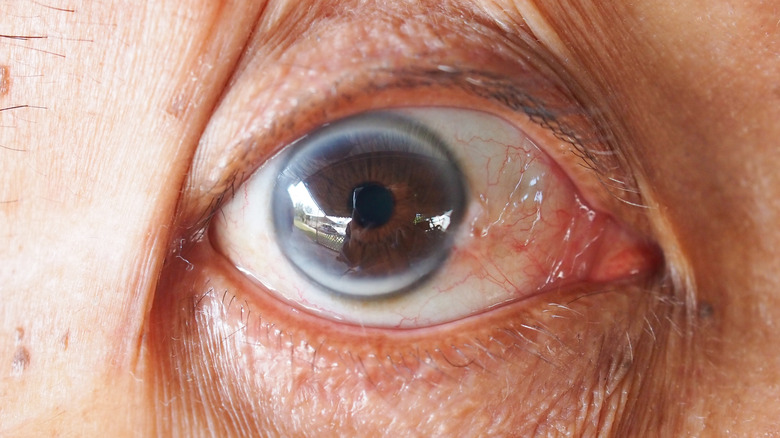
Developing corneal arcus doesn't automatically indicate cholesterol issues in middle aged and older adults. In fact, almost all adults will eventually have them after 80 years of age. Arcus senilis is in fact attributed to aging, and it tends to develop in both eyes. Aside from age, arcus senilis is also more common in males as well as African-Americans.
The younger you develop these rings around your cornea, the higher the likelihood of high cholesterol issues, especially in children or adults under the age of 40. Corneal arcus that appears in younger adults is known as arcus juvenilis, and it may point to cholesterol and triglyceride problems, or even carotid artery disease. What's more, the National Library of Medicine says there is a strong link between corneal arcus in males under 40 years of age and an increased risk of developing cardiovascular disease. They also note that adults who are younger than 50 presenting with these corneal features may have underlying atherosclerosis. In such cases, the grayish rings may also develop in one eye only.
While corneal arcus itself isn't directly harmful to your overall health, the underlying causes might be in some cases. Untreated cholesterol problems can increase your risk for more serious complications, such as heart attack and stroke. A personal or family history of high cholesterol can also increase your risk of developing arcus senilis (here's other important information you didn't about cholesterol until now).