

Floating Solar Panels Are Doing More To The Environment Than You Think
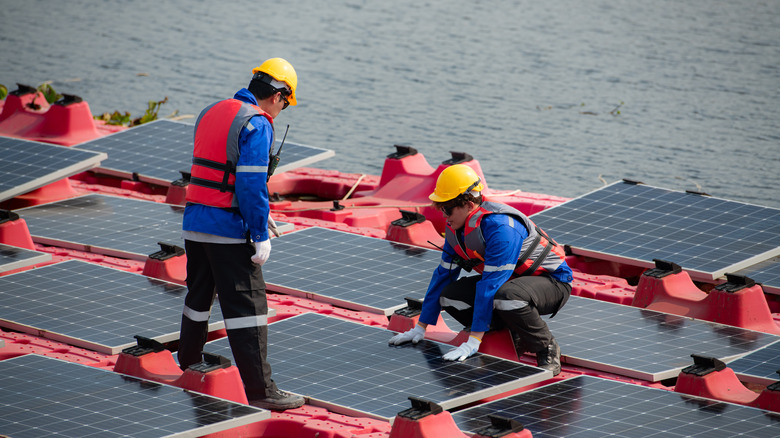
Increased demand to decarbonize society worldwide has driven rapid adoption of alternative energy sources like solar. While society has been covering roofs and parking lots with solar panels and building large-scale solar farms, some companies have shifted to making floating arrays of solar panels. These systems are helping increase solar energy output and reduce carbon emissions by expanding where panels can be installed. However, floating solar panels have several other effects on the environment. These include changes to water temperature and water-atmosphere interaction, as well as impacts on plant and animal life.
One of the main obstacles to bringing new solar power systems online is finding places to install the panels. This is especially the case near cities. Large population centers have higher demand for power, so it makes more sense to generate power nearby. Additionally, there are typically more parties competing for plots of land near cities. Floating solar arrays make it possible to use lakes, oceans, and even parts of the ocean for energy production. The deployment of floating solar panels is growing rapidly and is expected to increase in the near future, so researchers have been working to understand the potential side effects of this technology.
Panels directly affect water conditions
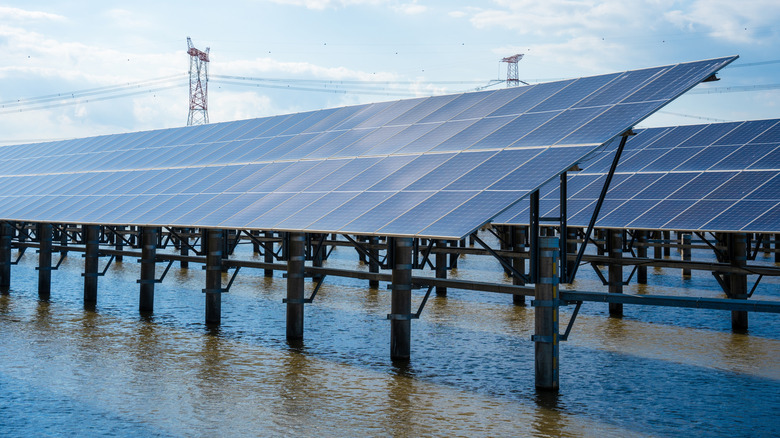
In addition to opening up more area for deploying power systems, floating solar panels have the advantage of being cooled by surrounding water, which improves performance as solar panel power production drops with increasing temperature. However, floating solar panels can also significantly affect water in several ways. The most obvious of these is how panels cast shade on bodies of water. This can reduce water temperature and could affect aquatic plants and different types of phytoplankton that get energy through photosynthesis.
On the other hand, blocking sunlight can be beneficial in regions where water may be scarce. Shading lakes with solar panels can decrease water loss through evaporation. Researchers have found that covering 70% of a reservoir's surface can reduce evaporation by up to 55%. One place this effect has attracted attention is in Australia, a country that loses nearly 370 billion gallons of water through evaporation each year.
Floating solar panels can also affect vertical mixing of water columns. These structures can partially block wind, leading to reduced wave action and turbulence. Additionally, portions of floating panel systems beneath the surface like supports and moorings can affect the bottom of the body of water and introduce underwater noise, especially during storms.
Impact on plants and animals

While researchers are uncovering the ways that floating solar panels affect water properties, there is also interest in their impact on plant and animal life. A 2024 study of floating solar panel systems in China found a reduced number of plankton species, decrease in bird diversity, and changes to the composition of bird communities in surrounding areas. Shade from floating solar panels might benefit some fish species that benefit from reduced visibility in the shade; however, there could also be increased predatory fish activity surrounding the shaded areas. Floating panels could also impact birds and aquatic insects by blocking access to water.
At the same time, the moorings of floating solar systems in the ocean could provide additional habitats for some species. Researchers have found that the submerged portions of ocean-based floating solar systems can effectively become an artificial reef within a single year. Organisms growing on moorings can provide shelter and feeding grounds for a variety of organisms.
With more floating solar panels being installed, the need for a better understanding of the potential environmental impacts, both positive and negative, is clear. With clearer knowledge of how these structures affect bodies of water and the organisms in and around them, planners will be better equipped to meet the demands for clean energy while protecting the environment.