

You Should Think Twice Before Pouring Hydrogen Peroxide On Open Wounds
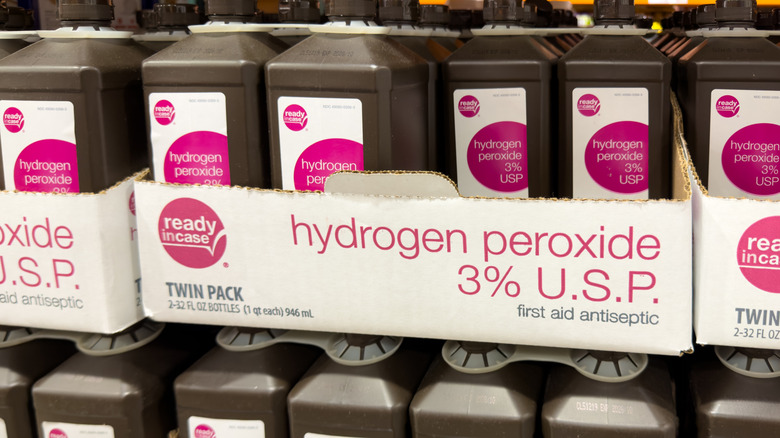
Bob Dylan sang, "Don't think twice, it's all right," but when it comes to pouring hydrogen peroxide on open wounds, research suggests that, actually, you might want to think twice. Hydrogen peroxide has traditionally been used as an antiseptic for minor cuts and scrapes, but modern research suggests it may also damage new tissue formation and impede wound healing.
The French chemist Louis Jacques Thenard discovered hydrogen peroxide in 1818, and it started to be used medically in the 1920s. Diluted hydrogen peroxide in weak concentrations became a common household antiseptic through the early 1900s due to its relatively low cost. Modern medical research has been mixed on its effectiveness for its use as an antiseptic applied directly to your skin.
Although hydrogen peroxide may help kill germs, it might also damage your healthy tissue and impact wound healing. Even though it remains a popular home antiseptic, often the simplest remedy for minor cuts and scrapes is the best one: soap and water.
Why isn't hydrogen peroxide recommended for wound care anymore?

Hydrogen peroxide is still a common ingredient used to purify water and a chemical used in high school experiments, but modern clinical guidelines no longer recommend the use of hydrogen peroxide on wounds since it may be toxic to your tissues and delay wound healing. The molecular formula for hydrogen peroxide is H2O2, meaning each molecule has two hydrogen atoms and two oxygen atoms. It has almost the same chemical form as water's H2O structure but with one less oxygen atom per molecule.
Hydrogen peroxide molecules are unstable and break down into water and oxygen over time. It's highly reactive with metals such as copper and iron through a process called oxidation, where it steals electrons from other molecules. When it steals electrons from metals found inside germ cells, it can lead to damage that kills them.
Although hydrogen peroxide can potentially kill germs, research suggests that it might negatively impact your wound healing. Multiple studies over the last 40 years have raised concerns that it could damage the cells called fibroblasts that create the collagen needed to build scar tissue. It may also damage blood vessels and lead to irritation. Hydrogen peroxide is usually sold as an antiseptic at a concentration of 3%, but no benefit in wound healing has been shown in the literature at this concentration, and it's debatable if it's effective at killing certain types of bacteria.
What should I put on open wounds?
Cleaning wounds after a cut or scrape is important to reduce your risk of infection. If you're in the habit of reaching for the hydrogen peroxide bottle in your medicine cabinet, you may want to go straight to your sink instead. Soapy water is now the top choice for open wounds, according to the CDC and most other international authoritative bodies.
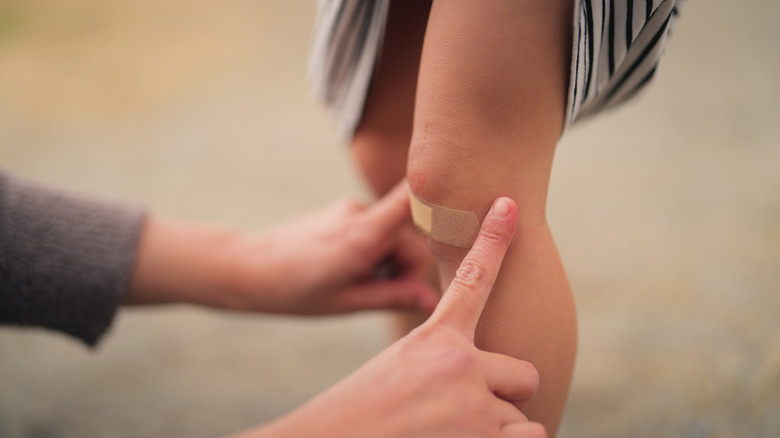
After cleaning well with soapy water, it's a good idea to cover wounds with a waterproof bandage to keep germs from entering. It's important to make sure your hands or the person's hands applying the bandage are clean to keep bacteria from entering the wound. Symptoms such as redness, swelling, or oozing are potential signs of an infection and warrant a visit to your doctor.
It's also a good idea to visit your doctor after a major cut or scrape if your tetanus shots aren't up to date. Tetanus is a potentially life-threatening bacterial infection of your nervous system. The CDC recommends that adults receive a tetanus shot once every ten years.