

A Newly Discovered 'Fire Amoeba' Just Broke The Heat Record For Complex Life
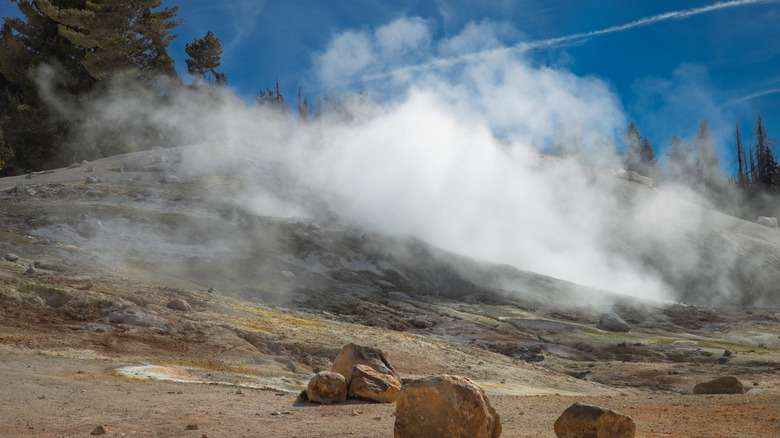
The inside of a volcano or a thermal spring may seem like a strange place to call home, but it isn't if you're a microscopic organism adapted to high temperatures called a thermophile. Scientists recently discovered an amoeba able to replicate itself and grow at a temperature of 145 degrees Fahrenheit. This sets a new temperature record among multicellular organisms.
The researchers discovered the amoeba by isolating geothermal samples along a tributary of Hook Springs Creek in Lassen Volcanic National Park, California. The temperatures of this tributary ranged from 120 to 149 degrees Fahrenheit thanks to an underground chamber of magma. The NASA-supported researchers took samples of the water and cultured the amoebas in a laboratory at various temperatures. They found that the amoeba continued replicating when kept in an incubator exceeding 145 degrees Fahrenheit and that they remained mobile at temperatures over 147 degrees Fahrenheit.
Previously, no multicellular organism has been able to replicate itself at temperatures over 140 degrees Fahrenheit. The previously record belonged to several species of fungi and algae. The newly discovered Incendiamoeba cascadensis earned the nickname the "fire amoeba" due to its ability to withstand such extreme temperatures.
Organisms adapted to the most extreme temperatures on Earth

The name thermophile is literally derived from the ancient Greek words for "heat" and "loving". By definition, thermophiles are microorganisms that thrive at temperatures above 113 degrees Farheinheit. Thriving means that these organisms can still optimally replicate, feed, and move at these temperatures. Amoebas such as I. cascadensis reproduce through a process called binary fission and don't need a mate to make more of themselves, unlike more complex organisms such as birds, fish, and mammals.
The newly discovered amoeba sets a new temperature record among eukaryotes, but there have been prokaryotic (single-celled) thermophiles identified at even more extreme conditions. The archaeon Methanopyrus kandleri is the organism known to be able to survive the highest temperatures. Archaea are single-cell organisms that look similar to bacteria. Researchers previously isolated M. kandleri from the sea floor in the Gulf of California, and it can grow at temperatures exceeding 251 degrees Fahrenheit.
The bacterium Geothermobacterium ferrireducens holds the honor of being the bacterium known to withstand the highest temperatures. It has been recorded growing at a temperature of up to 212 degrees Fahrenheit inside Yellowstone National Park's hot springs. It can survive these temperatures thanks to molecular adaptations to protect its DNA and proteins from high temperatures.
Animals adapted to most extreme conditions on Earth
If you look inside volcanoes or hot springs, you won't find any complex life forms like birds, mammals, or fish. The organisms adapted to the most extreme environments on Earth are all single-celled since their extremely short lifespans (sometimes less than an hour) allow them to adapt quickly. However, that doesn't mean that there aren't multicellular organisms thriving in inhospitable environments.
Camels are among the mammals best adapted to extremely hot temperatures. They can withstand temperatures regularly surpassing 120 degrees Fahrenheit without even breaking a sweat thanks to their extreme ability to conserve water. The red-billed quelea is a bird that lives throughout sub-Saharan Africa and is also perfectly suited to temperatures above 110 degrees Fahrenheit thanks to adaptations that allow it to conserve water.
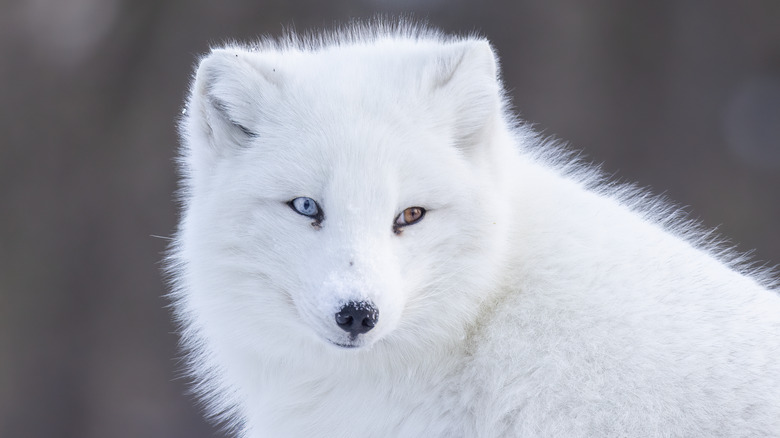
Mammals and birds have also adapted to some of the coldest environments on Earth. The Arctic fox is one of the most resilient animals of the Arctic tundra and can survive temperatures below -112 degrees Fahrenheit thanks to its thick coat. They're so adapted to their environment that they don't even begin to shiver until temperatures hit -94 degrees Fahrenheit. The animals of Antartica are also well-adapted to extreme cold. Emperor penguins can survive with a stable body temperature by huddling together to share warmth when Antarctica approaches -60 degrees Fahrenheit.