

The Gross Thing Lurking In Your Shower Gets Nastier Every Time You Use It
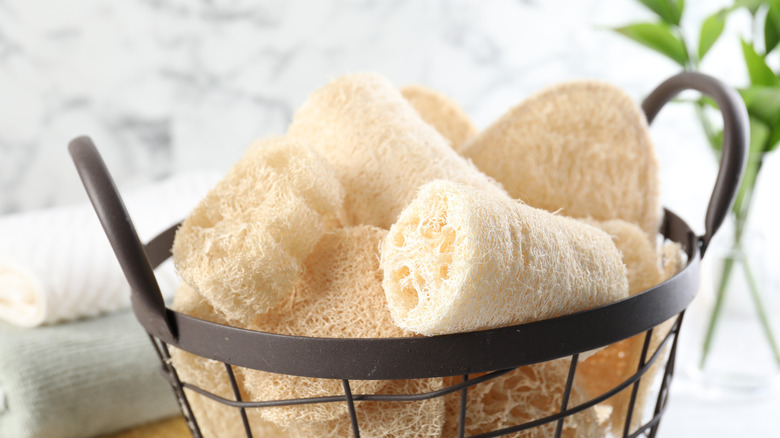
Washing away the dirt and grease of the day in the shower can feel immensely satisfying, and it can be even more fun with an abundance of accessories. Exfoliating dead skin is a priority for many during their shower routine, but if you've been using a loofah to do so, you may want to rethink that strategy. The natural sponge alternative, which you possibly choose for its eco-friendly credentials, may be good at sloughing old skin cells, but it is likely harboring some pretty nasty microorganisms.
While a brand new loofah may feel like it does a good job of cleaning and exfoliating your skin, unfortunately the more often you use it, the dirtier it becomes. The main issue is the structure of the loofah, and the crevices in between the fibers. As you clean your body, the dirt and bacteria that you wash off goes onto the loofah instead, and much of it remains trapped in the holes. "Loofah sponges are intimate with many unclean areas of the body and then sit around allowing bacteria to multiply within the nooks and crannies of the sponge," says Joel Schlessinger, a board-certified dermatologist.
After use, the loofah is then usually left in a warm, moist space, which is the ideal environment for bacteria to multiply. While the knowledge that showering may actually be reintroducing dirt onto your body is a gross enough concept in itself, some of the bacteria could actually make you sick.
The surprisng microbes that could be hiding in your loofah
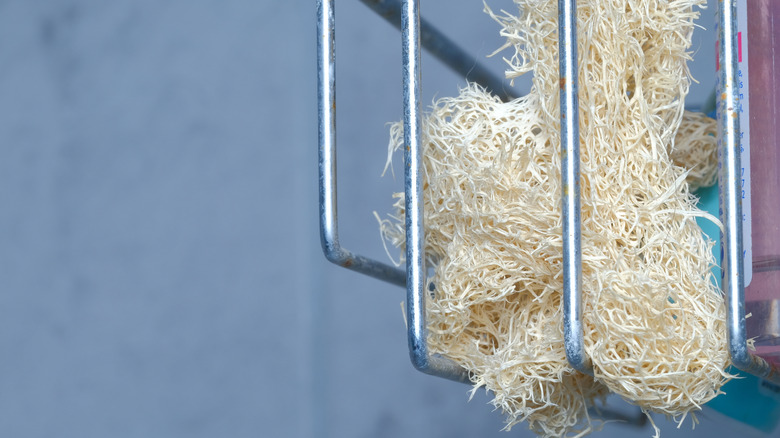
Bacteria live all over our bodies and are everywhere on our skin. A study published in the Journal of Clinical Microbiology in 1994 was prompted by a case of Pseudomonas aeruginosa folliculitis being linked to loofah use. The researchers found that multiple different types of bacteria were capable of multiplying within a loofah, including gram-negative bacteria, some of which can cause infection. Surprisingly, even a brand new unused loofah that was in contact with water became breeding ground for potentially dangerous microbes, including E. coli. This result is particularly surprising, as the assumption may have been that the bacteria became present on the loofah as a result of cleaning the body.
While using a loofah that contains these bacteria won't automatically make you sick, there are certain circumstances that make it more likely. "Using a contaminated loofah can introduce these microbes back onto the skin, especially if you have any nicks or open areas, potentially leading to folliculitis or infections," says dermatologist Sonia Badreshia-Bansal. Scrubbing too hard with the loofah in an attempt to remove dead skin can actually cause abrasions, and can increase the chance of bacteria making their way into the body. The longer a loofah is left without being properly cleaned or replaced, the more dangerous microorganisms will be present for every wash.
How to shower without exposing yourself to harmful bacteria
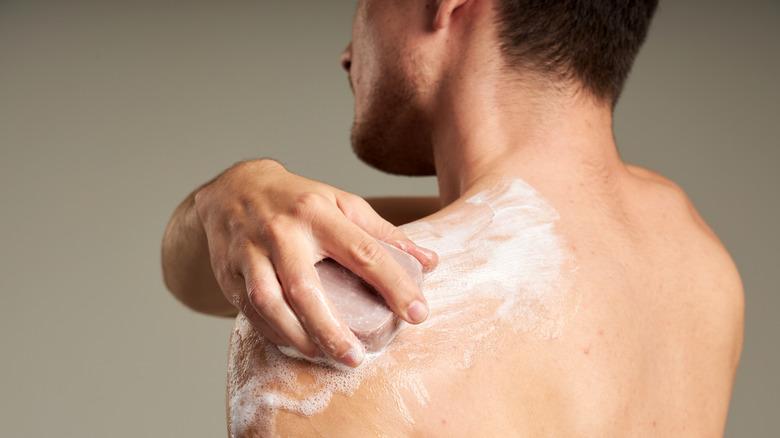
If you are determined to continue using a loofah, it is crucial that you store it properly and clean it regularly. Synthetic loofahs can trap bacteria too, so the same hygiene measures should be taken with both. According to dermatologist Melissa Piliang, the way in which we use loofahs exacerbates the problem. "They're used in a wet environment and you hang them up in the shower, which is also a wet environment," she explains. "They don't ever totally dry out, so the loofah is a beautiful breeding ground for bacteria." The first step, therefore, is to dry the loofah as much as possible between uses. Rinse it thoroughly after washing yourself, then hang it up in a dry place, rather than on the handle of the shower door which is a moist environment.
As well as rinsing after each use, you should sanitize the loofah once a week using a diluted solution of bleach. Soak it for at least 5 minutes to remove as much bacteria as possible. Dr Piliang recommends only using it once a week anyway, avoiding applying it to the face or genitals, and replacing it at least once a month .
The best way to avoid the issues that loofahs pose, however, is to stop using them completely. Washcloths are a more sanitary option, and can easily be washed with the rest of the laundry to ensure they are completely clean. Alternatively you can simply use your hands to move the soap or shower gel around your body and cut out the middleman altogether — this will help ensure that when you step out of the shower, you are definitely cleaner than when you went in.