

Reusing That Plastic Container Is Doing More To Your Food Than You Think
We may receive a commission on purchases made from links.
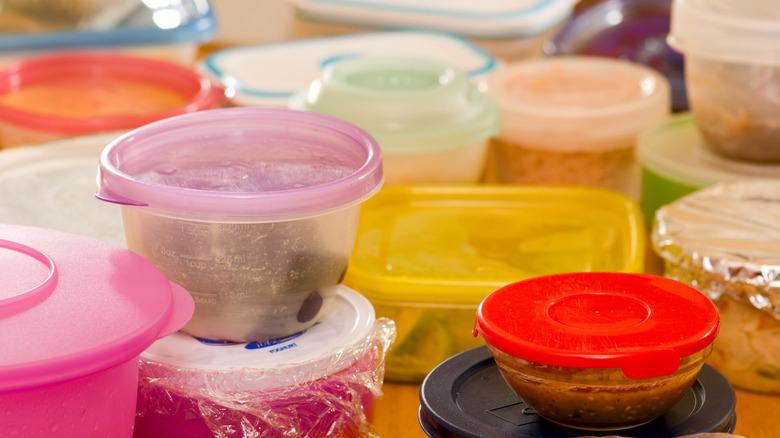
Plastic containers were long thought of as a modern miracle: inexpensive, lightweight, and able to keep food fresh longer. Plastic containers may keep our leftovers from going bad, but reusing plastic containers over and over is doing more than we may realize. When plastic food containers get old and worn, they can leach chemicals into food (especially when heated), shed microplastics, and even harbor foodborne illness-causing germs inside hidden cracks and scratches.
Somewhere around 40% of the millions of tons of plastic produced each year is used for packaging, with a significant fraction of this being food packaging. Some plastics are only meant to be used one time. One common example of single-use plastic is disposable plastic water bottles. Other plastics used to package food include wraps that keep food fresh and containers like yogurt tubs and condiment bottles. These plastics are considered safe when used as intended, as are containers meant for food prep and storing leftovers; however, even the highest quality plastic food container is only meant to be used for a limited time.
Wear and tear in plastic containers
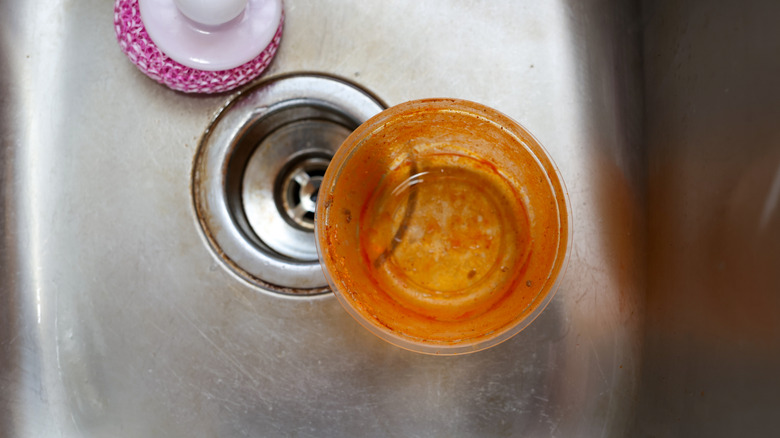
Over time plastic goes through a variety of physical and chemical changes thanks to heating, exposure to sunlight, and mechanical wear from use and washing. Scrubbing and washing with hot water or in a dishwasher can hasten this breakdown to some degree. Experts estimate that food-grade plastic containers can only go through a dishwasher or hot water wash about 100 times before they start to degrade.
Damage from repeated washing makes it more likely for a container to release microplastics into food. Microplastics have been found in many body tissues and could be associated with a variety of health problems. At the same time, bacteria can colonize cracks and scratches in plastic, acting as a potential source of contamination.
Heating plastic, like warming up leftovers, can also pose a health risk. Many plastics contain chemical additives to make them more soft and pliable or to help them resist staining. When heated, plastic containers can leach some of these chemicals into food. This can be more pronounced with fatty or acidic foods. Some chemicals that leach into food during heating could disrupt hormonal function and may be associated with health problems like high blood pressure or type 2 diabetes.
Making safer and healthier choices
Keeping plastic food containers out of the dishwasher and microwave can reduce the chances that unwanted chemicals and microplastics make it into your leftovers. But how can people keep their risks low? One action is to get rid of old and worn plastic containers. Anything that looks scratched or discolored or that holds odors is likely past its prime. Experts even caution against using containers that look brand new if they're more than 10 years old. This is because manufacturers only stopped using chemicals like bisphenol A in food-related products a little more than 10 years ago.
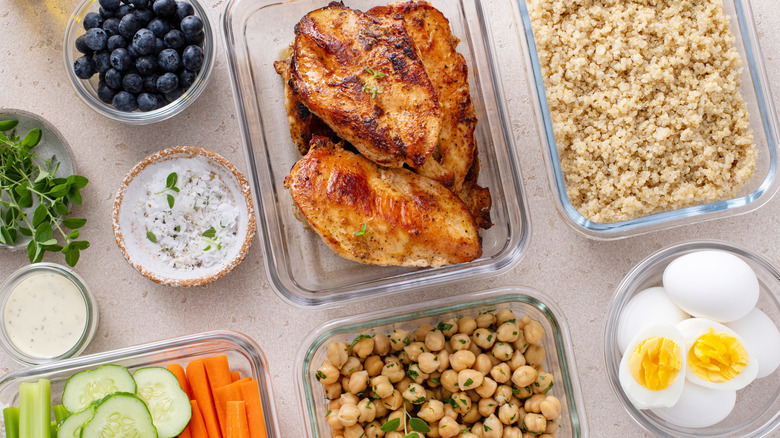
The type of plastic used also has a lot to do with how safe a container is. Different types of plastics are indicated by a number stamped on the bottom of the container. People should avoid reusing containers labeled 3, 6, or 7, but those stamped with a 2, 4, or 5 are durable enough to be used and reused. Another option would be to use containers made of glass, like these made by Pyrex, or stainless steel like this Greentainer three-pack to store ingredients and leftovers.
The risks of bacterial contamination, chemical leaching, and shedding of microplastics are something to weigh against the convenience of inexpensive and lightweight plastic containers. Being selective with types of plastic used and throwing out old, worn containers can help, but reusing plastic food containers over and over is something people should think twice about.