

Scientists Sealed People In A Space Station Simulation For 240 Days, Then Something Went Wrong
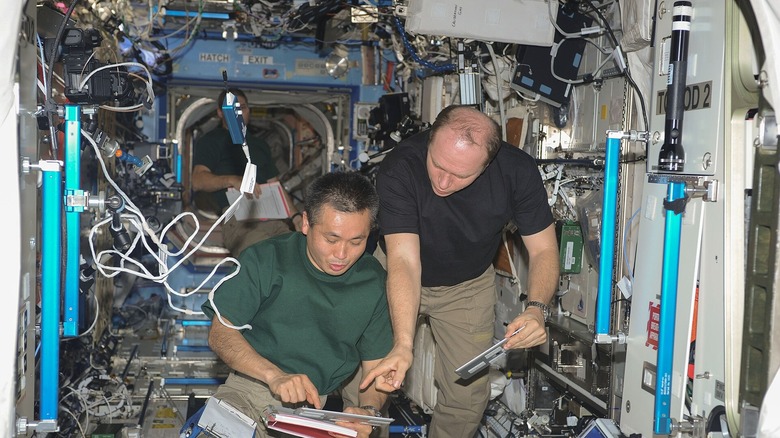
The International Space Station is one of science's greatest accomplishments, but the road to putting people into orbit long-term is paved with shocking studies about human behavior. ISS scientists had to ensure that up to a dozen humans could survive for months while living together in a space station the size of a 6-bedroom house, so they designed terrestrial testing facilities to see how people would react. The most notorious test was the Simulation of Flight of International Crew on Space Station of 1999, or SFINCSS-99. Participants were sealed into chambers that mimicked the conditions on the ISS, and their behavior quickly turned primitive.
The study was conducted in Moscow, Russia, and included participants from Russia, Austria, Germany, Japan, and Canada. The Canadian was the only woman. The participants were organized into three groups and placed into different, connected chambers. The first group, consisting of four Russian men, lasted 240 days to serve as a "control group." The other two "international test groups" lasted 110 days in the chamber, with periodic visits from other groups. Unsurprisingly, the different genders and nationalities quickly led to tensions.
Because the control group was composed of Russian men with the same culture and coping mechanisms, they endured their 240 days in relative harmony. The internationally mixed group, on the other hand, suffered "environmental stress" as a result of their language barriers and culturally distinct behaviors. But the biggest rift was between the control group and the international group. After a bloody fight between two Russians and drunken advances on the lone woman, the researchers decided to close the hatch, separating the two groups for their own safety.
The psychology of confinement: When even the professionals reach their limits
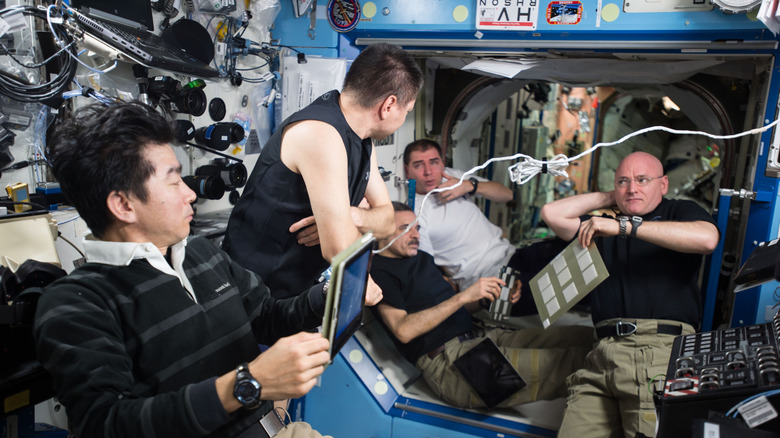
From a research perspective, the simulation in Moscow was a success. The most obvious finding was how people of the same culture cooperate better than people of differing cultures when confined together. The Russian control group consistently rated their group members highly, and they appeared to cooperate better.
This conclusion may seem absurd, considering a drunken fight broke out between two Russians during a party (one from the control group, the other from experimental group). The fight escalated so intensely that a third Russian compatriot allegedly hid the kitchen knives from the brawlers. Worse yet, the intoxicated commander of the control group attempted to kiss the lone female participant Judith Lapierre without her consent after unwelcome advances. The traumatic experience provided invaluable data for the researchers.
The fiasco of the 1999 Moscow simulation study demonstrated the conflicts that could arise between people of different cultures in confinement, since conflicts between the international group members emerged well before the traumatic events of the alcohol-fueled party. The party itself also revealed the dangers of intoxicants on the ISS, proving that adulterants like alcohol couldn't be allowed on the ISS.
Today, the astronauts on the ISS live in more harmony than their respective nations on the ground do. Thanks to experiments like SFINCSS-99, the ISS partnership developed a Crew Code of Conduct, which establishes mental health checks, a chain-of-command, and language standards to ensure the crewmembers get along during their stay. That's not to say the ISS is a safe environment — serious accidents happen surprisingly often and they live with the risk of being sucked into space. Nonetheless, the code of conduct ensures our earthly discords stay on earth.