

The Biggest Leopard In The World Is Nothing Compared To The Biggest Jaguar
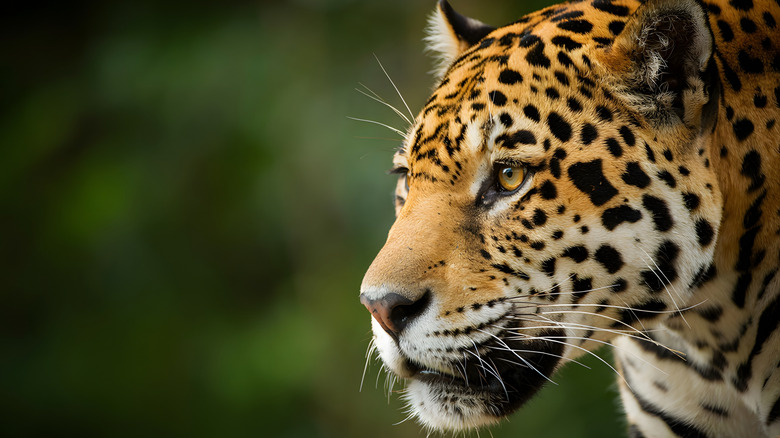
Would you be able to tell the difference between a leopard and a jaguar if you stumbled across one in the jungle? Whether you caught sight of it in the Americas or Afro-Eurasia would be a clue, since Jaguars are endemic to Central and South America, whereas leopards are spread out from South Africa to Siberia. Another clue might be the size. The heaviest jaguars ever recorded in the wild generally weigh about 100 pounds more than the heaviest leopards.
In the wild, male leopards rarely exceed about 150 pounds, and the smaller females are generally under 100 pounds. The average size of jaguars varies in different parts of their range. In Mexico, the males can grow up to about 250 pounds and the females about 180 pounds. From the tip of their nose to their tail, leopards can grow slightly over about 6 feet, whereas jaguars have been recorded over 8 feet long.
Animals in captivity generally grow larger than they would in the wild since they usually get regular meals and don't need to hunt for themselves. Some jaguars living in nature reserves or captivity have allegedly reached around 310 pounds, and possibly even higher. One of the largest leopards ever recorded was named Balaji, who grew to 315 pounds. but a lot of this weight was body fat since he was considered morbidly obese for a leopard.
How jaguar size compares to leopards
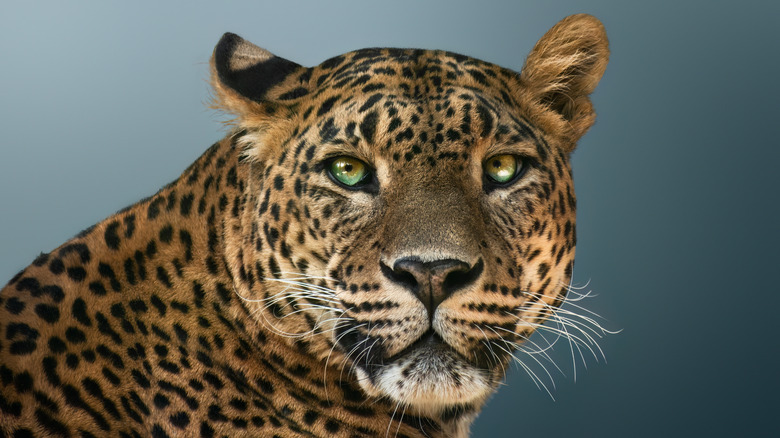
Leopards and jaguars are two of the five living cats in the Panthera genus, along with lions, tigers, and snow leopards. Most male leopards are about the size of or smaller than the average adult male human. In contrast, male jaguars often weigh in comparable to NFL linebackers, and even most female jaguars weigh more than most humans.
Scientifically, jaguars are known as Panthera onca. Even though the range of this endangered species extends from the southwestern United States to Argentina, all jaguars (both the spotted and all-black variants) are usually considered one species. Some sub-populations, like those living in Brazil's Pantanal wetlands, are bigger than others, but they generally have fairly unified characteristics.
Leopards are scientifically known as Panthera pardus and live in a wider area spanning from South Africa all the way to Indonesia and Siberia. Leopards can be divided into roughly eight subspecies (the number varies slightly depending on who you ask). The size of these subspecies varies widely. For example, the Arabian leopard that lives in Yemen and Oman is often considered the smallest subspecies, with males rarely exceeding 76 pounds and females 51 pounds. The largest subspecies are often considered the African leopard and the Sri Lankan leopard, both rarely growing over 200 pounds.
Are jaguars or leopards more aggressive?
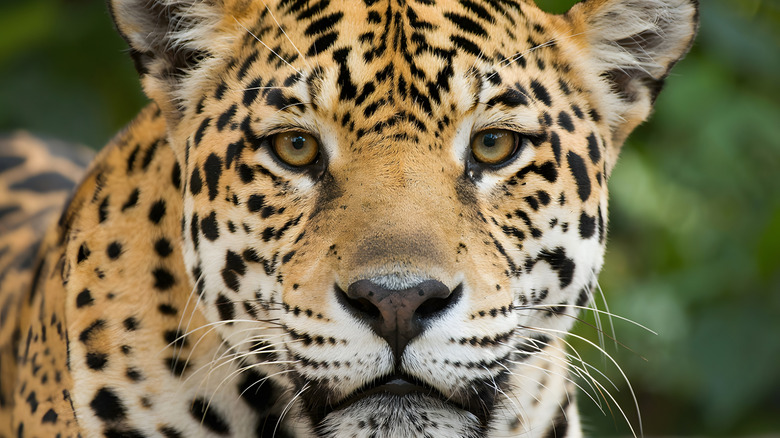
As scary as it may be to come across a 300-pound jaguar in the wild, it could be worse. A now-extinct subspecies called the giant North American jaguar may have been up to 20% larger. Modern jaguars are the third-largest cat behind tigers and lions and one of the most deadly animals that live in the rainforest, although they rarely attack humans. They generally pose more of a threat to livestock, which often leads to retaliatory killings from farmers. Only a handful of attacks on humans are reported each year.
If you had to pick whether you were to meet a leopard or jaguar in the wild, you may choose to try your luck with a leopard since jaguars are generally much larger. But counterintuitively, leopard attacks on humans are actually much more common, largely due to shrinking habitat. In Sanjay Gandhi National Park in Mumbai, 25 leopard attacks on humans have been reported in one year alone.