

In 1915, A Self-Proclaimed 'Rainmaker' Tried To Help His City. They Didn't Expect What Happened Next
The past 110 years have seen massive changes in Southern California, but one thing that has remained the same is the importance of precipitation. Rainfall and mountain snows make or break the region, with dry years driving urgent water conservation measures. In 1915, city officials in San Diego were looking at hampered growth thanks to an ongoing drought, but they had a potential savior in the form of a businessman named Charles Hatfield. Calling himself a "rainmaker," Hatfield said he could end San Diego's dry spell. But the unexpected happened when, after his attempts, heavy rainfall in January 1916 overflowed river banks, flooded San Diego, and washed away buildings and roads.
Hatfield proposed that the city pay him $10,000, a sum equivalent to nearly $310,000 today, if he could succeed in filling the Morena Dam Reservoir, which was only one-third of the way full, by the end of 1916. This wasn't the first time that Hatfield had made agreements like this. In 1904 he told Los Angeles businessmen that he could get 18 inches of rain to fall over five months. After that much rain fell, he pocketed his fee and started building his fame as a rainmaker.
The quest to squeeze rain from the clouds
Hatfield, and other rainmakers of the day, operated on theories that humans could influence rainfall in various ways. One early rainmaker, James Espy, tried to trigger rainfall by sending warm air currents from fires into the upper atmosphere. Others tried triggering rainfall with explosive-laden balloons and cannon fire, while others like Hatfield burned chemical blends to send fumes meant to stimulate rainfall into the air.
In some ways these efforts can be thought of as early cloud-seeding attempts. We now know that spreading silver iodide or dry ice into supercooled clouds (regions where water droplets are liquid despite being below freezing) can induce rainfall by causing ice particles to form and grow until they become heavy enough to fall. In practice cloud seeding can squeeze at most 20% more additional precipitation from clouds that are already able to make rain or snow under the best conditions.
Hatfield had developed his own secret blend of chemicals over many years. He tested these different blends, burning them atop a windmill tower on his father's ranch in Southern California. After his apparent success in Los Angeles and dealings with farmers and ranchers throughout the country, Hatfield set his sights on San Diego. In January 1916 he ignited his chemical blend on a 20-foot wooden tower and light rain started soon afterward. Newspapers reported his success, though filling the reservoir would take a lot more rain.
Did Hatfield actually make it rain?
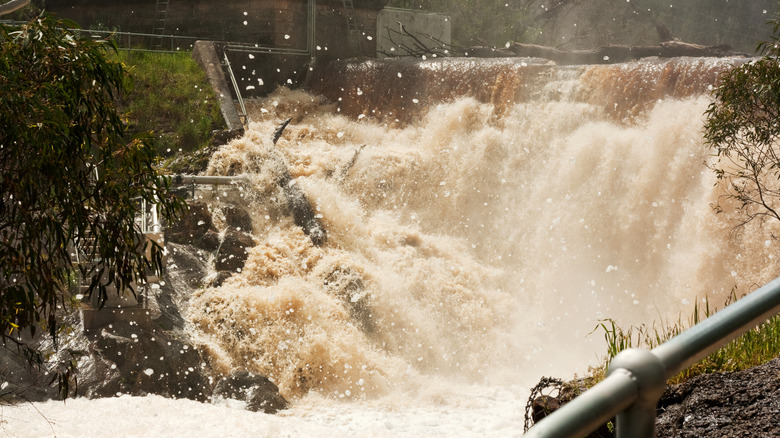
A lot more rain is exactly what San Diego got. Over five days, the mountains outside San Diego saw 17 inches of rain. After a few days without precipitation, rains returned, bringing the overall total to nearly 30 inches. The San Diego River overflowed its banks and a dam at a nearby reservoir failed. Afterward the Morena Dam Reservoir was filled to the brim, meeting Hatfield's goal well ahead of his deadline. Hatfield never collected payment from San Diego officials despite years of legal challenges. But this wasn't the end of his fame. In the 1920s he was paid to bring the rain in Canada and Honduras, collecting thousands of dollars.
Some blamed Hatfield for the flood's devastation while others questioned whether his efforts had any effect at all. However, it's virtually certain that Hatfield had nothing to do with the flood. Heavy rainfall affected a wide area of the Pacific coast, not just San Diego, indicating that larger forces were at work. The exact causes are unclear, but Southern California occasionally experiences heavy rainfall thanks to changes in weather patterns driven by El Niño, a warming of waters in the equatorial eastern Pacific Ocean. The 1916 flood predates records of El Niño years, but the event is similar to heavy rainfall events from recent El Niño events.