

In The 1920s, The US Military Accidentally Discovered A Technology That Changed Everything
We may receive a commission on purchases made from links.
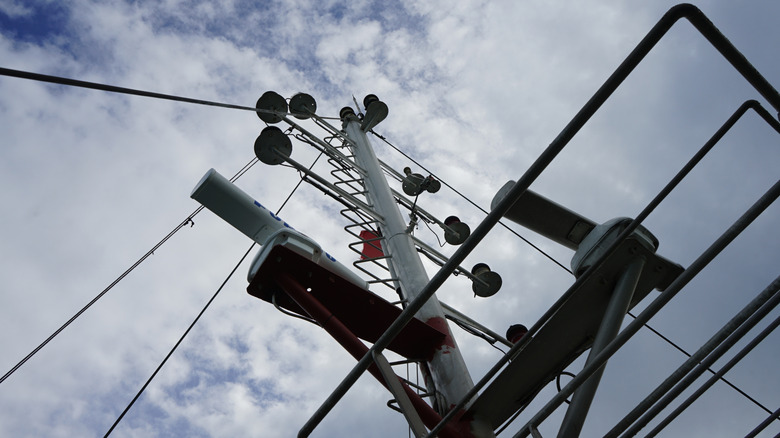
For centuries militaries around the world have sought out new technologies to improve their effectiveness. While weapons, vehicles, and equipment attract a lot of attention, being able to more effectively communicate on the battlefield has always been a goal. In the late 19th and early 20th centuries, radio was a groundbreaking technology. By 1910, communication between ships and shore was common, but engineers continued improving receivers and transmitters. In 1922 while testing new high-frequency radios, the U.S. military discovered that electromagnetic waves could also be used to detect distant ships even at night or in bad weather. This discovery led to the invention of the technology known as radar.
Radar, which stands for radio detection and ranging, sends radio waves out through a transmitter and receives signals that bounce back from distant objects with a receiver. By measuring the time it takes for a reflected signal to return, a radar station can determine how far away a distant object is. At the same time, the angle from which a signal returns reveals an object's direction and by taking repeated measurements, a radar operator can figure out which way a target is moving. It can be easy to take these capabilities for granted today, but 100 years ago this was a groundbreaking achievement that changed the world.
An accidental discovery
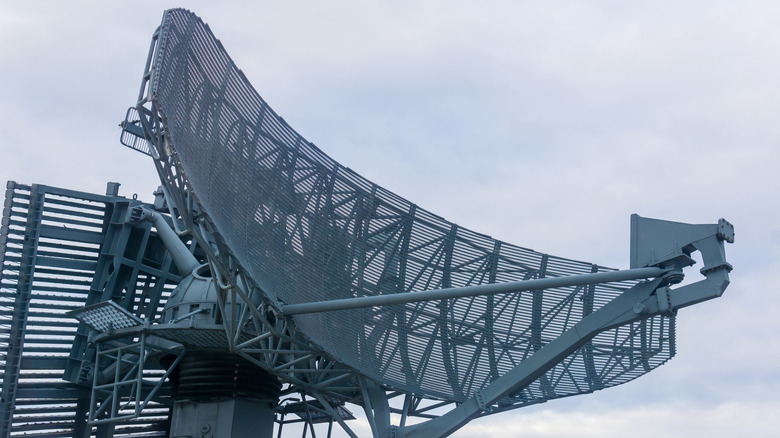
Engineers Albert Taylor and Leo Young were working on a prototype high-frequency radio communications system at Naval Air Station Anacostia near Washington, D.C., in 1922. They found that buildings and vehicles around the base would interfere or even block radio signals, so they moved their receiver to a location across the Potomac River to have a flat, open expanse of water without obstacles. Before long they noticed that a ship sailing up the river caused changes in the radio signal. After a few modifications, the engineers were able to spot approaching ships as far as three miles away. However, government officials were not interested in their discovery and Taylor and Young soon moved on to other high-frequency radio projects.
In 1930, Young was testing aircraft communications systems and noticed similar effects. He reached out to Taylor and they brought in a third engineer named Lawrence Hyland to explore the phenomenon further. In 1934, they filed a patent for their creation and within a few years the military was testing radar systems that could identify targets up to 17 miles away. By December 1938, the Navy installed a radar system on an active battleship, the USS New York, that could spot planes nearly 50 miles out. These developments were crucial to Navy victories in the Pacific Theater during World War II.
Radar is now everywhere
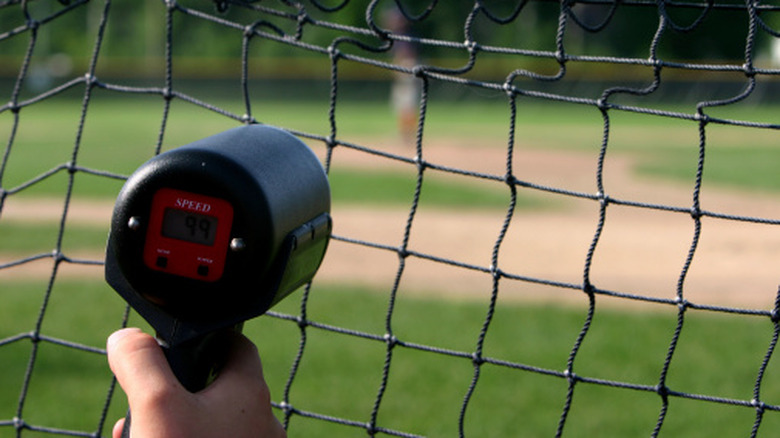
While the military applications of radar were obvious, this technology has also found extensive use in many civilian sectors. Radar allows air traffic controllers to keep planes flying safely and helps drivers detect cars in their blind spots and handle emergency braking. Meteorologists rely on tools like advanced radar instruments to make forecasts and provide the public with warnings of hazardous weather. Scientists have also used radar to collect remote sensing data like terrain elevation and changes to polar ice cover. People can even buy devices like this Bushnell Velocity Speed Gun to monitor traffic or measure speeds in sports like tennis and baseball, or this Simrad HALO20+ for precision boat navigation.
Over the past century, radar has become a commonplace technology that is still finding its way into new applications like autonomous vehicles. But while the technology is based on principles that humans have known about since the 1800s, its development is built on engineers accidentally discovering how to detect distant objects while working on better ways to communicate. And what they found helped change everything.