

The Common Sweat Myth That's Been Debunked By Science

Sweating is a normal physiological process that offers a great deal of benefits. Not only does sweat help to cool your body down when you're overheating, but it also keeps you safe if in cases where you might be exposed to excessively high air temperatures such as during a heat wave. Sweat may also help to hydrate your skin and even decrease the risk of skin infections to some degree. Outside of these benefits, some tout other purported health advantages of sweating. If you've heard that sweating can help your body remove a lot of toxins, this is a myth (and it's not the only one). Sweating does not get rid of any meaningful amounts of toxins from the body, and such functions are carried out by several essential organs instead.
First, it's important to understand what sweat is made of. About 99% of sweat is water, with the other 1% made of sodium and chloride. The rest of this 1% includes minerals and vitamins, other electrolytes, proteins, and toxins such as BPA and heavy metals. The latter is unfortunately how the myth of sweating out toxins came to fruition, as one comprehensive review explained in 2019. While it is possible to sweat out very small amounts of certain toxins, the amount is inconsequential, even if you sweat a lot at one time. In other words, placing yourself in a heated room or a sauna, or exercising in a hot environment for the purpose of sweating out toxins will not lead to any significant detoxification effects. What's more, trying to intentionally make yourself sweat more in an effort to remove toxins can actually pose some health risks such as dehydration and heat exhaustion.
Instead of sweating, here's how the human body actually removes toxins
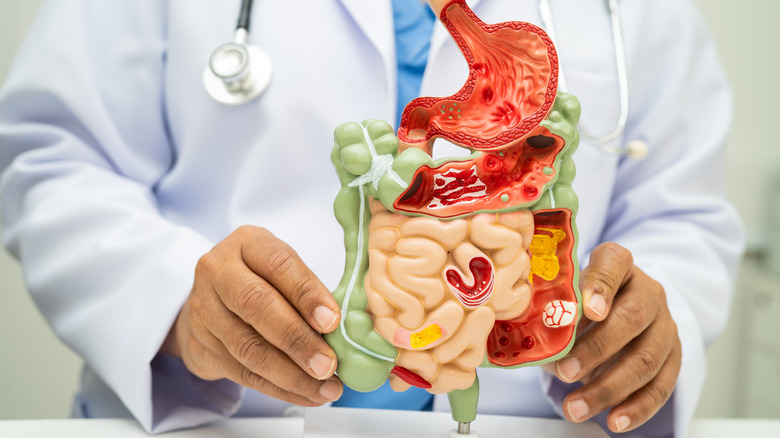
While sweating may remove trace amounts of toxins, certain essential organs tackle this job much more effectively. According to Michigan State University, these include your liver and kidneys. The liver has several important functions in the human body. This includes the ability to filter toxins and makes them water soluble for further removal by the kidneys via urination. Additionally, the lungs are responsible for removing airborne toxins, while the colon also removes toxins via waste. Collectively, these major organs are hard at work removing toxins and other byproducts on a continuous basis. Unless there's an underlying form of organ dysfunction, no additional support is needed. Simply sweating more will not replace the detoxification functions of these major organs.
Despite the sweat and detoxification myth, many people are still interested in trying out ways they can possibly remove toxins. Your best bet, says Michigan State University, is to eat a healthy diet to support liver and kidney function, as these are your primary toxin-removal organs. Regular exercise, drinking plenty of water, and getting enough sleep can also help, as well as limiting alcohol consumption. Aside from intentionally trying to sweat out toxins, you'll also want to avoid "natural" cleansing herbs, drinks, and other products says the National Center for Complementary and Integrative Health, as there is no scientific evidence that these actually help your organs get rid of toxins from the body.