

Scientists Sealed Princeton Students In Total Darkness For 4 Days. They Didn't Expect What Happened Next
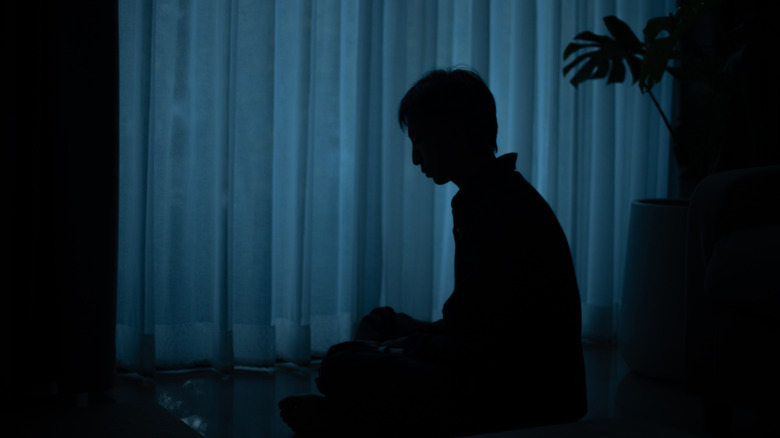
In the 1950s and 1960s, researchers at various institutions carried out experiments aimed at finding out how people were affected by social isolation and sensory deprivation. One experiment at Princeton University had student volunteers spend four days in total darkness, and while some of the participants experienced hallucinations, the researchers were surprised by the type and frequency of hallucinations and unexpected changes in motor skills, working memory, and sensation.
Princeton researcher Jack Vernon recruited undergraduate student volunteers through an advertisement in the university newspaper. Thirty students agreed to stay in a small room, mostly confined to a bed, in total darkness. The participants were not allowed to move around the room, talk, or sing. However, only a few of the students hallucinated at all, and those who did reported seeing simple shapes instead of the wild imagery noted in other studies. Later trials had participants stay in lit rooms while wearing masks that allowed only light in. In those cases more than half of the students reported complex visual hallucinations like seeing floral patterns, archways, and buildings.
The researchers also found that the students had notable decreases in fine motor skill tasks like holding a pen. However, subjects could more easily memorize lists of words. At the same time some of the participants had sensory issues. For example, one of the students couldn't tell the difference between the taste of beef broth and tomato soup.
Why researchers were interested in sensory deprivation
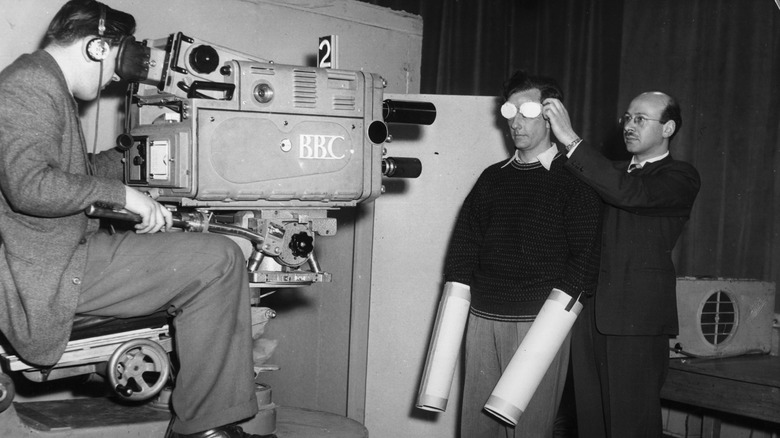
These studies of isolation and sensory deprivation built on earlier research into how the human brain handles a lack of sensory input. In the 1930s, German psychologist Wolfgang Metzger introduced a concept known as the ganzfeld effect. This bizarre sensory phenomenon happens when the brain fills in gaps in sensation when there's no sensory input to be had. Some researchers dug into the ganzfeld effect to study the possibilities of telepathy while others were interested in hallucinations.
However, research on isolation in the 1950s started in part because of rumors that Soviet agents were using sensory deprivation to turn Canadian prisoners during the Korean War into communists. Researchers in Canada and the United States were interested in finding out if such so-called brainwashing methods were possible and how to counteract them. Early studies at Canada's McGill University expected subjects to withstand sensory deprivation for weeks; however, most only lasted a few days to a week at most.
The experiments at McGill inspired Vernon, who designed the Princeton experiments to have even stricter conditions. For instance, instead of being escorted to the bathroom, volunteers were provided a chemical toilet in their isolation room. The intent was to maximize the number of hallucinations; however, what they found was that light perception seems to play a role in visual hallucinations.
The end of sensory deprivation research
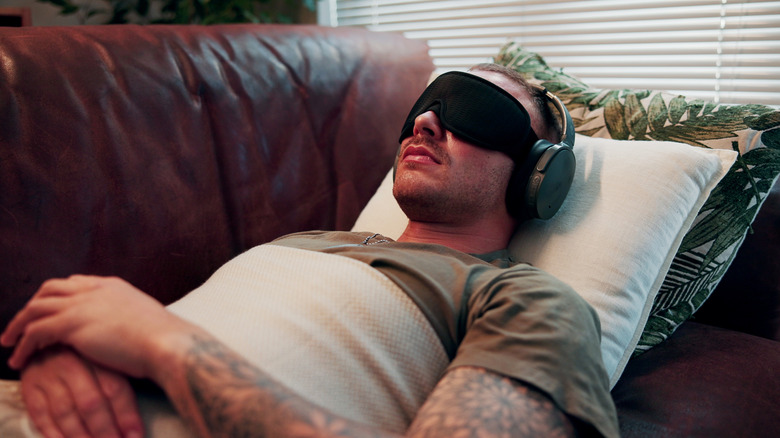
By the 1970s, sensory deprivation research had essentially stopped. In part this loss of interest was due to critics who noted similarities between sensory deprivation experiments and the use of isolation as an interrogation technique and the practice of placing prisoners in solitary confinement. However, research on the effects of sensory deprivation has given some insights into the unexpected ways the brain handles information, such as the way that light plays a role in visual hallucinations. Additionally, these studies have motivated experiments, like sealing people into caves for 40 days, to explore the different ways isolation affects humans, especially in the context of long-term space travel.
While formal research on sensory deprivation has lost its popularity, there are still people who are curious about its effects. Some practice sensory deprivation for short periods of time as a way to induce altered mental states without using drugs or as a form of meditation. However, experts recommend that people with mental health conditions like schizophrenia avoid sensory deprivation as it could cause negative experiences.
While the Princeton experiment would be virtually impossible to conduct today thanks to modern research standards and institutional review boards, the unexpected findings of the Princeton study hinted at the complexity of sensation and the brain.