

Scientists Say This Body Part Could Be An Indicator Of Human Brain Evolution

Despite rapid advancements in neuroscience, the human brain remains a mystery. For nearly 300,000 years, Homo sapiens (humans) have wrestled with the nature of consciousness, how it came to be, and why one person's perception of reality is never quite the same as another's. Human brain evolution, then, quickly becomes a complicated topic. But a clue to how the brain evolved could be right at your fingertips.
That's right, there seems to be a connection between the length of your fingers (specifically the ratio of the second and fourth fingers, called the 2D:4D ratio) and how your brain developed in the womb—at least if you're biologically male. Early embryo development in almost all vertebrates follows the same pattern, and embryology is an important pillar in the study of evolution generally.
How an embryo develops into a fetus and eventually a small human is as much a matter of chemistry as it is anatomy. Hormones from the mother's body affect fetal growth, organ development (including the brain), and neurology. Estrogen plays a key role in these processes, and some researchers are proposing the estrogenized ape hypothesis to describe how human brains became so much larger than those of other apes.
What does the role of estrogen in brain evolution have to do with finger length?
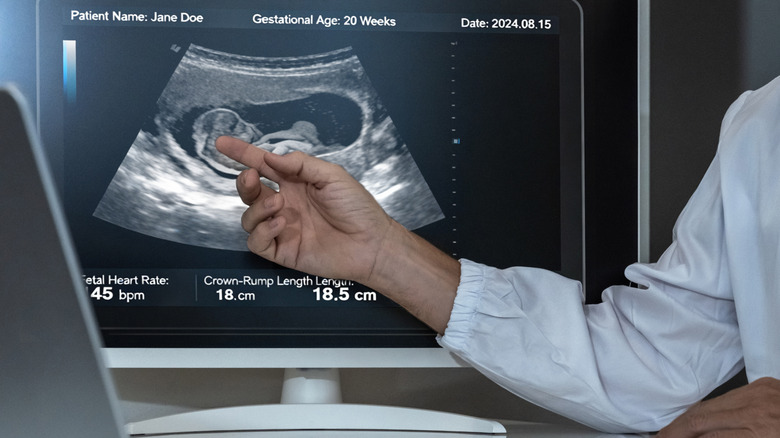
During the first trimester of pregnancy, the fetus grows rapidly. Cells divide and differentiate, forming the basic outlines of the heart, brain, spinal cord, and limbs. Because they are dividing so quickly, fetal cells are particularly vulnerable to differences in hormonal chemistry.
Between the fourth and eighth weeks of gestation, a cluster of genes activates that controls the development of the fingers and toes as well as the genitourinary system (the testes, ovaries, and androgen signaling system that will regulate sex hormone production). The fetus's sex organs begin producing their own hormones between weeks 8 and 14, which act upon the developing digits and the developing brain tissue. Thus, the 2D:4D ratio can be used as a proxy for prenatal hormone exposure.
The cells in the 4D (ring finger) have a significantly higher concentration of androgen and estrogen receptors than those in the 2D (index finger). The greater number of receptors in the 4D finger cause it to respond more to the hormones in the womb and to grow longer. The 2D:4D ratio remains stable over an individual's lifetime, which makes it a useful data point for prenatal brain development.
Male babies with larger head sizes often have a longer second finger than fourth finger. In other words, a higher 2D:4D ratio in males correlates with larger early brain volume because of their joint sensitivity to prenatal hormones.
Supersizing the brain

Throughout human evolution, our brain volumes have expanded far beyond what is needed for our body size compared to other hominids (all members of the genus Homo, as well as gorillas, chimpanzees, bonobos, and orangutans). This is a direct result of hormonal influences in the womb. Although testosterone gets top billing in many discussions of prenatal development for its effect on sexual differentiation, estrogen is key to neurological development. Increased fetal estrogen exposure, as evidenced by the 2D:4D ratio, may have driven the dramatic scaling-up of the human brain.
The topic of human brain evolution is an example of metacognition — it literally requires thinking about thinking. Over the centuries, there have been many attempts to understand human cognition and development, and not all of the explanations were based in science (looking at you, phrenology). Of course, our hands do not determine who we are or how we think. However, the 2D:4D ratio is a permanent physical imprint of the hormonal cocktail that sculpted our limbs and our neural architecture before any of us ever took our first breath.