

In The 1930s, The Soviet Union Backed A Scientist Who Said Crops Could Be Educated. It Went Very Wrong
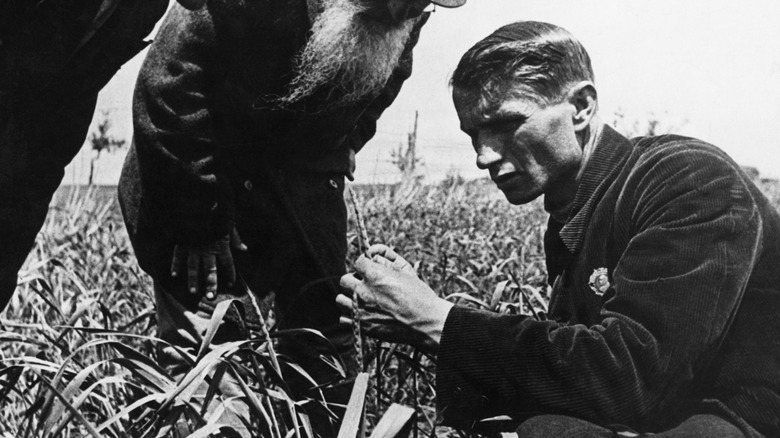
The deadliest scientist in history... That is the legacy of Soviet biologist Trofim Lysenko. Rising from peasant roots in modern Ukraine to become director of the Institute of Genetics at the powerful Academy of Sciences of the USSR, he appeared to be the perfect communist success story. But instead of wielding his influence for the better of the people, he embraced dangerous and inaccurate theories that destroyed the Soviet agricultural system and directly contributed to the devastating famines that killed millions across the country during the reign of Joseph Stalin.
Lysenkoism, as his brand of pseudoscience has come to be known, rejects many of the core principles that defined Charles Darwin's theory of evolution and Gregor Mendel's finding that certain physical traits are passed from one generation to the next by way of DNA segments known as genes. Instead, Lysenko believed that evolution could be forced upon species by teaching them new traits, which they would then pass down to their offspring. Many of the "lessons" he sought to teach plants were lifted directly from the principles of Marxism–Leninism, the guiding doctrine of the Soviet Union, even though they had no applicability to plant life. However, Lysenko's willingness to toe the party line throughout his career led to his theories eclipsing all of the accurate scientists in his country to disastrous effect.
A history of Lysenkoism
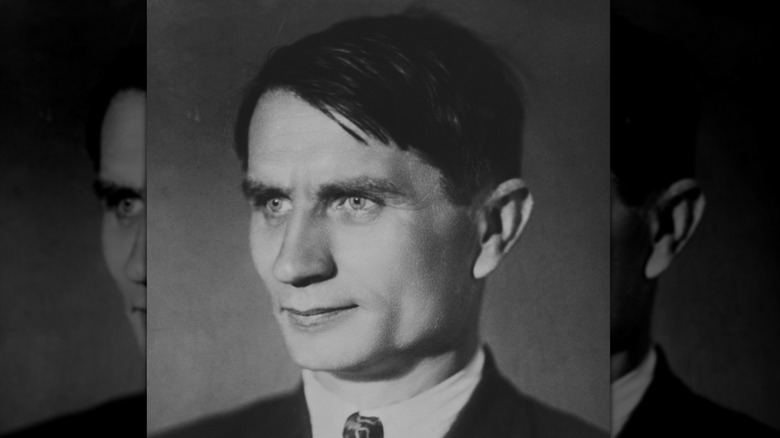
Lysenko built his theories upon another form of pseudoscience: Lamarckism. This was a theory proposed by the 19th century French naturalist Jean-Baptiste Lamarck, half a century before Charles Darwin published his landmark work, "On the Origin of Species". Lamarck proposed that physical changes acquired during a living thing's lifetime could be passed on to the next generation, but this has long since been discredited (if it were true, the children of body builders would pop out of the womb with massive muscles). Lysenko chose to believe Lamarck over Darwin and Mendel, to the point that he actually rejected the existence of genes.
In 1932, Lysenko made headlines across the Soviet Union for his successful experiments in vernalization, a process that entails exposing seeds to cold temperatures in order to stimulate germination. It is useful for agricultural purposes because it can ensure plants bloom and fruit at the optimal time. In a country infamous for its harsh winters, this had significant implications, and Lysenko was praised by scientists and government officials alike.
Unfortunately, he drew the wrong conclusions from his vernalization experiments, believing that they proved plants could be "educated" to change their growing habits. He also ascribed communist ideals to plants. He argued that crops should be planted close together to maximize yield, and that they would all flourish because, in keeping with the socialist ideal of class consciousness, plants of the same "class" would not compete. This resulted in devastating soil depletion across the USSR.
Why did Lysenko become so powerful?
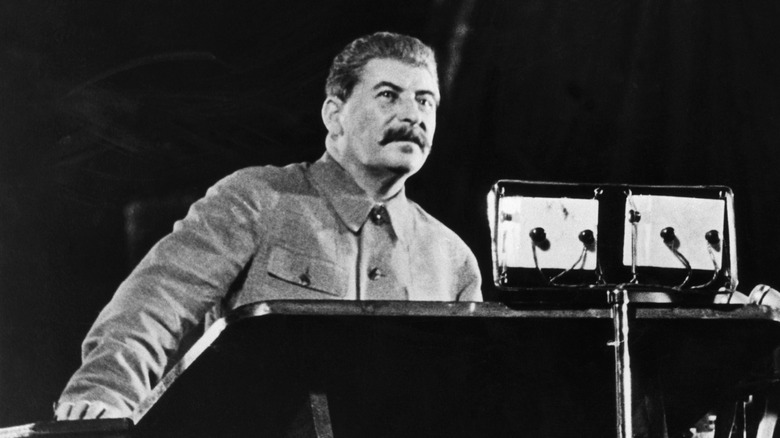
Lysenko's rise to power is a grim lesson in the dangers of fanaticism. The simple fact of the matter is that Lysenko achieved his prominent position by more or less sucking up to Joseph Stalin and the leadership of the governing Communist Party. He was known for making impassioned speeches in which he would praise Stalin and rally against anyone who questioned the government's directives and ideals. It was with Stalin's own approval that, in 1948, Lysenkoism was declared the only acceptable interpretation of genetics.
Most scientists in the Soviet Union knew that Lysenko was wrong, but due to his closeness to Stalin, opposing him was extremely dangerous. Many had their experiments overlooked or suppressed, and those were the lucky ones. Numerous scientists were killed during the Great Purge of 1936–1938, and countless others were sent to gulags. Lysenko's most prominent challenger was Nikolai Vavilov, an esteemed geneticist who encouraged scientists not to accept Lysenkoism and to explore other theories. For his opposition, Vavilov was ostracized from scientific sources and ultimately arrested in 1940. He would die of starvation in prison three years later.
Truth prevailed in the end, however. Stalin died in 1953 and was succeeded by Nikita Khrushchev, who shocked the world by denouncing his predecessor and pursuing an agenda of "de-Stalinization." Lysenko soon found himself ousted from the Soviet elite, and in 1964, the country formally discredited his work.