

Scientists Say Your Brain Might Not Be A Blank Slate At Birth. Here's Why

A persistent notion about the human mind is that we start life with a brain that is essentially empty and fill it as we experience life. The ancient Greek philosophers Plato and Aristotle considered the mind an empty tablet, waiting to be written on. Later, in the 17th century, English thinker John Locke wrote how the mind of an infant is a tabula rasa, or blank slate. But as science and technology have developed, so has humanity's understanding of how the brain works. And a 2026 study found that instead of being a blank slate, the brain's neurons are hyperconnected and these connections become sparser with age.
The study examined the brains of mice immediately after birth, during adolescence, and during adulthood to see how neurons in the brain connect with one another. The researchers focused on a network of neurons in the hippocampus known as cornu ammonis 3, or CA3. The hippocampus is a part of the brain that controls memory and learning, and CA3 specifically helps with storing and retrieving memories. The strength of connections between neurons in CA3 strengthens or weakens memories, something known as plasticity.
A hyperconnected network of neurons
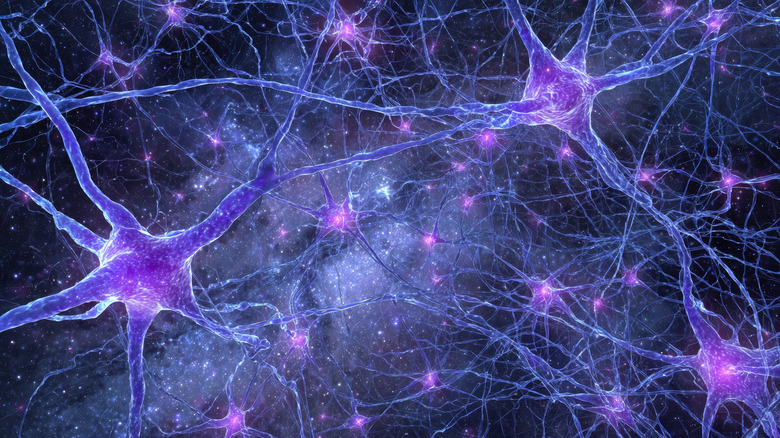
Memories of specific experiences are thought to be stored as networks of neurons in the brain that are connected and fire together. If the brain were a blank slate at birth, there would be few, if any, connections between neurons. Every time we experience something, neurons would connect to build new networks from scratch. However, a blank slate model raises questions about the human ability to acquire language and express and understand emotion even at an early age.
The research team found that the neurons in the newborn mouse brains were highly connected in a seemingly random way. As the mice got older, the connections between neurons became sparser and less random. This suggests some kind of pruning mechanism. They also found that the networks of neurons were more easily activated in the newborn brains. Because of this, experiences can cause connections between neurons that overlap with one another, making it hard to distinguish one memory from another. On the other hand, adolescent and adult networks needed more inputs to fire and networks were more clearly defined. This could explain why memory becomes more specific as we age and why people typically don't retain memories from early childhood; however, a different mechanism may explain why people suddenly forget familiar things.
The advantages of a pre-wired brain

Having a hyperconnected network in CA3 could be advantageous since the wiring needed to connect neurons and form memories is already formed. It's possible that these connections, as chaotic as they may seem, help with understanding sights, sounds, and smells, something crucial for postnatal development. In contrast, a less connected network of neurons would likely make it harder for young to communicate.
Being able to map every neuron in the brain and understand how the brain works at the cellular level is helping to reveal how the brain stores and retrieves memories. While this study shows that neurons in the brain are highly connected at birth, it doesn't fully explain how those connections form in the first place. The connectivity could be from a routine developmental process, but experiences before birth could also play a role in how neurons are connected. Additionally, more research will be needed to see if the changes in connections seen in the mouse study apply in humans as well. However, given the similarities in brain structure between the species and the way these findings are consistent with research on the way memories are formed, it's possible that the human brain is far from a blank slate at birth.