

Scientists May Have Solved The Mystery Of Why You Suddenly Forget Familiar Things
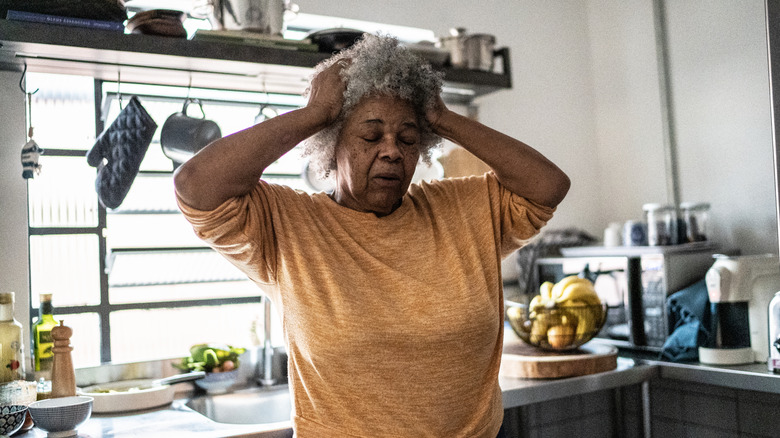
We're all familiar with déjà vu, the phenomenon of having the sudden and unsettling feeling of having already experienced a certain event or moment before. However, you may not have heard of the opposite experience, known as jamais vu, where something that should be very familiar momentarily drops out of your brain, leaving you feeling blank and confused for a few seconds.
The phrase jamais vu is French for "never seen," (whereas déjà vu means "already seen") and it is a recognized psychological phenomenon. Examples include suddenly feeling that a close friend or relative is unfamiliar or walking into a room in your house and feeling disoriented. One way you may have experienced it, but perhaps thought nothing of it, involves writing or typing a word you've always known, only to stare at it as though it has no meaning or is in another language.
This is not the same as memory loss, and it is no cause for concern as long as it happens very occasionally. However, regular occurrences similar to jamais vu should be discussed with a doctor, as neurologist Jean Khoury, MD, explains, "Episodes that happen more frequently or that last longer than a few seconds can be a red flag" (via Cleveland Clinic). As long as it happens with roughly the same regularity as déjà vu, there is no reason to be concerned.
Jamais vu is caused by a temporary miscommunication in the brain
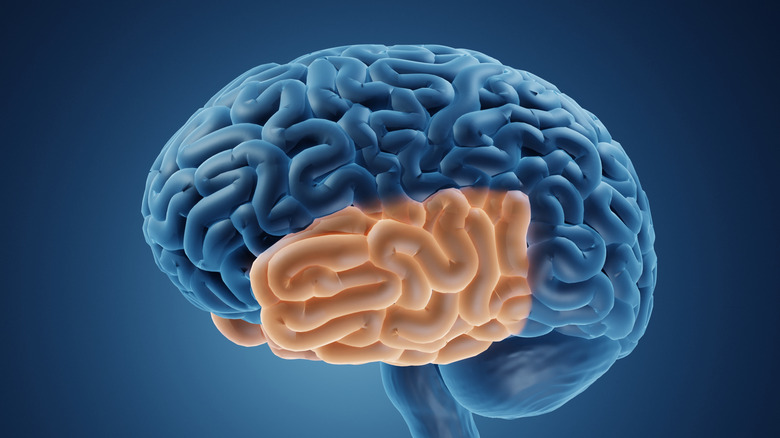
The reason that jamais vu is talked about alongside déjà vu, and named so similarly, is that they are a result of the same fleeting issue in the brain. The temporal lobes and hippocampus are two parts of your brain that are responsible for memory, and if there is a temporary blip between the two, the perception of old and new can be confused.
In the case of word alienation, scientists think that repeated exposure to a word can change the way the brain processes even a short, easy word, leading to us questioning whether the word is even correct. A study published in Memory in 2021 asked participants to repeatedly copy familiar words until they felt "peculiar." Two thirds of the participants began to feel strange after writing the word 30 times, or after a minute of copying. This is considered to be a form of jamais vu, and interestingly, the study also found that people who experienced déjà vu on a regular basis were also more likely to experience jamais vu, suggesting that some people's brains may be most susceptible to the random misfires than others'. However, there is also a chance that jamais vu is dismissed by many people as soon as it is over, as they assume it to be short term memory loss, and therefore cases of jamais vu are likely underreported.
Certain environmental factors can increase the likelihood of experiencing jamais vu
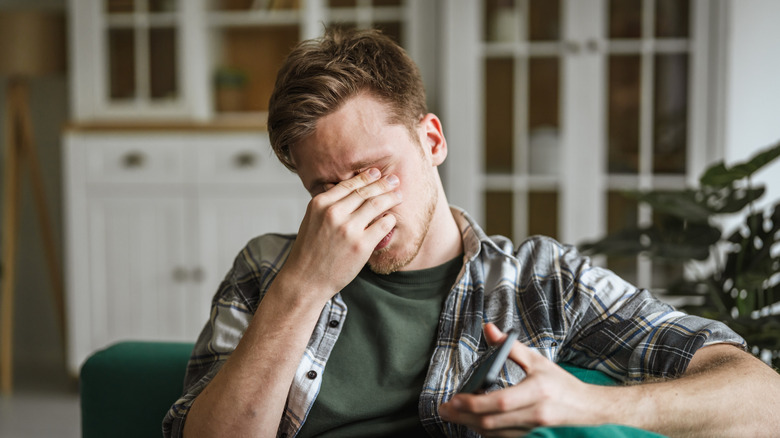
While jamais vu is a phenomenon that usually doesn't cause any concern, there are certain situations and environments that can make it more likely. If you have ever tried to concentrate on something difficult after pulling an all-nighter, you will be aware how exhaustion can affect memory and focus. Lack of sleep has similarly been associated with an increased chance of jamais vu occurring.
Stress and anxiety also play a part in triggering episodes of jamais vu, as the brain tries to cope under difficult circumstances. Dr. Jean Koury explains (via Cleveland Clinic): "It can be a protective mechanism. The brain detaches slightly from reality as a coping strategy." Medical conditions can also affect the likelihood of experiencing jamais vu. A study published in Epilepsy Research and Treatment, described how déjà experiences, including both jamais vu and déjà vu, are connected to temporal lobe seizures.
In most cases, jamais vu is a strange phenomenon that is a symptom of the brain having a temporary wobble in communication between two of the main memory components, causing you to doubt your own familiarity for a few seconds. It may be more unsettling that déjà vu, but it is essentially the same harmless experience, in reverse.