

What Scientists Know About Deja Vu That You Didn't (Until Now)

Deja vu means "already seen" in French, an apt description of that weird feeling we get when a situation or image seems so familiar but we can't quite pinpoint when and where we've experienced it before. Since the time of Plato, Aristotle, and Pythagoras, people have described feelings of deja vu. However, it wasn't formally characterized until 1876 when Émile Boirac put a name to the phenomenon. Fast forward to today and people still don't know for sure what causes deja vu. What has changed, though, is that scientists now have many theories to explain how deja vu occurs and some very thought-provoking data. In a similar vein, the creepy, unsettling nature of liminal spaces can be easily explained by science.
Most of the theories are centered around ways that the brain stores and accesses memories or on how the brain registers familiarity. The brain is a complex organ and we only understand a fraction of how it works, so it's difficult to point to any one theory as the "true" explanation for deja vu. Still, exploring some of the theories can help to provide insight into this common but fascinating phenomenon.
Theories that may explain the feeling of familiarity without the memory in deja vu
There are many theories about what causes deja vu, but several are particularly interesting. The dual processing mechanisms theory proposes that memories are stored and retrieved by two mechanisms: the memory recollection mechanism and the familiarity function. When these mechanisms are out of sync, deja vu occurs, producing a sense of familiarity without the associated memory.
Another theory proposes that information travels via two pathways to the brain cortex, where information is processed. The cerebral cortex is described in this article about what the parts of the brain control. When information passes through both pathways at a similar time, the brain processes it as one event. When the timing is out of sync, the brain may store the information as two separate events, one now and the other in the past.
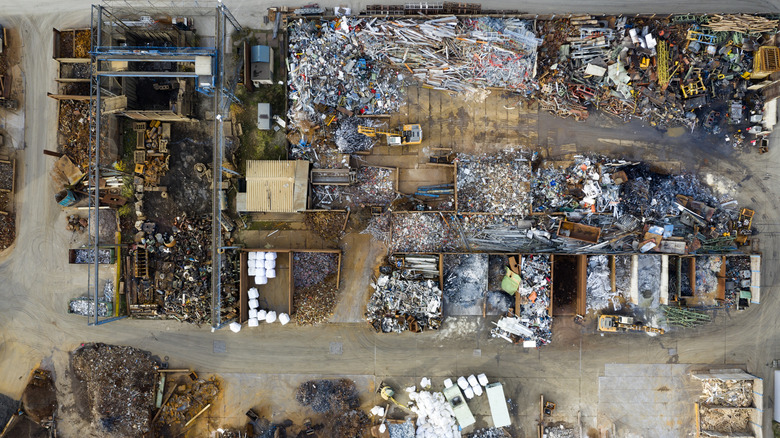
A third theory, the Gestalt familiarity theory, posits that deja vu happens when the configuration of elements in a scene is similar to that of a previously viewed scene. As described in Consciousness and Cognition, this theory was tested by presenting VR scenarios (videos) to college students. Each scenario had a corresponding scenario containing different features arranged in a similar configuration (e.g., a junkyard and garden with similar layouts). The students were more likely to indicate they experienced deja vu and a sense of familiarity when encountering a scenario spatially similar to one they had seen before. They didn't recall the specific past scenario but just knew that the new one was familiar.
Is the feeling that you can predict what's next just an illusion?

A particularly freaky aspect of deja vu is the feeling that you know what's coming next. The authors behind the VR study wondered whether these feelings of prediction were associated with an actual ability to predict future events. In a study published in Psychological Science, the researchers had college students view the same configurationally similar sets of VR videos that they used in their previous deja vu experiment. However, they cut short the second set of videos (the "test" set) just before the final turn and asked the students to predict whether the next turn would be left or right. They also asked whether the students experienced deja vu and if the scenarios seemed familiar.
Strikingly, students who experienced deja vu weren't able to predict the direction of the last turn any better than chance (50%), despite being more likely to feel that they could predict the future than those who didn't experience deja vu. Their perceived predictive ability may be as illusory as perceptual illusions.
These findings suggest that both deja vu and the accompanying feelings of premonition are memory phenomena that are influenced by familiarity. They may also dovetail with the idea that the purpose of memory may be more about predicting the future than recollecting the past. More research needs to be done but we can be sure about one thing: we will see deja vu again in the future.