

Scientists Say Using This Tiny Creature's Poop Could Help Fight Climate Change
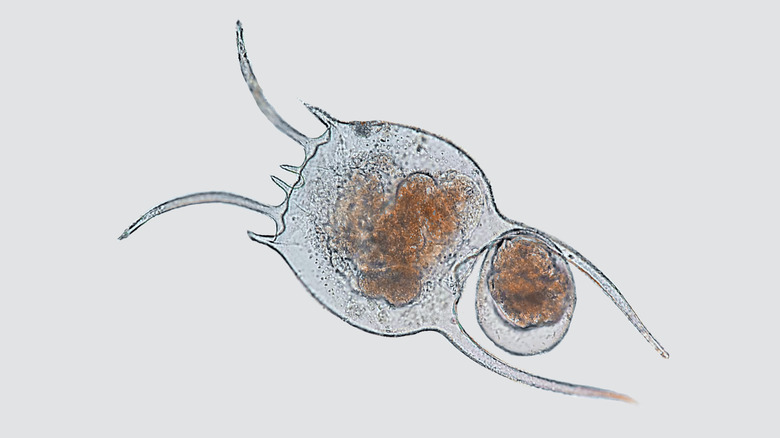
Human activity is the reason behind climate change, but the path towards fixing it isn't clear. Countries have made promises to cut back on emissions, yet most have failed to follow through. To make matters worse, deforestation from logging, forest fires, and agriculture (as well as hydroelectric dams) has destroyed many of the natural carbon sinks that pull carbon from the air. Some believe that industrial-scale air scrubbers will replace the carbon sinks we've lost, but researchers at Dartmouth have a more natural solution. In a 2024 study, the team demonstrated how spreading clay dust over the ocean surface can help turn dying algae into zooplankton food — which eventually traps the carbon into solid poop instead of greenhouse gases.
The surface layers of the oceans contain trillions of phytoplankton, a form of microscopic algae that performs photosynthesis (just like a plant) by converting carbon dioxide into useable energy. In fact, the ocean's phytoplankton are responsible for the biggest carbon sink on the planet, sequestering billions of tons of carbon dioxide every year. But most of that carbon doesn't stay out of the atmosphere for long. Oceanic algal blooms ebb and flow with the seasons (though this algal bloom rhythm has recently stopped in the Panama Sea). After a seasonal bloom, the dead and dying phytoplankton decompose into carbon particulates, which are eaten by bacteria and ultimately respired right back into the atmosphere.
To prevent this from happening, the Dartmouth researchers tested a way to encourage zooplankton to eat the carbon particulates before they could decompose into greenhouse gases. By spraying clay dust over the water's surface, the decaying algae's microscopic remains had something to attach to, and they clumped into the perfect size for zooplankton to eat.
How to use natural Florida clay to change the carbon cycle in our favor
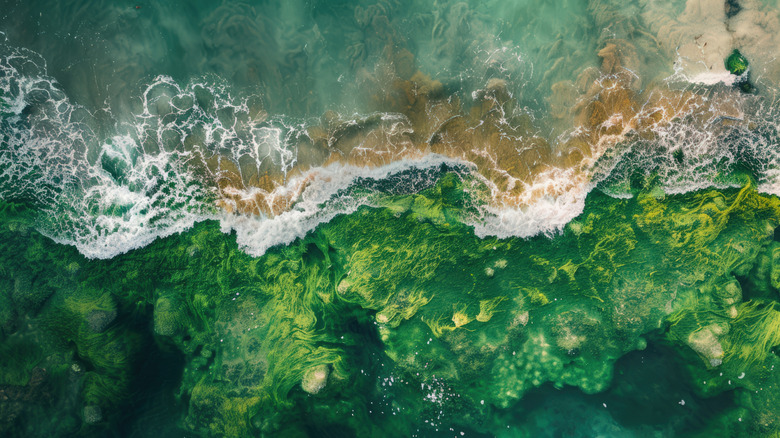
Photosynthetic producers capture carbon dioxide from the atmosphere to make energy. When they die, their decomposition process releases a significant amount of the carbon that they captured back into the atmosphere. For instance, phytoplankton absorb billions of tons of carbon dioxide from the atmosphere every year. Yet, roughly 80 to 90% of the carbon captured eventually makes it back into the atmosphere as a gas within a few years. Less than 1% of the carbon captured by phytoplankton gets locked away on the ocean floor.
Thus, the problem for the Dartmouth researchers was clear: How can you ensure that the dead organic carbon captured by phytoplankton remains locked in the ocean? The answer lies in another abundant type of microorganism: zooplankton. Zooplankton are tiny creatures that eat whatever floats their way. But the organic carbon released by dying phytoplankton is too small for zooplankton to bother taking a bite. Thus, the scientists sprayed clay dust, composed of natural silicates mined in Florida, over the surface of the water and waited. Soon, the bacteria clumped the carbon around the clay, forming chunks of organic matter that the zooplankton could eat. Critically, the zooplankton released these tasty clay-and-dead-algae meals as solid pellets of poop, which sank to the ocean floor.
The experiment was on a small, laboratory-controlled setting, so it's unknown if spraying clay over a waning algal bloom would make a difference on a larger scale. In any case, the climate crisis is upon us, and any insights into the ways our planet can heal are important. If the path towards reducing greenhouse gases includes slight tweaks to the global carbon cycle, so be it.