


Dan Taylor
Sciencing Editorial Policies
The unique content on Sciencing is a result of skilled collaboration between writers and editors with broad journalistic, academic, and practical expertise across the wide variety of scientific fields we cover.
In pursuit of our mission to provide accurate and ethical coverage, the Sciencing editorial team consistently fact-checks and reviews site content to provide readers with an informative, entertaining, and engaging experience. Click here for more information on our editorial process.
Stories By Dan Taylor
-

-
How To Do Cool Science Experiments With Rubbing Alcohol And Baking Soda
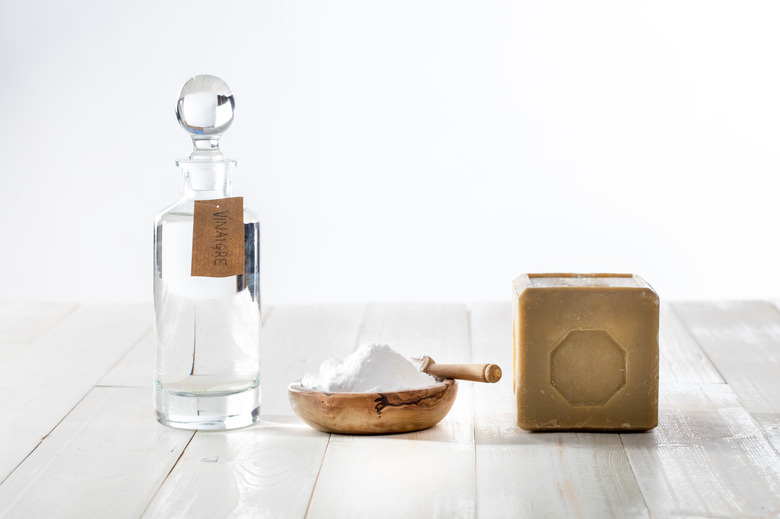
Kids are naturally curious, so it is good to spark that early fascination with science through creative experiments. Rubbing alcohol and baking soda are two substances that can form the foundation of several projects that will get kids thinking. Rubbing alcohol -- which is either concentrated ethanol or isopropyl alcohol -- and baking soda, also known as sodium bicarbonate, are two common household ingredients, making these experiments easy to set up and execute.
Read More -

How To Dissolve EDTA In Water
Ethylenediaminetetraacetic acid, or EDTA, is a colorless acid that the U.S. Food and Drug Administration has approved for treating lead and heavy metal poisoning, as well as hypercalcemia and ventricular arrhythmias. You can dissolve the acid in water by following a few steps.
Read More -

How To Identify Red & Black Striped Snakes
Snakes with red and black stripes can range from deadly poisonous to completely harmless, so it's important to be able to distinguish between different species. While bright markings on snakes generally indicate that you should keep your distance, some snakes only use their colors to ward off predators and will cause nothing more than a puncture wound if they bite. A few telltale markings are generally all you need to distinguish the venomous coral snake from nonvenomous red and black striped snakes.
Read More -

How To Convert Cubic Feet To Lbs
Converting cubic feet into pounds is not a direct calculation because cubic feet is a measure of volume and the pound is a measure of mass. A cubic foot of lead, for example, will weigh a lot more than a cubic foot of feathers. The key to converting volume into mass is to use the density of the object in the equation. If you know the object's density, you can convert its cubic feet into pounds with a simple calculation.
Read More -
How To Find The Mass, Density & Volume Of Gummy Bears
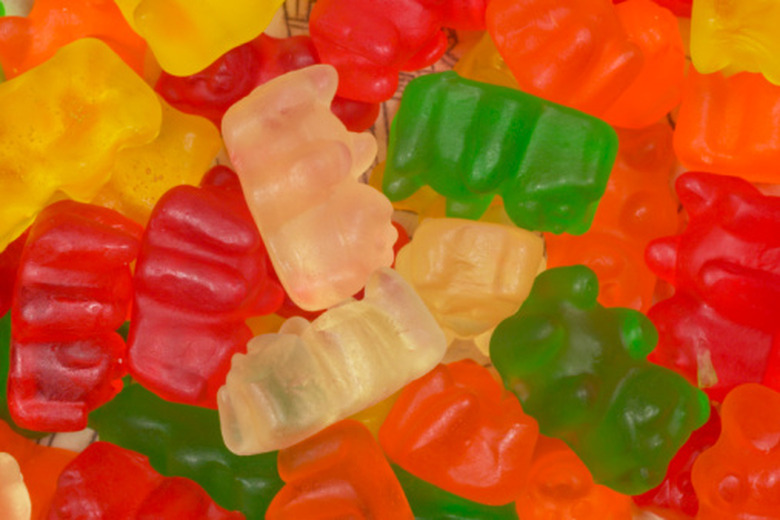
When teaching scientific measurements like mass, density and volume to kids in a classroom setting, gummy bears make good subjects because they are small and the kids can snack on them when they're done. Several classrooms have used this exercise to teach kids about measurements and as the first part in an experiment on how much the gummy bear changes in these measurements when soaked overnight in water. You can perform a few simple calculations to determine the mass, density and volume of a gummy bear.
Read More -

How To Convert BTU To MCF
How to Convert BTU to MCF. Converting British Thermal Units (BTU) to a thousand cubic feet (MCF) is helpful when performing energy calculations, but may seem tricky due to how different the two terms are. The gas industry uses the term MCF to represent one thousand cubic feet of gas, whereas a BTU is the measurement for how much heat is necessary to raise the temperature of a pound of water by 1 degree Fahrenheit. However, converting BTUs into MCFs requires just a simple calculation.
Read More


