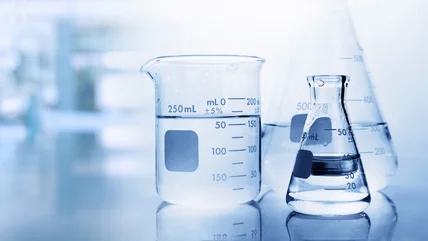
How To Calculate Water Volume
Calculating the volume of water can sometimes be a bit confusing, but there are some tricks you can make use of, and they make the whole process easier.
Read More

The unique content on Sciencing is a result of skilled collaboration between writers and editors with broad journalistic, academic, and practical expertise across the wide variety of scientific fields we cover.
In pursuit of our mission to provide accurate and ethical coverage, the Sciencing editorial team consistently fact-checks and reviews site content to provide readers with an informative, entertaining, and engaging experience. Click here for more information on our editorial process.
Calculating the volume of water can sometimes be a bit confusing, but there are some tricks you can make use of, and they make the whole process easier.
Read More
Reginald Punnett, an English geneticist, developed the Punnett square to determine the potential genetic outcomes from a cross. Merriam-Webster says its first known use occurred in 1942. Heterozygous plants have a dominant and a recessive allele (alternate form) for a given trait. The Punnett square shows the genotype of each plant in a test cross along either side of the square. It also demonstrates each intersection between these genotypes, which results in a potential genetic outcome of their pairing.
Read More
The alleles that make up the genes of an organism, known collectively as a genotype, exist in pairs that are identical, known homozygous, or mismatched, known as heterozygous. When one of the alleles of a heterozygous pair masks the presence of another, recessive allele, it is known as a dominant allele. Understanding genetic dominance, from its discovery to its related variations, is an important step in the overall comprehension of the transmission and expression of genetic material.
Read More
When you divide one number, or integer, by another, the resulting number from that division is known as the quotient. Evenly divisible numbers produce quotients of a round number. Other numbers, however, will yield a quotient followed by a remainder.
Read More
According to the Valence-Shell Electron-Pair Repulsion Model, widely accepted among chemists since its development in the 1950s, the repulsion between electron pairs shapes the molecule in such a way as to reduce the repelling energy, or maximize the distance, between those pairs.
Read More

Dividends and divisors are the two key ingredients that yield the quotient, or answer, to a division problem. The dividend is the number being divided, while the divisor is the number by which the dividend is divided. In other words, given a÷b, a is the dividend and b is the divisor.
Read More
Coefficients and subscripts are essential components when writing longhand chemical formula compounds or equations. A coefficient, reflecting the number of molecules in a given substance, is a number placed in front of a given molecule’s abbreviation. A subscript, however, reflecting each element’s atomic contribution to a given molecule, appears following or between elemental abbreviations and is typically smaller in size and set below the type line.
Read More
A mole -- abbreviated as mol in calculations -- is a unit of chemistry used to represent a small mass of any type of particle from atom to molecule. One mole of any particle is equivalent to its atomic weight, reported as u or grams per mole, as represented on the periodic table.
Read More
Cytokinesis is the division of one cell into two and is the final step following the four-stage mitotic cell cycle. During cytokinesis the nuclear envelope, or nuclear membrane, that encloses the nucleus’s genetic material remains unchanged, as it was dissolved and reformed into two separate membranes in an earlier mitosis phase.
Read More