

This Popular Plant Could Be Secretly Attracting Ticks To Your Yard
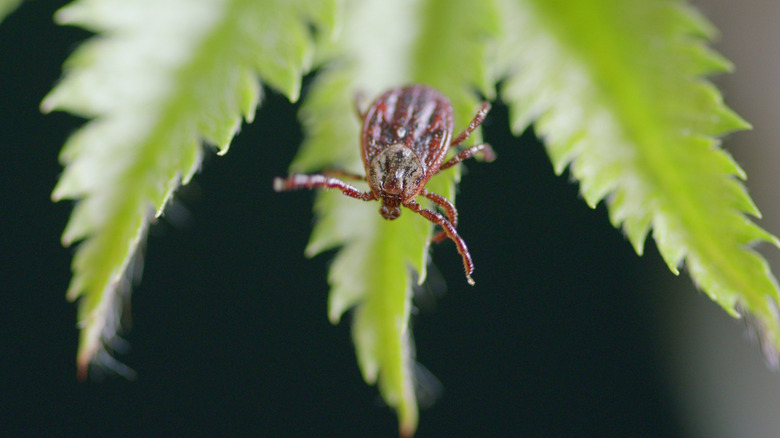
You may have heard that growing ferns in your yard is a good way to ward off ticks. The logic behind such advice is sound: White-tailed deer are the most common distributors and carriers of ticks, including deer ticks, and deer generally avoid grazing on ferns due to the plant's lack of nutrients and unpalatable texture. Thus, many people mistakenly assume that planting ferns in their yards will ward off deer and the ticks they carry.
However, in certain environments, ferns can actually be perfect breeding grounds for ticks. While the bitter plant doesn't attract deer, the dense, low-lying fronds of ferns do attract squirrels, mice and other rodents in search of a shadowy hiding spot. And ticks aren't picky. The parasitic arachnids will happily hitch a ride on any warm-blooded creature that brushes against it. To make matters worse, the many fractally-branching fronds of fern plants offer ideal perches for ticks to wait in ambush and latch on to a passerby.
Just as rodents prefer the shelter of ferns, so too do ticks. Ticks seek warm, humid environments to shelter in. Incidentally, ferns create miniature canopies close to the ground, trapping both moisture and heat under their interwoven fronds, where ticks can thrive. Adding to the attraction, some fern species are evergreen, so they can provide an ideal habitat for ticks to survive freezing winters. While there are a few ways to minimize tick infestations in your fern plants, it may be wiser to avoid cultivating ferns altogether.
How to reduce the risk of tick-borne illnesses in your yard
Ticks can spread some seriously nasty diseases. The most notorious tick-borne illness is Lyme disease, which can cause nerve damage and facial palsy if untreated. Its primary vector is the black-legged tick, or deer tick. Other tick-borne illnesses include anaplasmosis, tularemia, and babesiosis. Some tick bites even cause alpha-gal syndrome, an allergy to red meat. At least one tick-borne disease is present in every state of the continental United States, though the risks and specific diseases depend on the region.
Fortunately, you don't have to avoid ferns like the plague. The best way to reduce tick infestations in your ferns is by attacking the habitat that ticks prefer. That means trimming your fern plants regularly. By creating space in the fern "canopy," sunlight and wind can help dry out the ground beneath it and reduce humidity. If your ferns are planted in shady areas, such as the sides of houses, in alleyways, or under trees, consider moving them to sunnier, well-ventilated spots in the yard.
Other plants can aid in the fight against ticks. While ferns are particularly welcoming to ticks, any other low-lying weeds that may trap moisture and create shade should also be trimmed or removed. With the tick-friendly habitat eliminated from your property, you can choose plants that ticks and their carriers avoid, such as lemongrass, sage, lavender, mint, and juniper. Even onion grass is believed to help ward off ticks, so letting it grow in your lawn may help. Ticks serve an important ecological purpose, but that doesn't mean they're invited to live in your yard.