

The 13 Biggest Asteroids To Ever Hit Planet Earth
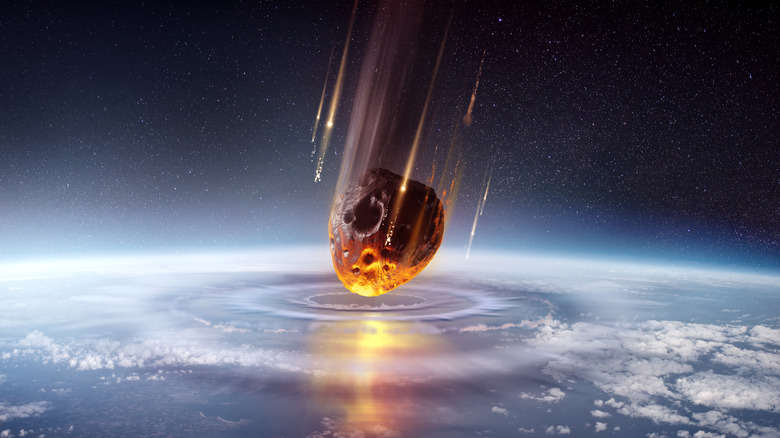
The idea of an asteroid hitting Earth can be a scary one, but it can be pretty hard to comprehend just how scary such an impact might potentially be. To put things in context, many people who have read about asteroids may be familiar with the 1908 Tunguska Event in Siberia, which leveled 500,000 acres of trees. The diameter of the asteroid (or possibly comet) that exploded in the atmosphere has been estimated to be up to 300 feet ... but it's still a tiny thing compared to some of the others that have hit our planet.
These days, NASA's Center for Near-Earth Object Studies is keeping tabs on asteroids and comets that might venture near our little slice of space, and its scientists are confident that no massive impacts are due in at least 100 years. Still, comparatively close calls have been known to happen: In 2022 alone, an asteroid big enough to destroy a city missed Earth in January and another one passed by Earth in August.
Low as their risk may be, asteroid impacts continue rank among the biggest threats to Earth from space, and pretty huge ones have hit Earth several times in the past. To learn more about the biggest impacts that science currently knows about, let's now take a look at some of the biggest asteroids that have hit our planet.
The Siljan Ring asteroid
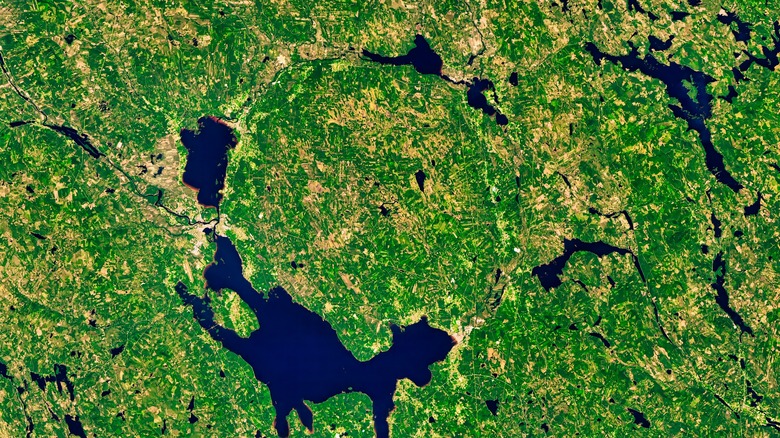
Sweden's picturesque Dalarna region hides a secret that can only seen from above. This formation known as the Siljan Ring consists of Lake Siljan and a handful of other bodies of water that form a clearly identifiable, circular shape.
The Siljan Ring consists of remnants from the most massive asteroid impact Europe has ever taken, as far as science knows. Formally known as the Siljan impact structure, the ring was caused by an asteroid that hit the area an estimated 380 million years ago. Sanna Almwark and her team from Sweden's Lund University have estimated that the full diameter of the Siljan Ring is a little over 37 miles, and the diameter of the asteroid that caused it was about 3.1 miles. This would have been enough to have destructive consequences on a global scale.
Apart from being visible proof of a hugely destructive event that took place hundreds of millions of years ago, the Siljan Ring is also a hotbed of research that has yielded interesting evidence of ancient lifeforms. Scientists have already drilled deep into the ground and found fossilized remains of fungi that used to live in the area.
The Chicxulub asteroid
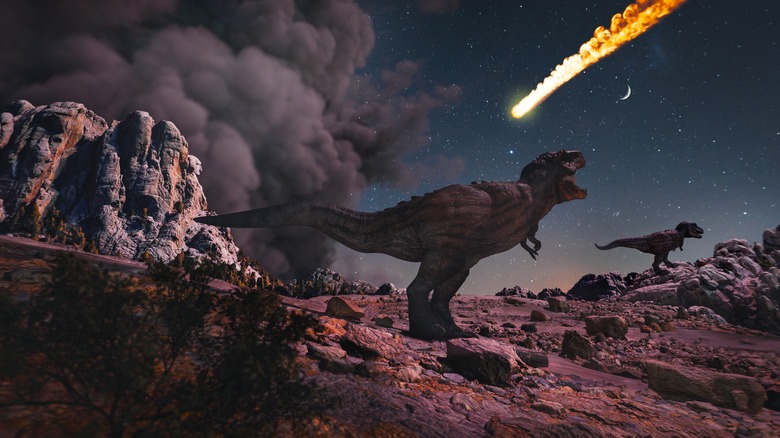
The asteroid that caused the Chicxulub crater is none other than the big, bad one that most readers probably knew to expect while diving in: Namely, the asteroid that heralded the end of the Cretaceous Period, thought to have caused the death of the dinosaurs. Well, the dinosaurs and roughly 80% of all other life, as well.
The 110-mile crater is located underwater near Mexico's Yucatán Peninsula, and marks the famous impact that happened 66 million years ago. The asteroid that caused it is thought to have been somewhere between 6 and 9 miles in diameter, which would have been more than enough to severely impact the planet's ecosystem and cause the so-called K-T Event: arguably the most famous of the five mass extinction events in Earth's history so far.
The impact was a perfect storm of destruction, as the asteroid hit the ground at just the right angle to spray the entire atmosphere with rock dust and gases that caused a dark, 15-year winter. Near the impact zone, things were even worse. The asteroid bored deep into the planet's crust so quickly and roughly that untold amounts of rock from deep within were suddenly hurled high into the atmosphere. Perhaps most impressively, an entire circular mountain range the size of the Himalayas formed around the crater and collapsed again ... in just three minutes. In other words, this was not a particularly good time to be a lifeform hanging out in the area.
The S2 impact
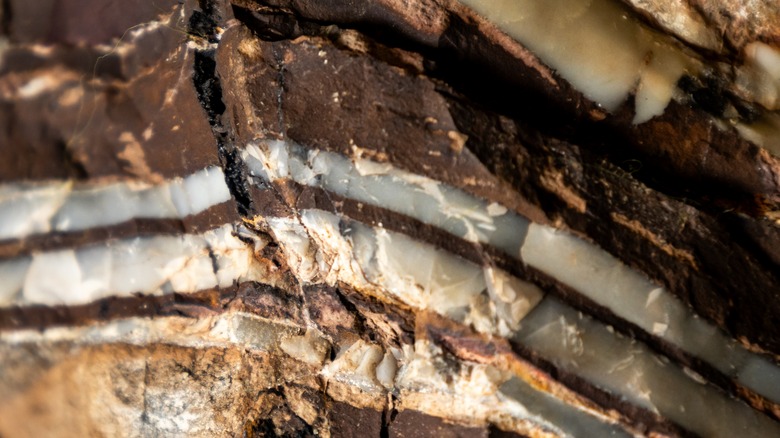
While the asteroid that killed the dinosaurs sounds impressive, there's some evidence that Earth has seen even worse than that. Evidence of a particularly destructive impact has been found on the Barberton Greenstone belt in South Africa. The object in question hit Earth some 3.26 billion years ago. It has been called both an asteroid (a rocky space object in orbit of the sun) and a meteorite (a piece of a larger asteroid that partially vaporizes as it hits our atmosphere). Still, at the end of the day, nomenclature doesn't change the fact that the thing that hit Earth was the size of no less than four Mount Everests. To put that in numbers, the object could have been as large as 37 miles in diameter — the same size as the Siljan Ring impact structure.
Apart from immediate physical destruction, something this big would have been enough to make the top layers of the oceans boil for up to decades, and turn the very atmosphere itself hot and dust-filled for an extended period of time. However, the long-term transformative effects of this so-called "S2" object could actually have yielded a net positive. Researchers think that the aftermath of the impact may have caused the ideal conditions for certain type of bacteria. This may have allowed early life not only to recover, but actually flourish in the wake of all the mayhem.
The Australasian Strewnfield impact
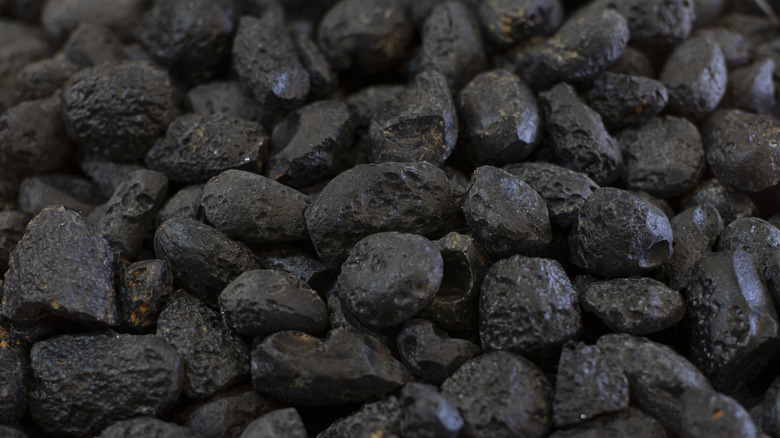
Certain types of tektites look like dark stones, but they're actually glass — namely, a very special kind of glass that forms when an asteroid hits Earth. Sometimes, these pebbles can be used to gather information about asteroid impacts that we might otherwise know very little about. One such investigation involves the so-called Australasian Strewnfield, which is a large area of tektites from a single impact event that covered some 10% of Earth with loosely-scattered tektites. It's thought that this particular impact may have been caused by a hefty object that landed in what's currently known as the Asian country of Laos, though much of this event's full nature remains unclear.
However, the same method has been used to discover a separate asteroid impact that may have happened relatively recently — "just" 11 million years ago. A very recent find publicized by the researchers at Curtin University in a September 2025 article, this impact created a strewnfield that's 560 miles at its widest point, which suggests a crater of at least 16 miles. Still, even this might be peanuts compared to that Laos crater, which some researchers suspect may one day turn out to be the largest one ever found on Earth.
The Vredefort Crater asteroid
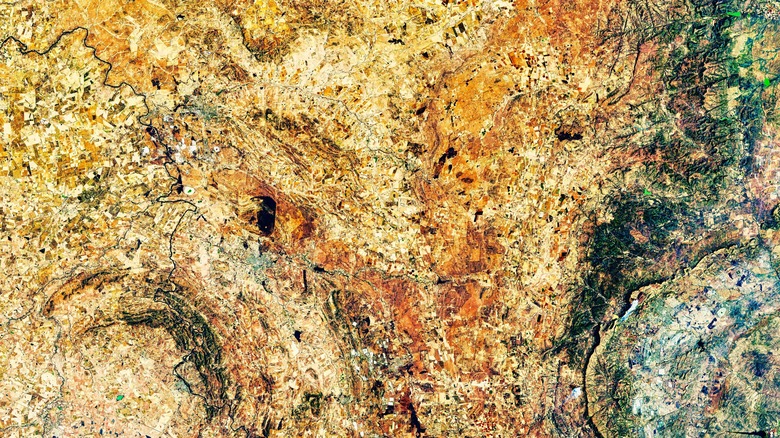
If we're talking about sheer size, it's hard to beat the Vredefort Crater in South Africa. This massive impact structure is what remains of a large asteroid that hit Earth around 2 billion years ago, thoroughly distorting the area's landscape in a matter of moments.
The Vredefort Crater is the biggest asteroid impact crater that we currently know of, even though it has been deformed and partially smoothed over by time and human activity. As you can probably expect, the object responsible for a crater as large as this was gigantic. Originally, scientists thought its diameter was somewhere in the 9.3-mile zone. However, recent researchers have discovered that the true size may have been closer to 15.5 miles. They also think that the asteroid must have moved significantly faster than originally thought in order to create the crater, which may originally have been up to 186 miles wide. This, of course, means that the asteroid would have caused even worse destruction than the Chicxulub impact.
The Popigai asteroid
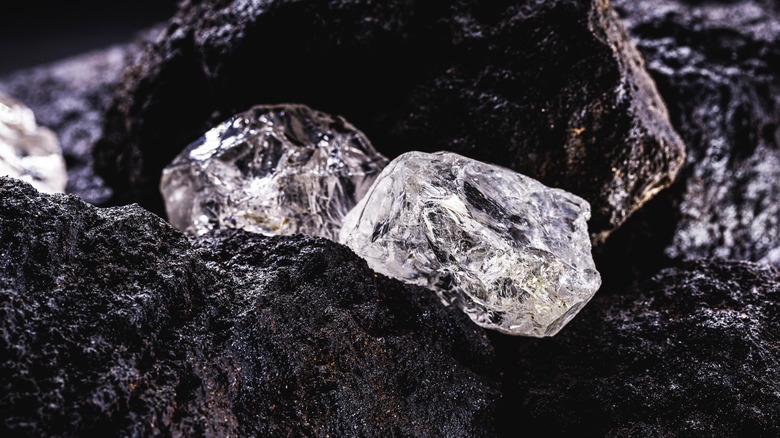
Sometimes, an asteroid brings more than a large crater and untold amounts of destruction. One such case took place around 36 million years ago, when an asteroid that measured up to 5 miles in diameter hit an area that's now known as the Taymyr Peninsula in Siberia. The debris-propelling impact created one of the largest impact craters on Earth, the 60-mile Popigai. Oh, and it also littered the area with precious stones.
The Popigai asteroid hit so hard that it instantly melted down an impressive 420 cubic miles of rock. What's more, the sheer forces involved accelerated the way diamonds are made to the point that the graphite in the nearby areas transformed into small diamonds. In effect, this created one of the largest diamond concentrations in the world in an instant. However, the Popigai diamonds aren't the kind of hefty gemstones one might imagine. Because of the violent and sudden way they were formed, they're tiny and fairly sub-par when it comes to quality.
The Chesapeake Bay bolide
Comets, meteors, and asteroids all have their own characteristics. However, sometimes it can still be difficult to look at a crater and determine just which of them caused it back in the day. Such is the case with the 25-mile-wide Chesapeake Bay impact crater, hidden under its namesake body of water on the U.S. East Coast.
Scientists aren't quite sure whether the up to 3-mile bolide that struck the area was an asteroid or a comet. Still, that's close enough to include it on this list, especially since the impact had such a profound effect on the area. The Chesapeake Bay bolide hit 35 million years ago, and it transformed the entire region in short succession. The impact changed the area's topography to the point that even the rivers altered their courses, which is understandable considering the sheer size of the dent it made on our planet.
Stac Fada
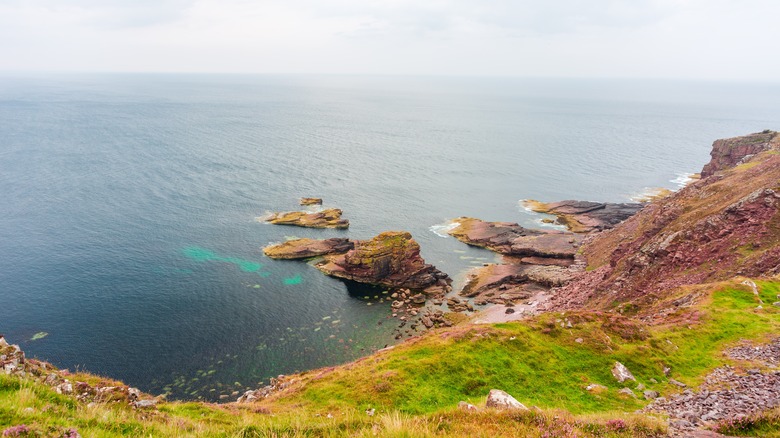
The Stac Fada impact is another one of those cases where the terms "asteroid" and "meteorite" tend to be used fairly interchangeably, especially in earlier reporting. Still, it deserves its place on the list because this particular object may have played a pretty important part in a little thing called the evolution of life as we know it.
Named after the sandstone deposit in Scotland that contains evidence of the impact, the Stac Fada impact was originally thought to have happened some 1.2 billion years ago. However, recent research indicates that the event may have actually happened just 990 million years ago. This is significant, because it coincides with a very specific time in the history of life on Earth – namely, the arrival of freshwater eukaryotes, which would eventually develop into ... well, everything. Flora, fauna, and funga all contain eukaryotic cells, which are an essential building block of life on our planet. Scientists are now looking into the possibility that meteorite and asteroid impacts in general could have given our planet's life occasional booster shots by creating conditions that nudged the ecosystem toward a particular direction.
As for the size of the Stac Fada object, it's estimated to be about 1.2 miles in diameter. While this makes it one of the smaller chunks of space rock on this list, its scientific significance makes it a worthy inclusion.
The Manicouagan asteroid
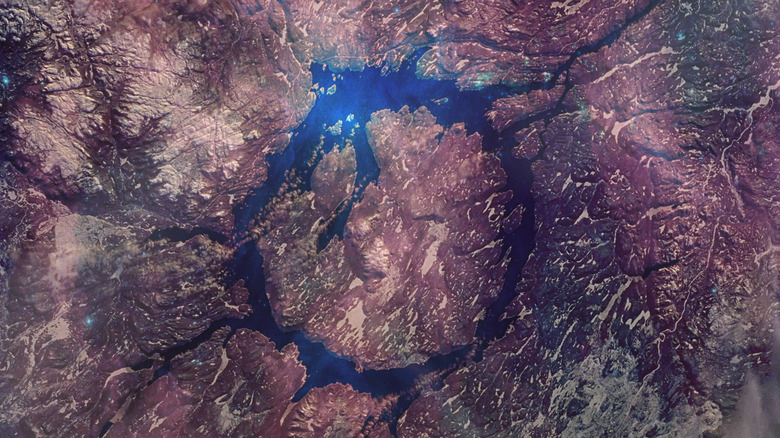
The Manicouagan impact structure is located in Quebec, Canada. Thought to have been formed when a 3.1-mile asteroid hit the area roughly 214 million years ago, its current diameter of about 43.5 miles is a touch larger than it originally was, making it one of the larger craters in the world. The ring, in fact, is so large that it can be seen from space.
Manicouagan is notable for the fact that it's not simply lying around as a memorial to a destructive event from days of old. Instead, humanity has found a way to put it to good use. In 1959, hydropower utility company Hydro-Québec started the construction of the massive Daniel-Johnson Dam on the nearby Manicouagan River. The dam was completed in 1968, measuring 703 feet tall and 4,311 feet long, and it turned the Manicouagan impact structure into a water reservoir that doubles as a handy salmon fishing spot.
The Deniliquin impact asteroid
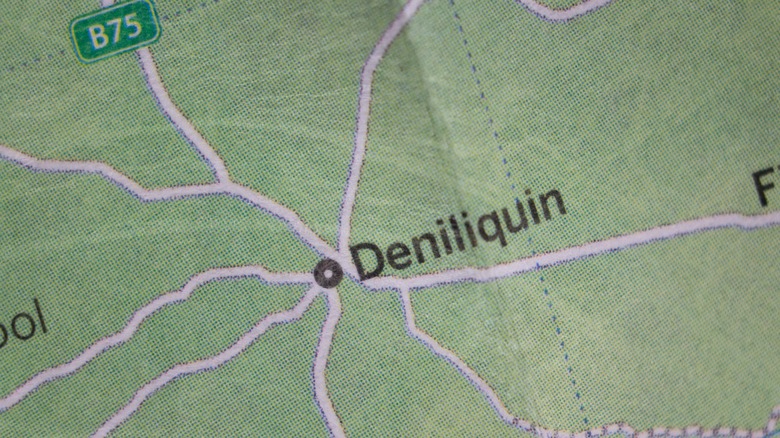
The thing about asteroid impacts is that there's been a lot of them — and as several examples in this article show, many of them are heavily eroded, buried, or even hypothetical. One of the more mysterious examples is the Deniliquin impact structure in what's now known as Australia.
In 2023, researchers found that the Deniliquin area in Southeast Australia showed signs of a ring-like structure that can very well turn out to be what remains of a very large asteroid crater. According to measurements of the area's magnetic zones, the impact structure could be up to 323 miles in diameter, which would make it the largest known asteroid crater yet — far bigger than the Vredefort Crater.
Actually uncovering the secrets of the Deniliquin impact structure may be tricky, though. The researchers studying the area fully recognize that surface-level examination isn't enough, and drilling is required to establish the potential crater's true nature.
The Morokweng asteroid
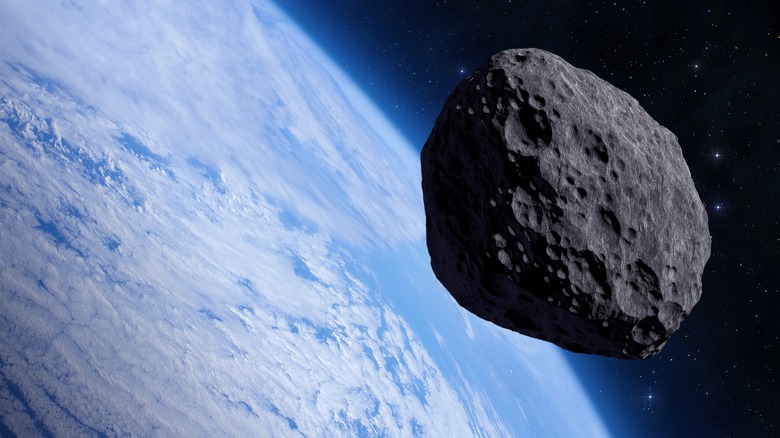
South Africa is the location of the ancient and gigantic Vredefort Crater, but it's not the only huge asteroid impact structure in the region. Somewhat smaller but far better preserved is the Morokweng Crater. This particular impact structure is located in the Kalahari Desert ... though its real areas of geological interest lie far under the surface.
The Morokweng structure is notable for the fact that researchers have actually found and retrieved parts of the ancient asteroid that caused it. When this space object hit the ground some 145 million years ago, it was somewhere between 3 and 6 miles in diameter, which puts its impact firmly in the global devastation end of the scale. However, the fossilized fragments of the asteroid that scientists have been able to recover from 2,500 feet deep have been considerably smaller, as the biggest one of them is just 9.8 inches.
The Acraman asteroid
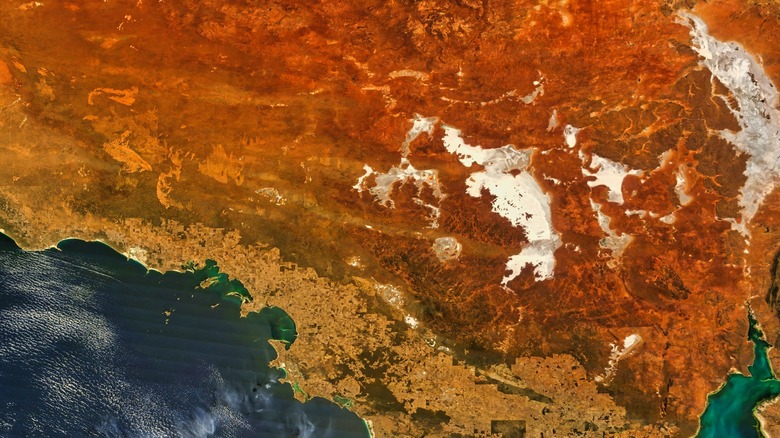
Some asteroid craters have the decency to look just about how you'd expect them to. The Acraman impact structure, on the other hand, has no time for such frivolities. This South Australian site is centered around the reasonably round salt lake known as Lake Acraman, but beyond that, the terrain is fairly rough and difficult to visualize as an impact structure. Experts think that the crater's inner ring could be 55 miles wide, which suggests an asteroid of an unconfirmed but likely pretty significant size.
Erosion has done a number on the Acraman impact structure, which is thought to be a little under 600 million years old. Research by G.E. Williams and Malcolm Wallace of the University of Melbourne suggests the asteroid that caused it could have been a global-scale problem both for the atmosphere and for the ecosystem. Some also suspect that the Acraman asteroid may also have contributed to the intense cold spell that the planet went through at this time. While this glacialization period spelled doom for some early life, the surviving lifeforms were incredibly sturdy and able to quickly take over once conditions improved.
Tookoonooka impact structure
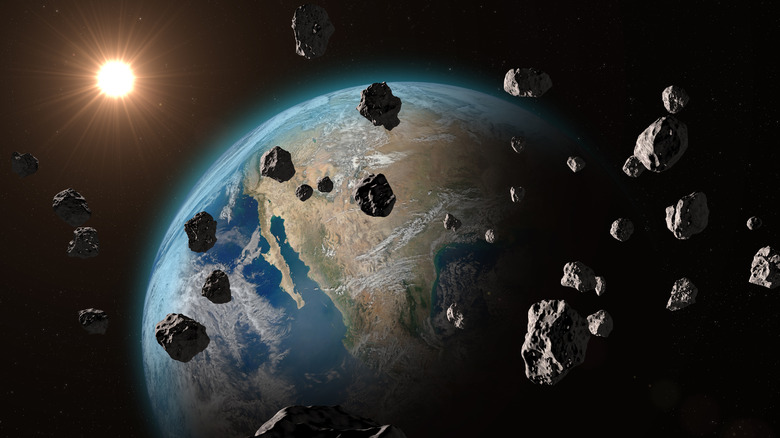
One of the more impressive pieces of asteroid impact evidence in Australia is the Tookoonooka impact structure buried deep within Queensland's Eromanga Basin. The truly interesting thing about Tookoonooka isn't what it is by itself, however. It's the fact that in the mid-2010s, researchers started to suspect that it's actually part of a set.
Back in the 1990s, researchers thought that Tookoonooka was around 128 million years old and buried some 3,000 feet deep. However, more recent information has hinted that it's actually just one part of a bigger asteroid, and the other one landed in the Australian Outback around the same time — up to 360 million years ago. It's also possible that a handful of other impact zones are related to the same event. Since the diameter of the Tookoonooka impact structure is 41 miles and its sister site Talundilly is even bigger at 52 miles, this would have been a pretty big bombardment that might potentially even have played a part in triggering the late Devonian mass extinction.
At this point, a reader might start wondering why Australia seems to host so much asteroid-adjacent activity. As it turns out, there's a reason for that. Australia is a very stable and ancient continent, which means some of its terrain has remained unchanged for 3.7 billion years. This stability means that researchers have been able to find over 170 asteroid craters, and it's entirely possible that more are on the menu.