

The Unexpected Reason Dinosaur Skulls Had These Bizarre Holes
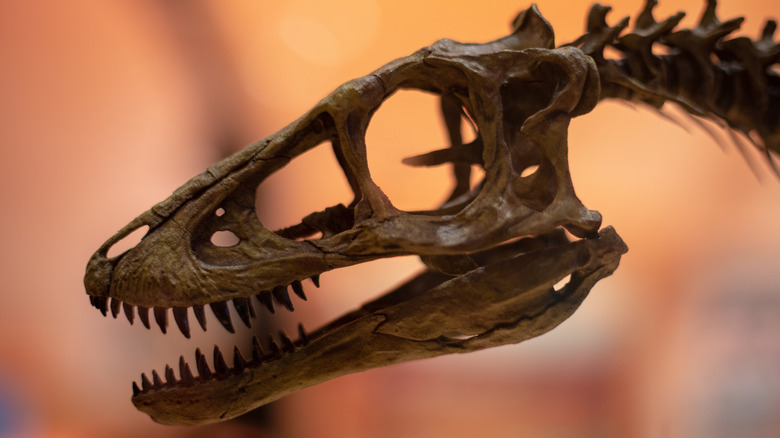
Dinosaur fossils reveal both insights and mysteries. One question puzzling paleontologists is the purpose of strange holes that are found in some dinosaur skulls. Many famous dinosaur species have the curious cavities. From some of the smallest dinosaurs to the massive Tyrannosaurus rex, evidence of unexplained holes in the tops of their skulls in an area called the frontoparietal fossa permeates the fossil record. Normally, skull cavities are for muscle attachments for things like chewing. But paleontologists have suggested a different explanation: it seems the frontoparietal fossa holes were used to cool off the brain.
A new study from the University of Missouri, Columbia, published in The Anatomical Record, argues that such skull holes are actually temperature-regulating vents. In other words, these dinosaurs had something akin to air conditioners built right into the tops of their heads, which would have been a useful feature for creatures that had yet to evolve the delicately calibrated warm-blooded homeostasis that we mammals enjoy today.
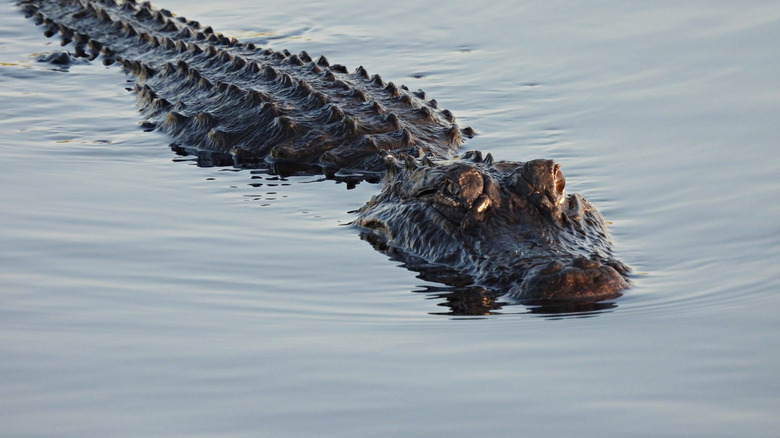
The theory makes sense when you consider modern equivalents. American alligators, which have been (inaccurately) described as living fossils, also have holes in the tops of their skulls to help regulate their body temperatures. And then there are birds, the closest living relatives to ancient dinosaurs. Wild turkeys, for instance, have holes in their skulls to help dissipate heat, so it's not a stretch to assume that their ancestors possessed the same physiological feature. In any case, it's clear that the bizarre holes found in dinosaur skulls weren't adaptations for chewing; the muscle fibers of their modern examples simply don't correlate with mastication muscles. With the muscle-attachment theory increasingly challenged, the University of Missouri researchers have landed on the only practical possibility — that dinosaur frontoparietal fossa holes were heat exhausts.
Comparing the past with the present
Most of the fossilized examples of skull holes come from the Mesozoic era, which occurred between 252 to 66 million years ago. The Mesozoic was the dinosaur's biggest run, from their rise to global dominance to their extinction. The dominant species of the time were reptiles, including dinosaurs and crocodilians. Across the era's timeline, several extinction events and global shifts took place. Nonetheless, for the most part, the Mesozoic climate was blisteringly hot, with estimates ranging from 6 to 9 degrees Celsius higher than today.
Dinosaurs weren't exactly cold-blooded, but they weren't warm-blooded, either. Instead, their metabolisms likely fell within a middle ground, in which some energy was spent to maintain a constant body temperature while also adapting to external temperature shifts. Dinosaurs like the Tyrannosaurus and Velociraptor would have had to regularly reduce their body temperatures, especially considering their active hunter lifestyles.
The researchers from the University of Missouri observed how the skull holes of modern alligators aren't empty. Instead, they're packed with blood vessels that carry warm blood from inside the skull to the skin. The team then used thermal imaging to confirm that these regions of the skull emit noticeable amounts of infrared radiation. Based on the evidence, it's clear that the skull holes in modern alligators serve to vent body heat. This discovery makes a strong case for the purpose of skull holes in dinosaurs, since alligators are direct descendants of dinosaur contemporaries, the ancient crocodilians. Still, such comparisons aren't definitive enough to eliminate all other possible explanations; some dinosaurs' skull holes may have served as fixtures for horns or blood-vessel ports for head ornaments. Whatever the case may be, the study exemplifies how we can learn about the past by studying the present.