

The Only US State Without The Black Widow Spider
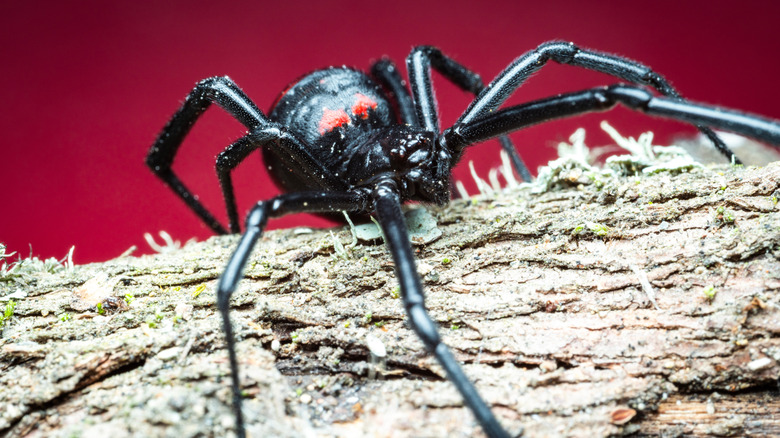
For many arachnophobes, the pinnacle of their fear is the infamous black widow spider, renowned for its painful, though rarely lethal bite. The black widow is actually just one member of the genus Latrodectus which are found on every continent except Antarctica and can be found in every country in North and South America. In the U.S., they're found in every state except one, so if you want to get away from widow spiders, you're going to have to move to Alaska.
The reason you won't find any black widow spiders living in Alaska is pretty simple: It's too cold. Most researchers believe that Latrodectus spiders originated in equatorial climates, and their physiology reflects that. A 2023 research paper quantified the thermal tolerances of three widow spiders present in the U.S. and found that only the western black widow could survive subfreezing temperatures, and then only down to around 30 degrees Fahrenheit.
The researchers discovered that the lowest temperature of the coldest month was a good predictor for the distribution of the species they were studying. Given that the average low temperature in Juneau, one of Alaska's more southern cities, is just 25 degrees Fahrenheit, the western black widow wouldn't be able to survive the winter.
How do Alaska's spiders survive the cold?
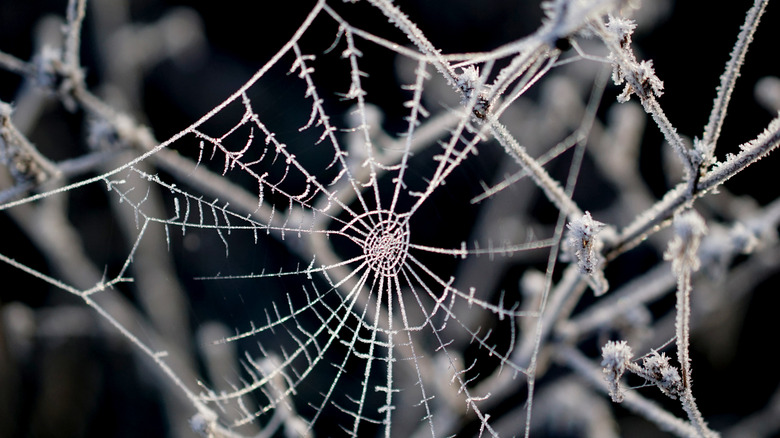
If you're already packing your bags for a move to Alaska, you'll probably want to know that it has plenty of other spider species that are specially adapted to the cold northern winters. The biggest spiders you'll find in the 49th state are fishing spiders and wolf spiders, both of which can grow to over 3 inches long, but neither of which have a particularly dangerous bite. In the United States, only the black widows and brown recluses are spiders that have bites that are considered medically significant, and neither of them live in Alaska.
When it comes to surviving the sub-zero temperatures, some spiders actually just don't. It's common for some spider moms to place their egg sac in a protected location in order for it to survive the winter while they die in the first frost. Other spiders enter diapause to survive the cold months, while yet others combine these strategies, with newly hatched spiders entering diapause while still in the egg sac.
At least three species of spiders in Alaska survive the cold by using special proteins in their hemolymph (spider blood) that act as antifreeze. These antifreeze proteins both lower the freezing point of their internal water, and limit the size that ice crystals can grow to, preventing cold-induced cellular damage. Alaska may not have black widows, but it does have some of the hardiest spiders in the world.