

Why People Are Spraying Their Patios With Vinegar (And Does Science Back It Up?)

Despite the numerous benefits spiders provide to our quality of life, most people don't want to live anywhere near them. Most seemingly dangerous spider bites aren't enough to send you to the emergency room, but they can hurt, and their webs make our homes look run down and dirty. Because of these annoyances, many people go out of their way to keep spiders away from their homes, and one of the most popular methods floating around out there is to spray patios and entrances with vinegar, but the science doesn't really back it up.
Nancy Miorelli of SciBugs told us, "While there's certainly a lot of anecdotal evidence that vinegar can repel spiders, it's not backed up by the scientific literature." She points to a 2025 study in particular that looked at the effects of 11 different chemicals (including vinegar) on invasive Joro spiders. Vinegar had the lowest lethality rating of all the chemicals tested, being responsible for the deaths of zero spiders. Further, it led to one of the lowest rates of web abandonment, meaning it wasn't particularly bothersome for the spiders either (though vinegar is good for getting pesticides off your fruit).
Of course, there could be more to the story. The vinegar used in this study had just a 5% concentration of acetic acid, "which is not likely enough to cause damage to spiders unless they're really small," says Miorelli. If you insist on using vinegar for your spider-fighting needs, you may need to up the concentration. A close relative of spiders, called the vinegaroon, or whip scorpion, produces a defensive spray of over 80% acetic acid, which is apparently enough to drive off a camel spider.
What's a good alternative to vinegar for spider control?
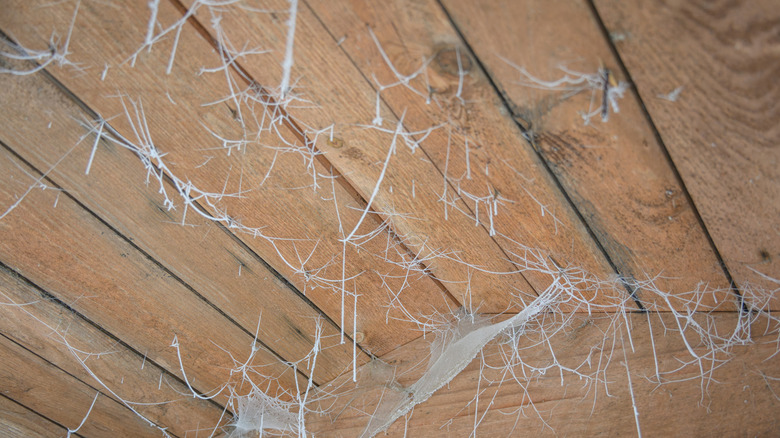
When it comes to killing spiders, there's not a lot of mystery. Commercial arachnicides use neurotoxins which disrupt nervous system signaling, leading to a rapid death. But when it comes to repellents, which is what vinegar is popularly believed to be, there's a lot more that we don't know than what we do know.
For starters, not much is known about how spiders interact with and respond to chemical stimuli. Whereas insects use their antennae to sense the environment around them, spiders use specialized hairs on their legs. "These little hairs have an open tip in which nerve fibers are exposed directly to the environment," says Miorelli. "We know that spiders can sense the chemical qualities of whatever they're walking on by simply probing it with their feet."
We also don't know why some chemicals repel spiders and others don't. For example, another 2025 study looked at the repellent properties of 10 essential oils on a small wolf spider. The research team found five oils that were effective (catnip, cedarwood, cinnamon, citronella, and clove), but also noted that the repellent effects weren't broadly applicable across all species. The authors further note that even though eucalyptus, lavender, lemon, peppermint, and tea tree oils (all pretty good methods of banishing flies) weren't effective repellents against their wolf spider, that doesn't preclude them being effective against another species. In other words, we still have a lot to learn.