

You've Been Warned: Going To Sleep With Wet Hair Could Be A Bad Idea
We may receive a commission on purchases made from links.
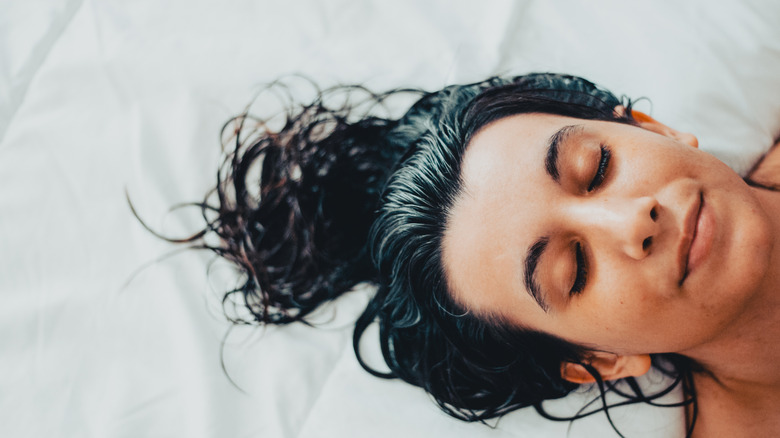
Sometimes a nice warm shower can be a wonderful way to relax before going to bed. It can almost feel like washing the stresses of a long day down the drain, as the steam nearly lulls you to sleep. But if washing your hair is part of this ritual, there is the downside of sleeping with wet hair. In addition to minor annoyances, such as waking up to a damp pillow, not drying your hair before going to sleep can result in other issues. While not necessarily a risk to overall health, it can mean damaged hair. For anyone who has experienced damaged hair, it is devastating. So, how can this happen? And what steps can you take to protect your lovely locks?
The primary risk to worry about when going to sleep with wet hair is breakage. This is because wet hair means weaker hair. Strands of hair are composed of dead epithelial cells that have been keratinized. Essentially, as new cells are formed in the hair bulb, which is the living portion of the hair within the skin, these cells are filled with a hard protein known as keratin. This works to harden the cells, and as new cells continue to form, these keratinized cells are pushed out. This is the portion we see as hair.
How water weakens hair
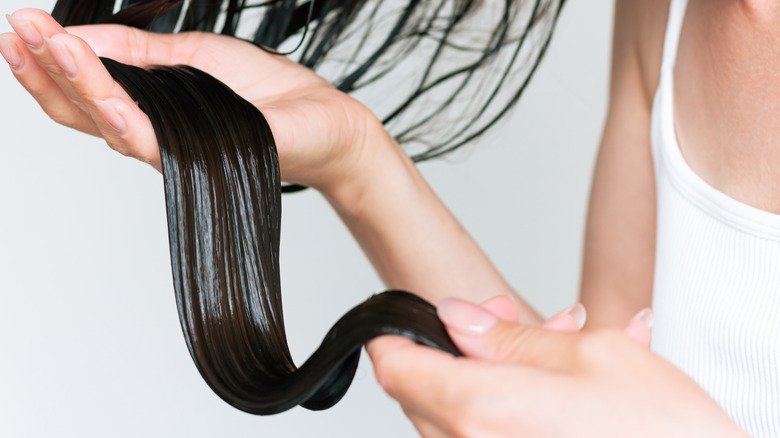
One of the chemical bonds involved in holding together the molecules that compose your hair is a hydrogen bond, which is relatively weak. Water molecules are excellent at forming hydrogen bonds themselves, so they basically sneak in and form more of these weak bonds with the hair. This is also why you might notice a change in your hair texture when it is wet. This makes the hair more susceptible to breakage because there aren't as many bonds holding it together. Think about it like diluted glue: There is still some stickiness, but the hold is less strong.
This weaker hair can be an added problem when going to sleep, as you are introducing friction from contact with your pillow into the equation. Water encourages lifting of the hair cuticle, which is the protective layer of proteins on the outer portion of each strand. This leaves the hair shaft more vulnerable to tearing. Some light tossing and turning could result in damage, leading to split ends and rough-feeling hair. Additionally, as you move about in your sleep, your hair can tug against the fabric, pulling it beyond its natural point of elasticity. This can likewise damage the cuticle.
How to take care of your hair before bed

Overall, introducing water to hair makes it more vulnerable. Combining this with mechanical stress as the hair tugs and moves across the fabric of your pillow can easily lead to damage. However, this is not the only thing that you want to avoid when going to sleep with soaking wet hair. That damp environment that you are creating while you catch up on rest is an ideal resort for some bacteria and fungi. While many microbes are perfectly harmless, there are some that can cause issues, including scalp infections.
There are steps that can reduce these problems. First, if you have the time and energy to dry your hair before bed, do it. However, keep in mind that heat can also cause hair damage. Yes, it's all very finicky. So, try to dry your hair without heat, using a blow-dryer on a cool setting, or use a thermal protectant product.
There are also ways to reduce friction. Try using a microfiber towel or a t-shirt to absorb some excess water since these are not as tough as a typical towel. Another tip is to sleep with a satin or silk pillowcase. Your hair is less able to catch on these fibers, allowing for more ease of movement and less friction. And, speaking of pillowcases, whether or not you sleep with wet hair, wash them regularly. This can help prevent the buildup of harmful bacteria and keep your scalp safe.