

NASA Has Big Plans To Return Humans To The Moon
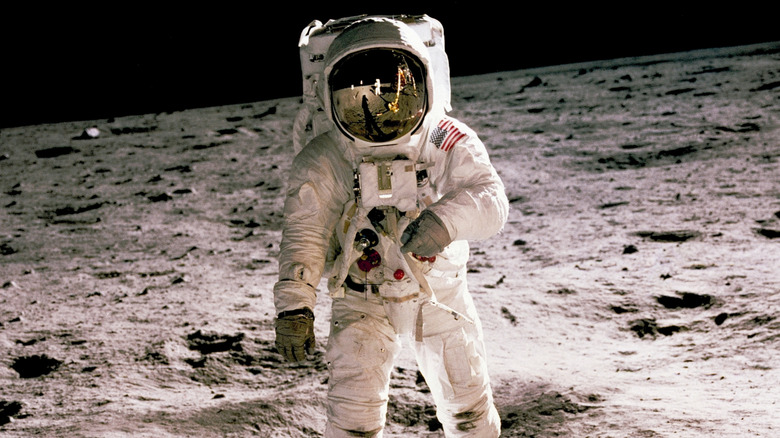
The universe is a massive place, and NASA is an organization that does exactly what it stands for: explores the unknown in space. While more than 290 astronauts have gone into space and been working on the International Space Station for years, humans haven't gone back to the moon since 1972 because of money and politics. That's about to change as NASA's Artemis program progresses.
Basically, the Artemis program, named after the Greek goddess of the hunt, is NASA's plan to put humans back on the moon again, but it's more ambitious than Project Apollo. The organization intends to build a permanent base on the lunar south pole where it can conduct scientific research and examine the effects of living on another world over the long term. Through partnerships with international space agencies and companies, the Artemis program includes a series of planned flights to prepare for eventual moon landings.
The first test flight, the Artemis I, was conducted in 2022 without a crew. Its mission was to test NASA's Exploration Ground Systems, deep space rocket, and Orion spacecraft. During the flight, the Orion journeyed almost 270,000 miles past the moon, beyond where any spacecraft intended for carrying humans has been before. Its success demonstrated that the organization's technology is ready to take astronauts on moon missions.
Future Artemis flights and moon landings
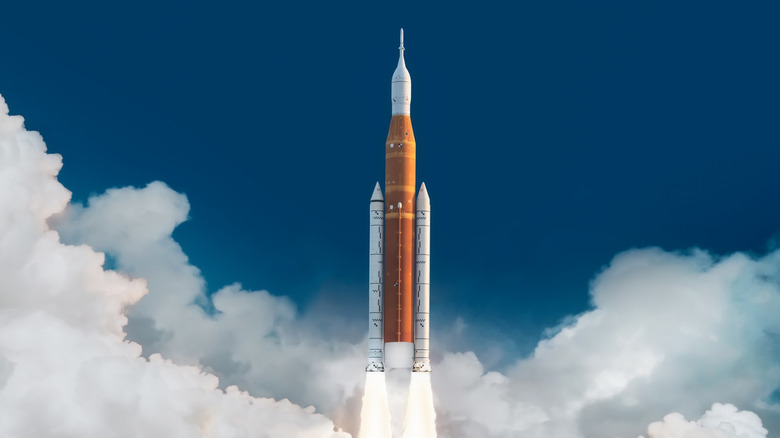
Continuing the plan, NASA is set to launch the Artemis II in April 2026 with four crewmembers. Their mission this time is to fly around the moon without entering the moon's orbit, traveling more than 4,000 miles beyond the celestial body — exceeding even the distance of Artemis I's journey. During this second test flight, scheduled for 10 days, NASA's Exploration Ground Systems, Space Launch System rocket, and Orion spacecraft will be put through their paces. It's the ideal opportunity for the crew to examine the Orion's life-support systems for future flights.
Also, NASA has announced that it's increasing the frequency and regularity of its flights. This includes accelerating its Artemis III flight from late 2028 to mid-2027, during which it will rendezvous and dock with SpaceX, Blue Origin, or both commercial landers. Building on the previous flights, a series of robust tests will be performed, too, involving advanced spacesuits, the human landing system, and other operational capabilities while in a low orbit around Earth.
The Artemis III flight was originally supposed to include the first landing on the moon in more than 50 years. However, that task was pushed back and scheduled for the Artemis IV mission in 2028. It's probable that the landing flight will still last about 30 days. Meanwhile, the landing itself will likely involve two of the four crew members spending about one week near the lunar south pole — joining the likes of the first men on the moon between 1968 and 1972 — as the other two wait in the moon's orbit for their return. More about that mission will be confirmed as the launch gets closer. Upon its successful completion, NASA plans to make one moon landing every year from then on.