

What Iran's 'Black Rain' Could Do To The Human Body
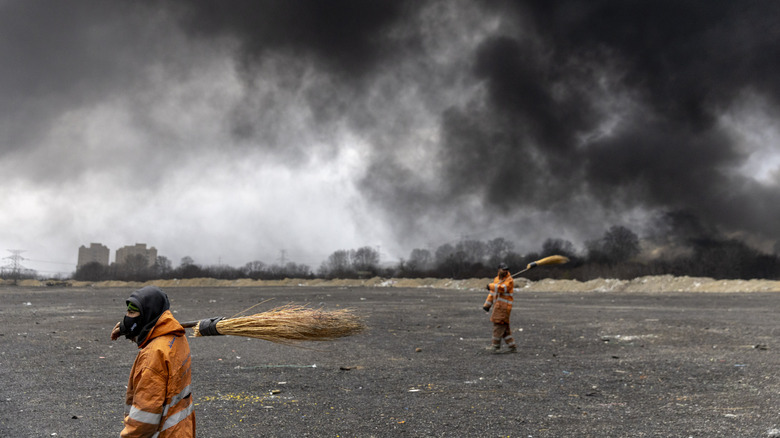
During the night of March 7–8, 2026, the U.S.-Israeli war escalated against Iran with attacks on 30 oil facilities that the country was using for military operations. This strategy has already had a major impact on the environment, sending clouds of toxic, black smoke into the air as the resulting large fires raged. Soon after, the pollutants fell over nearby cities in the form of black rain (also called acid rain). Since then, the World Health Organization and other experts have warned about the effects it can have on people's health.
WHO spokesperson Christian Lindmeier said during a United Nations Geneva press briefing, "The black rain and the acidic rain coming with it is, indeed, a danger for the population. Respiratory, mainly, and it could be acidic depending, of course, what context you have. Additionally, the rainfall mixed with toxic pollutants would be extremely dangerous ... with strong acidic properties and could cause chemical burns to the skin and serious damage to the lungs."
Johns Hopkins Bloomberg School of Public Health researcher Marsha Wills-Karp tells The New York Times that people near a burning oil facility may show early symptoms of suffocation. These include increased heart rate and breathing, dizziness, headaches, and the sensation of not being able to get air. As the body instinctively tries to protect itself, many people will cough in an attempt to keep the chemicals out. Additionally, some people could experience eye and skin irritation as they come into contact with the toxins. However, these negative health effects of acid rain on humans aren't limited to those in nearby cities, because the wind can carry the pollutants for miles and even across the border.
The potential long-term effects of black rain

While the immediate health effects of black, toxic rain are the primary concern for people living near Iranian oil facilities that were attacked, the pollutants can cause long-term effects as well. WHO spokesperson Christian Lindmeier explained during the U.N. Geneva press briefing that there was a "massive release of toxic hydrocarbons, sulfur oxides, and nitrogen compounds into the air" and that "Iranian authorities have issued an alert advising people to stay indoors."
Although authorities are doing what they can to reduce exposure risk and protect the communities, indoor isolation won't fully prevent it. Outdoor pollutants regularly infiltrate indoor areas, and being exposed to the chemicals for lengthy periods in such a situation can have long-term consequences for people's health. For instance, The University of Melbourne Department of Chemical Engineering associate professor Gabriel da Silva writes in a news article that exposure to the toxins has the potential to increase people's risk of cancers, neurological problems, and cardiovascular conditions because the particles could enter the bloodstream after they are inhaled. Elderly individuals, children, and people with preexisting lung and heart conditions are particularly at risk.
Also, the risk is exacerbated by indirect exposure as acid rain enters the water cycle via snowmelt and runoff. Along with contaminating drinking water, the chemicals can get into the soil, polluting the food supply. Retired Queens University at Kingston professor and ecotoxicologist Peter Hodson told CBC News, "The contamination of plants and soils and water present the possibility of a chronic exposure, and the unknown effects of an acute exposure, to things that we just don't know about." Additionally, the effects of acid rain on plants and animals can have a domino effect that impacts the entire ecosystem.