

What Happens When Fuel Depots Burn For Days After Airstrikes
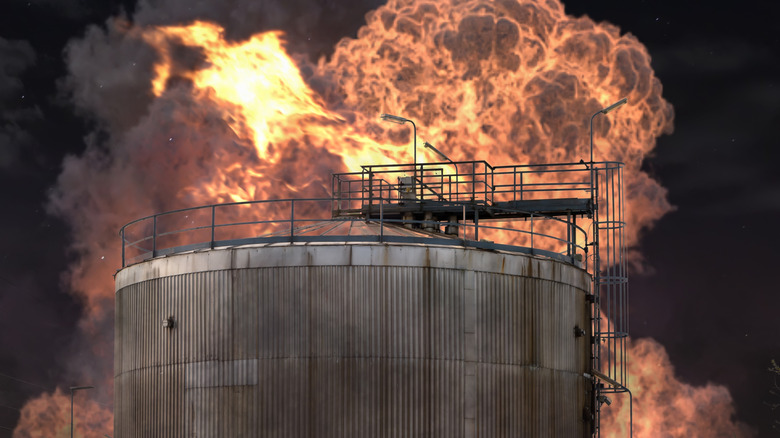
In early March, it was confirmed that the 2026 U.S.-Israeli attacks on Iran had ignited oil depots near Tehran. At least four separate depots were struck, making the spread of the contamination vast. In terrifying testimonies, residents have described life in the shadow of burning petroleum, saying the entire city smells like fire and the light of the sun has been blotted out from the sky by black smoke. But the biggest danger of so much exposure to the toxins occurs inside the body.
The first noticeable affront from the burning petroleum comes in the form of acid rain. Typically, acid rain forms in cities with smog — though Tehran's acid rain will be a lot more concentrated and a lot more damaging. As the depots burn, they'll release a mix of extremely hazardous pollutants into the city's atmosphere, while more solid debris will drift down into the city proper. When clouds mix with that air pollution, they absorb airborne compounds, primarily sulfur dioxide and nitrogen oxides, and become acidic. Then, when those clouds precipitate, the resulting rain is acidic enough to erode statues, corrode metals, cripple public infrastructure, ruin crop soil, acidify waterways, and kill wildlife. It can also kill humans.
While acid rain isn't harmful to the skin, it does produce harmful airborne particulates which, when inhaled, can cause cardiovascular damage and even fatal heart attacks. The Environmental Protection Agency states, "Many scientific studies have shown a relationship between these particles and [their] effects on heart function, such as heart attacks ... and effects on lung function." Such are the immediate risks of acid rain as it's falling, while the long-term effects are arguably worse.
The environmental health costs will last generations
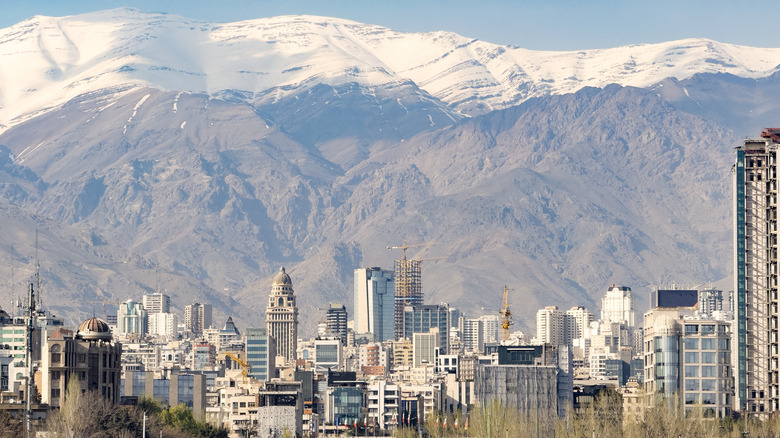
The exact chemical profile of Tehran's burning depots can't be ascertained for certain, at least not without getting close to an active warzone. Still, experts predict that the pollutants released by the burning fuel are several orders of magnitude deadlier than the acid rain that commonly falls in polluted cities like New Delhi or Beijing. They've even upgraded the super-polluted plume over Tehran to the informal status of "black rain." The ongoing crisis has been compared to a refinery explosion, which often leaves exposed communities with higher rates of cancer.
In fact, refineries release toxic chemicals into nearby communities even when they're operating normally. According to data collected by the EPA, many of the pollutants released by refineries have been shown to cause cancer, cardiovascular disease, neurologic diseases, reproductive dysfunction, and other potential harms. These refinery pollutants include high quantities of benzene, nitrogen oxides, methylene chloride, toluene, and methylene (all of which are carcinogenic); the same chemicals threatening the skies of Tehran.
To make matters worse, Tehran's geography is shaped like a bowl, which leads to temperature inversions. This meteorological geometry traps the air pollution over the city and prevents it from dissipating into higher atmospheric layers. Consequently, the only direction left for the toxic cloud emanating from Tehran's burning oil clouds to go is down. The aforementioned carcinogenic chemicals will inevitably enter the lungs of the residents and the water cycle of Tehran. Pending clean-up measures, increasingly more Tehrani residents will become casualties of the international conflict.