

The Popular Supplement That Might Help Reduce High Blood Pressure

According to the American Heart Association, high blood pressure is the single-most preventable risk factor in cases of cardiovascular disease and kidney disease. Recent research has even indicated that this health issue can cause cognitive decline and dementia because of the damage it can cause to small blood vessels in the brain. That's part of the reason the American Heart Association published new blood pressure guidelines in August 2025, stressing the importance of prevention and early treatment. While a HEPA (high-efficiency particulate arrestance) air purifier is an unexpected home appliance that could lower blood pressure, it might be surprising that a magnesium supplement could do the same.
An analysis of studies published in 2011 in The Journal of Clinical Hypertension found that adding 500 to 1,000 milligrams of magnesium to your diet every day has the potential to reduce blood pressure. While the results of that research were inconsistent, another study of 11 trials published in 2017 in The American Journal of Clinical Nutrition had more consistent results in individuals with insulin resistance, prediabetes, and other noncommunicable chronic illnesses. It found that doses of 365 to 450 milligrams a day significantly reduced diastolic and systolic blood pressure compared to the control group that didn't receive the supplementation.
Meanwhile, an analysis of 38 randomized controlled trials published in 2025 in Hypertension found consistent yet modest results regarding the effect of magnesium supplements on blood pressure. More than 2,700 participants were involved in the trials, and those with hypertension and hypomagnesemia experienced notable reductions in blood pressure while normotensive participants did not.
How magnesium lowers blood pressure
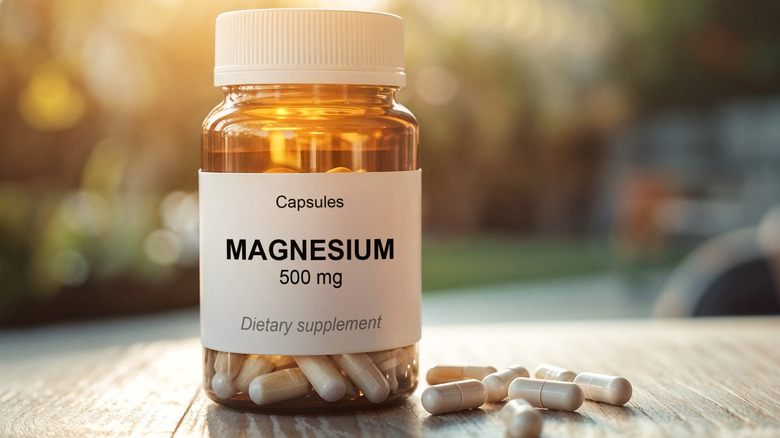
There are five key ways that magnesium works in the body to reduce blood pressure. The first is by acting like a calcium blocker, preventing it from entering cells in the blood vessel walls. As a result, the muscles around the blood vessels relax, making them wider so that the pressure decreases. The second is that magnesium competes with sodium for a spot on the blood vessel cells, which also prevents the vessels from tightening up.
Thirdly, magnesium stimulates the body to make relaxing chemicals like prostaglandin E1 (PGE1), prostacyclins (including endothelial prostaglandin I2), and nitric oxide. These chemicals cause vasodilation (widening blood vessels), which improves blood flow. Fourthly, magnesium regulates other minerals like calcium, potassium, and sodium so that blood vessels stay healthy and flexible. Finally, magnesium regulates artery stiffness, cardiac rhythm, insulin sensitivity, pH levels, and the renin-angiotensin-aldosterone system (RAAS). Meanwhile, it suppresses activities in the body that make the vessels tighten.
Because of these inner workings and promising research, the FDA announced in 2022 that food companies and supplement manufacturers can make qualified health claims on their packaging to note that magnesium "may reduce the risk of high blood pressure (hypertension)." However, they must also add that "the evidence is inconsistent and inconclusive" or similar wording. You should also keep in mind that there's more to the effectiveness of increased magnesium intake.
Magnesium alone may not be enough to lower blood pressure efficiently

Although more studies are needed, it appears that many types of magnesium can lower blood pressure. The magnesium oxide and magnesium asparate-HCl analyzed in The Journal of Clinical Hypertension study provided significant decreases in blood pressure. Meanwhile, the successful blood pressure reduction in certain individuals across the trials studied in the The American Journal of Clinical Nutrition publication involved magnesium asparate-HCl, magnesium pidolate, magnesium chloride, and a magnesium byproduct called Magnosolv-Granulat. In the analysis published in Hypertension, 27 of the 38 trials included a complex of magnesium types that produced mixed results, reducing diastolic but not systolic blood pressure in some cases.
Part of the reason may be because, while magnesium doses of around 370 milligrams or more per day can lower blood pressure, it's more effective when it's administered in natural form. Simply put, you're better off increasing magnesium intake by eating mineral-rich foods. Some examples include almonds, black beans, peanuts, and spinach — all of which are naturally low in sodium (which is known to raise blood pressure) and fiber (which is known to reduce blood pressure). Pumpkin seeds in particular contain a lot of magnesium, which is why they're one of the best foods to help you sleep.
On top of that, increased magnesium intake is more effective at decreasing blood pressure when it's combined with calcium and potassium. Fortunately, cruciferous vegetables like broccoli, leafy greens like spinach, nuts and seeds, as well as beans are all rich in these minerals, too.