

The Tiny Mammal Scientists Dropped Onto A Volcano Surprised Everyone
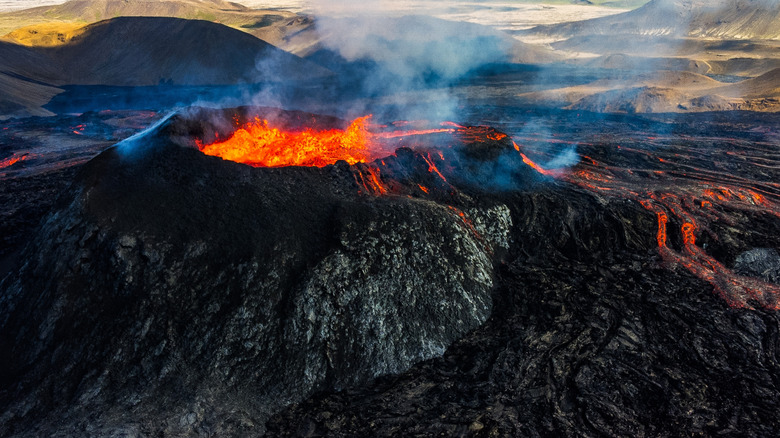
When it comes to natural disasters, volcano eruptions can result in catastrophic loss of life, from human lives to flora and fauna. Miles of land surrounding the 1980 explosion of Mount St. Helens, which was the deadliest and most destructive volcanic eruption in U.S. history, were incinerated by lava. Thinking outside of the box, scientists from the University of California, Riverside and Utah State University put their hopes of helping the land recover in the hands of a pest: the gopher.
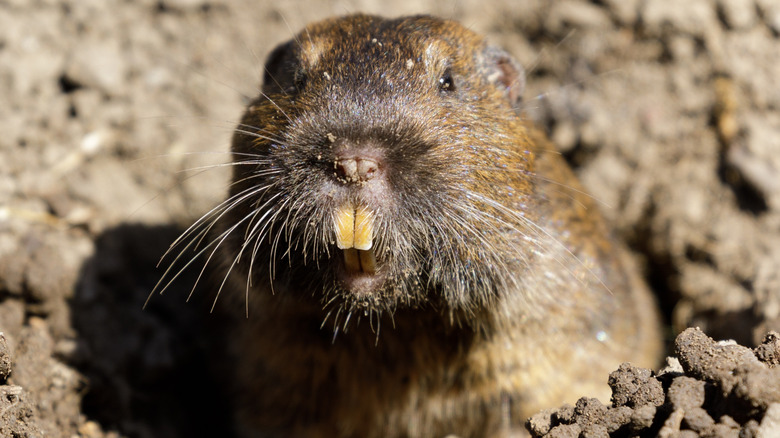
Gophers are known for burrowing tunnels in the ground, which is where they spend most of their lives. They only emerge to disperse or harvest vegetation and to eat. Hypothesizing that their digging and dispersion behaviors could help the animal and plant life regenerate, the UC Riverside researchers took a few local gophers — specifically northern pocket gophers (Thomomys talpoides) — to the volcano in 1983. They enclosed the animals for just 24 hours on two plots of the porous pumice covering the Earth's surface where some Lupinus lepidus — a hardy, flowering perennial lupin — managed to survive.
The scientists were right. Just six years later, 40,000 plants were thriving on those two plots where the gophers had dug up communities of bacteria and fungi from beneath the scorched surface. Those benefits are still visible today. "In the 1980s, we were just testing the short-term reaction," said UC Riverside microbiologist Michael Allen in an interview. "Who would have predicted you could toss a gopher in for a day and see a residual effect 40 years later?"
The importance of the fungi that gophers surfaced to bring Mount St. Helens back to life
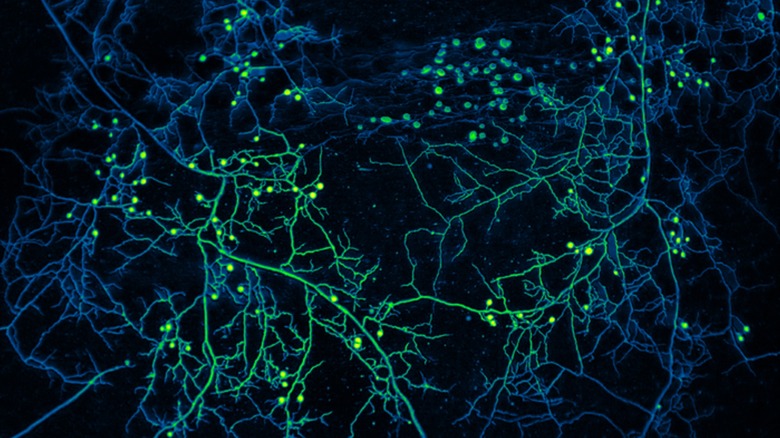
A team of scientists, including Allen, have monitored the regeneration of life on Mount St. Helens, one of several volcanoes that have erupted in the last 100 years and wreaked havoc on humans and wildlife alike. In a paper published in Frontiers in Microbiomes in 2024, they detail how bacteria and fungi have been paramount to the land's recovery. The main contributor and reason all of this has been possible is arbuscular mycorrhizal fungi (AMF), which were found in higher concentrations in the plots where the gophers were left compared to plots that were still barren.
Allen explains, "With the exception of a few weeds, there is no way most plant roots are efficient enough to get all the nutrients and water they need by themselves. The fungi transport these things to the plant and get carbon they need for their own growth in exchange." In fact, this fungi was found under one of the world's oldest trees in Chile and deemed partially responsible for how the alerce trees and other plant life in the forest have thrived.
Arbuscular mycorrhizal fungi also aided the survival of an old-growth forest on Mount St. Helens
The plots where the gophers were enclosed for a day weren't the only places where life has returned to Mount St. Helens. Analyzing samples from an old-growth forest on one side of the volcano, the scientists found AMF in the soil under the trees. They determined that the fungi took the nutrients from the needles that fell from the trees when they were covered in ash from the eruption. Then, the AMF distributed those nutrients to the trees so that they could survive. "The trees came back almost immediately in some places. It didn't all die like everyone thought," said UC Riverside environmental microbiologist Emma Aronson in an interview.
Unfortunately, the same couldn't be said for the cleared forest on another side of the volcano. Acres of trees were cut down prior to the eruption, so there were no needles for soil fungi to feed on. Because of that, not much of anything has regrown there, a negative effect of logging on the ecosystem. Aronson noted, "It was shocking looking at the old growth forest soil and comparing it to the dead area." These findings emphasize that there's much more to learn and do to rescue dying ecosystems. University of Connecticut mycologist and lead author of the 2024 study Mia Maltz added, "We cannot ignore the interdependence of all things in nature, especially the things we cannot see like microbes and fungi."