

Never Leave This Type Of Kitchen Appliance Plugged In Before A Storm
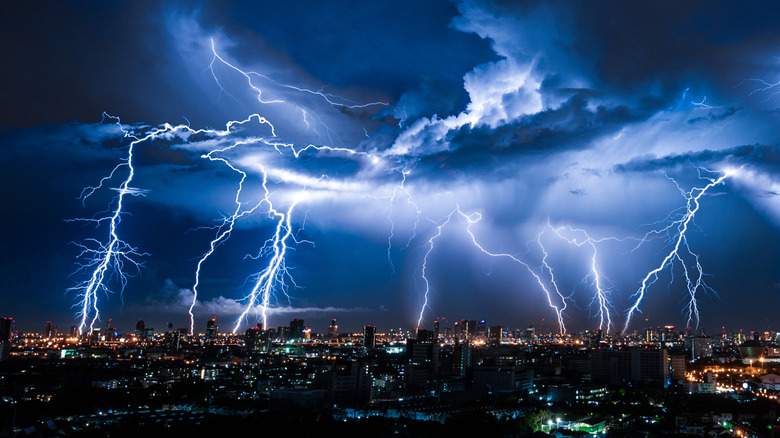
While meteorologists do what they can to predict incoming storms, Mother Nature has its own plans sometimes. Knowing the warning signs that lightning might be about to strike, including your hair standing on end, can help you better prepare for the effects. Along with seeking shelter to protect yourself, you can protect small kitchen appliances from potential storm damage by unplugging them beforehand.
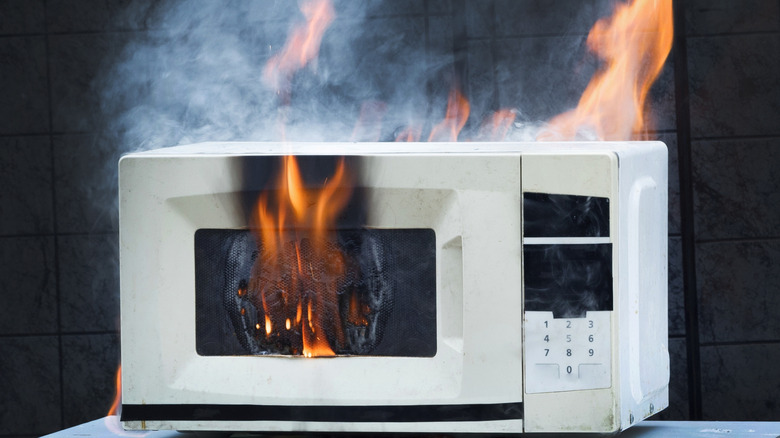
Storms that bring lightning have the potential to cause a power surge throughout your home. As a result, any small kitchen appliances — air fryers, blenders, coffee makers, microwaves, slow cookers, stand mixers, or toasters — that are plugged into electrical outlets can be overloaded. This surge can cause extra stress on the circuit boards and other electrical components inside. While repeat overloads can degrade the life of your appliances over time, there's a chance that a single occurrence could break them altogether. It's even possible for a surge to trigger a fire.
You could install surge protection outlets and use plug-in surge protectors, but one of the myths about lightning is that surge protectors will stop electrical surges from happening. In fact, the Association of Home Appliance Manufacturers director of communications Chris Doscher told Better Homes & Gardens that plug-in surge protectors are designed for laptops, televisions, and other small electronic devices. "Plug-in surge protectors are not designed to be used with home appliances" and can even cause overheating, he added. That's why AHAM recommends unplugging them instead.
How a storm causes power surges that damage small kitchen appliances
Lightning is an immense spark of electricity that can affect small kitchen appliances. According to the NOAA National Severe Storms Laboratory, a single strike can hold 100 million to 1 billion volts. That's why simple overvoltage is one way that a storm can damage devices through power surges. While circuit breakers are designed to trip when they're overloaded with power, the event can happen so fast that it just doesn't trip in time. Also, the wiring may not be able to withstand it, so the breaker contacts can become welded together before it can trip. Lightning can even have such a high frequency surge that it goes undetected.
However, lightning strikes don't have to hit your home or power lines directly to be devastating. It can do it through inductive coupling, which involves the spike of currents and voltages from the changing electromagnetic fields transferring its energy between metallic conductors within the area, with nearby cables, power lines, and other wires acting like antennas. That's why the effects of thunder and lightning can be so far-reaching and it's always best to unplug small kitchen appliances beforehand when possible.