

This Body Part Is Eating Itself And You Never Knew It

Various systems in the body are constantly working behind the scenes to carry out millions of chemical reactions per minute, and the immune system is an incredible part of that. Within it, there are two types of phagocytes, one of which are specialized white blood cells that attack, destroy, and engulf (or eat) invading cell organisms through the process of phagocytosis. What's even more intriguing is that the brain, which regulates inflammatory responses as part of the immune system, also performs phagocytosis. Rather than attacking invading cells, though, the brain routinely eats itself.
According to a paper published in The Biochemist, the brain's microstructure is constantly changing, and it changes by "eating" itself. Specific cells called microglia, which are a type of phagocytic neuroglia in the central nervous system, are responsible for this phagocytosis — eating nerve cells (neurons) or synapses (neuron connectors). This process is regulated by a phagocytic code, which is akin to the etiquette of cannibals. Along with triggering the engulfment, phagocytic receptors on the microglia are what detect target cells that have the "eat me" surface expression.
There are two types of target cells with this surface expression — desialylated glycoprotein and phospholipid phosphatidylserines. The phosphatidylserines are the most common and usually found on the inner side of the cell membrane and tasked with protecting brain cells. When cells are dying, activated, or stressed, though, they become exposed on the outer surface where they can be detected and eaten by microglia. However, how the microglia respond also depends on the opsonin proteins they release.
Why the brain is constantly eating itself
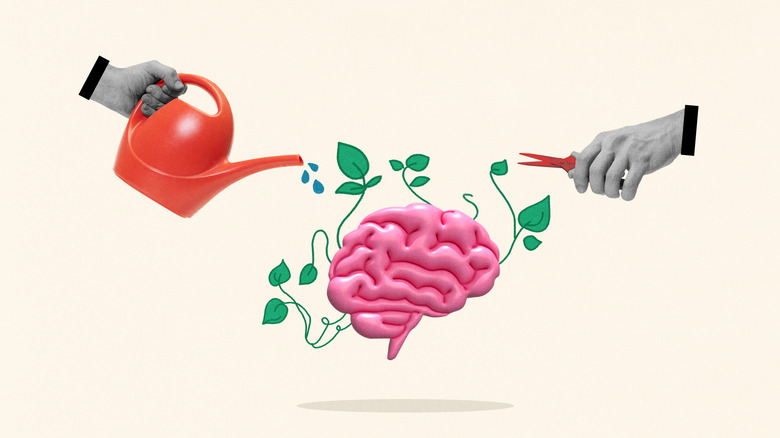
The purpose of the immune system is to defend the body from invaders to prevent sickness, and phagocytosis is part of that. In the brain, however, microglial phagocytosis occurs as a developmental aid and to clean up so that the brain can continue working as it should. In an article published in BBC Science Focus, neuroscientist Dean Burnett explains that the brain does so much all the time that it uses about one-third of the body's supply of energy. These processes create a lot of unusable byproducts and debris that have to be eliminated.
While much of this housekeeping activity occurs when the body sleeps, it's not limited to that period. That's because the connections between cells (synapses) also need to be changed or removed during stages of development. For instance, a so-called "pruning" starts at the same time as adolescence in order to get rid of extra neurons and insufficiently active synapses accumulated during childhood. Microglial phagocytosis is responsible for part of that process. As a result, the resources that those cells and neurological connections were holding hostage (so to speak) are put to better use.
As one of the ways the anatomy of the brain might surprise you, microglial phagocytosis keeps the brain healthy, but mishaps can happen. Research indicates that the process failing in mice leads to some neuronal circuit impairment and autism-like behavior. Meanwhile, scientists think that insufficient cleanup is related to Alzheimer's disease. On the flip side, there's the potential for too much housekeeping (meaning the brain is destroying itself), which may contribute to neurodegenerative diseases, such as Parkinson's. Scientists are currently looking for ways to prevent excessive microglial phagocytosis to avert this destruction and related diseases.