

A Giant Species Could Hold The Secret For Extending Human Lifespans
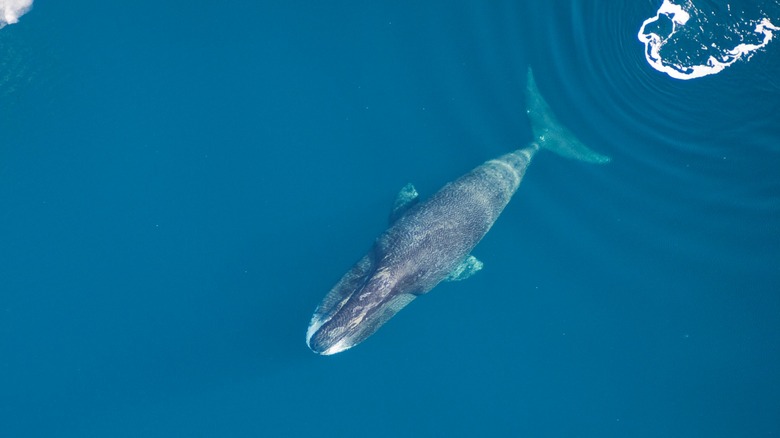
The desire to live longer is a natural instinct among humans. According to the Centers for Disease Control and Prevention, the average life expectancy of Americans is 78.4 years. As people use a variety of anti-aging treatments and practice healthy lifestyles, researchers continue to dig deeper in why some creatures live so long. This persistence has led them to discover the key to why the lifespan of a bowhead whale can reach more than 200 years, and the findings could help extend humans' lives.
In a collaborative effort led by scientists at the University of Rochester, research has discovered that a protein called CIRBP is responsible for bowhead whales living so long despite their size. Prior research has found that larger animals are more susceptible to developing cancers than smaller animals, yet bowhead whales weighing up to 200,000 pounds are not prone to developing cancer. The new research, published in Nature in October 2025, found that CIRBP is the reason.
Studying bowhead whale cells, the scientists analyzed the proteins involved in DNA repair to identify the mechanisms behind their lengthy lifespans. They found that the mammals have a lot more of the CIRBP protein than other mammals — 100 times more, in fact. Cooperating with Alaska-based scientists, they also determined that the bowhead whale cells increased CIRBP protein production when they were exposed to cold temperatures. Since the protein is activated by the cold and these mammals are among the animals that live in the ice cap regions, the extremely high levels of CIRBP makes sense.
How this bowhead whale discovery could extend the human lifespan
To understand how identifying the high amount of CIRBP in bowhead whales and how it activates can lead to extending human life, it helps to understand Peto's Paradox. This puzzle refers to the longstanding reality that, despite having more cells, large species of animals don't have a higher chance of developing cancer.
It has vexed scientists because cancer develops in stages of genetic mutations referred to as oncogenic hits through the process and repair of double-strand DNA breaks. These hits accumulate in genes that control the growth and division of cells and the repair of DNA. In humans, most cancers progress after five to seven hits. And while fewer hits are required in bowhead whales for cancer to develop, the hits are also less likely to accumulate in their cells. Although hypothetical at this point, it's possible that researchers can use the DNA repair abilities of the CIRBP protein to stave off cancers in humans, therefore extending their lives. How that can be achieved, though, is still to be determined.
"Both boosting the body's existing CIRBP activity or introducing more of the protein may work," said University of Rochester biology professor Vera Gorbunova in a statement. "Lifestyle changes—things like taking cold showers—might contribute too and might be worth exploring." For now, the next step is learning more about CIRBP "to see if we can develop strategies to upregulate the same pathway in humans," added Gorbunova. The outlook could be promising, too, because scientists at the University of Sheffield who were part of the bowhead whale study have already extended the lifespan of fruit flies with CRIBP.