

Common Plants That Could Be Attracting Wasps To Your Garden
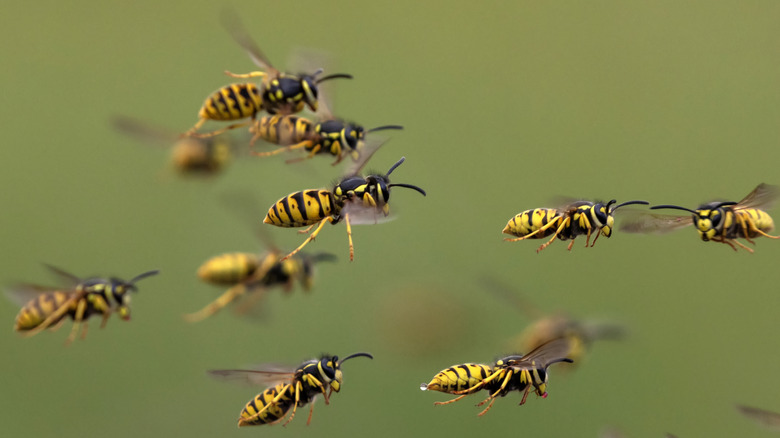
Whether you maintain a garden for the fruits and veggies, the beautiful flowers, or both, unwanted insects are guaranteed to show up. The downside is that some of these insects aren't quite so nice. For instance, at least a handful of types of wasp are very aggressive and could even be deadly if they sting people who have an allergy. Not all wasps are aggressive, but seeing a lot of similar-looking insects flying around your garden might feel worrisome. Although not entirely surprising, some common plants could be the culprit.
It might be obvious, but nearly any plants that bloom with flowers can attract wasps. Black-eyed Susan, goldenrod, French marigold, purple tansy, smooth aster, sunflower, and white clover are just a few examples that you might plant simply for the view, not intending to invite wasps to your garden. However, several herb plants attract wasps as well, including basil, cilantro, dill, fennel, lavender, mint, and rosemary. On top of that, wasps like a lot of fruit-bearing and legume plants, such as cowpeas and fig trees.
The science behind why these plants attract wasps
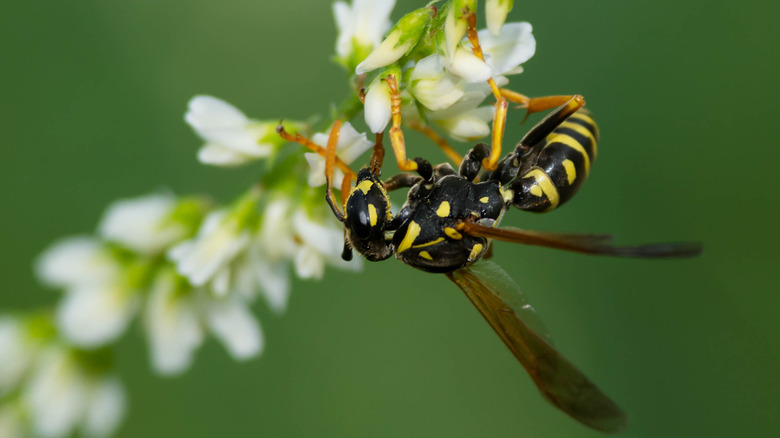
There are actually a couple of reasons why certain plants attract wasps. Although not so scientific, plants that are most likely to attract these flying insects have readily accessible pollen and nectar. Those that produce small, vibrant flowers usually have shallow florets, while others have nectar glands on their leaves and stems. As a result, the short mouthparts on wasps can easily reach the nectar, so the insects are more likely to land on those flowers and stay on them longer. Wasps tend to visit long-lasting blooms and those that produce high-energy nectar more often as well.
On a more scientific level, some plants release herbivore‑induced volatile compounds when they're being attacked by predators like aphids, caterpillars, and ladybugs. A study published in PLoS ONE found that (Z)-3‑hexenol, or leaf alcohol, which lands in the category of green-leaf volatiles, acts as an airborne signal that draws parasitic wasps and other species that prey on the plants' predators.
Plants that attract beneficial wasps but deter stinging wasps
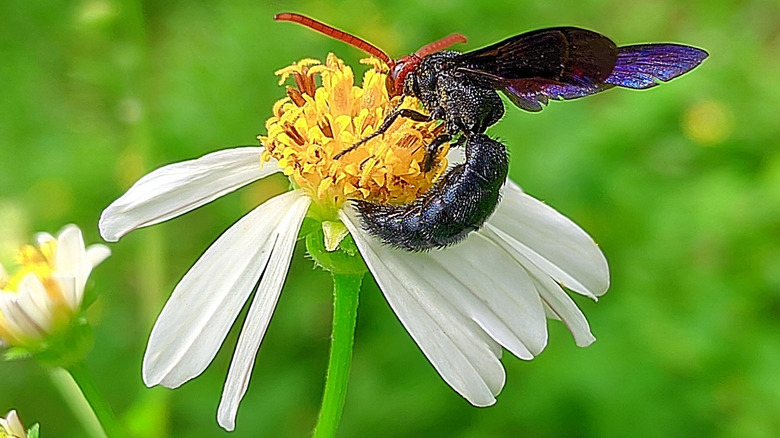
As mentioned, not all types of wasps are concerning. Parasitic wasps, for instance, are beneficial to have in your garden and don't bite or sting people. These insects are very small and not always identifiable. When they're attracted to plants by leaf alcohol, though, they get rid of other insects by laying their eggs on or inside of their bodies. Those eggs eventually develop and kill the host insects, effectively protecting the plants. That's one reason scientists are releasing wasps into U.S. forests.
Fortunately, several of the common plants that attract wasps in general are the same ones that lure in parasitic wasps while deterring aggressive wasps. These include herbs and ornamentals that have strong scents, because the aggressive species don't like the smell. Dill, eucalyptus, fennel, lavender, mint, and rosemary are a few herbs that are well-known for deterring these stinging insects, as are marigolds. Additionally, scented geraniums like citronella have the benefit of repelling wasps and mosquitoes. That's why these plants are ideal for potting and placing near doorways, along porches, and anywhere else you spend most of your time outdoors.