

Scientists Finally Spotted An Underwater Ross Seal And It Couldn't Be Cuter
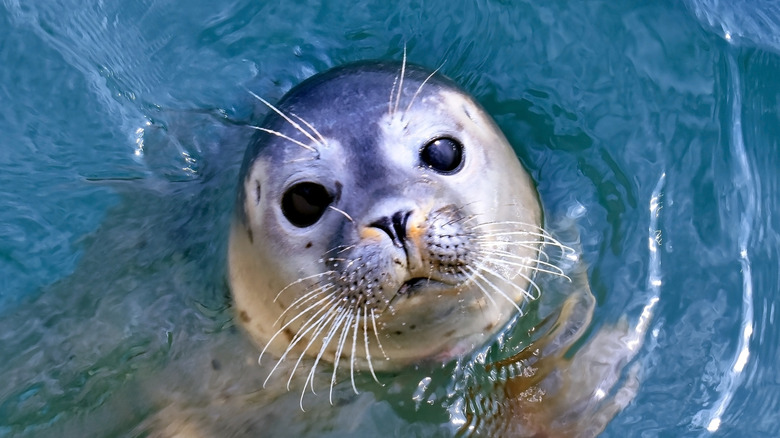
There's a reason so many people hop on coastal tours to see seals: They're just so darn cute! Among the more than 30 species in the world, the harbor seal is one of the most common, residing along both the East and West coasts. The Ross seal (Ommatophoca rossii), on the other hand, is the rarest seen and least studied of these Antarctic animals. In fact, this species has eluded cameras while underwater ... until now.
The photos were captured by Lindblad Expeditions undersea specialist and expedition diver and photographer Justin Hofman while traveling on the National Geographic Resolution ship to the southern reaches of Antarctica. Sharing the photos on Instagram, he said, "These are quite likely the first-ever underwater photographs of a Ross seal ... In 15 seasons of working in Antarctica, I have only seen two Ross seals, and this is the second one."
The cutest of the photos (although subjective) is of the Ross seal looking straight at the camera with its large eyes as it swims through the water. Fellow undersea specialist and expedition diver Ayla Townsend also captured the seal from the side, showing off its broad neck and body and short flippers.
Additionally, Townsend was able to capture the only video of a Ross seal. You can watch the Antarctic animal on her Instagram moving from the ice into the water to take a leisurely swim. She commented, "I never expected to be able to see a Ross seal, and this underwater moment will forever put a smile on my face. It was so special."
Why seeing a Ross seal is rare and what little scientists have been able to learn so far
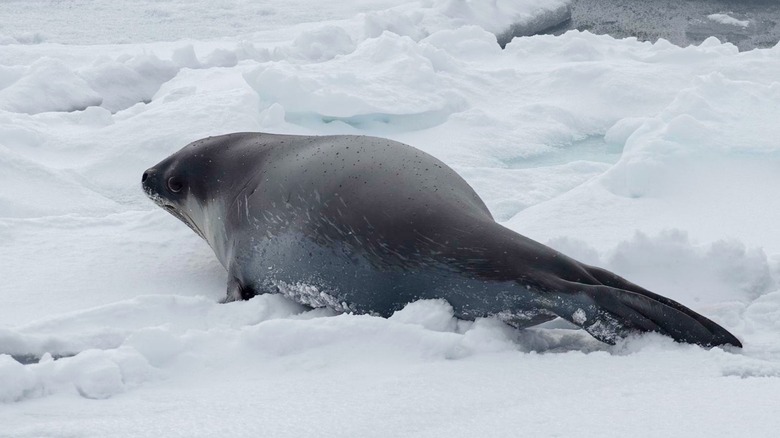
With the Instagram post, Justin Hofman noted that the possibility of seeing a Ross seal and capturing underwater photos of it had crossed his mind. He never thought it would really happen, though, because these animals from Antarctica generally live so far south. In fact, they generally breed and mold among the medium to dense ice beyond 60 degrees south latitude. Despite that, they have been seen or electronically tracked in the Amundsen Sea, East Antarctic, and Lazarev Sea.
Another reason seeing a Ross seal is so rare is because they only account for 1% of the seal population that resides in the Antarctic ice. On top of that, they spend most of their time foraging, diving as deep as 1,000 feet and staying underwater for 20 minutes or more at a time.
Because of that, little is known about this species. What is known is that they are also the smallest of the Antarctic true seal population, growing up to 7.6 feet long and weighing between 330 and 470 pounds. In comparison, the largest Antarctic species are the leopard seal, which measures up to 12 feet long and weighs up to 840 pounds, and the Weddell seal, which grows to 10 feet and weighs 880 pounds.
In addition, scientists know that Ross seals are typically solitary animals that nurse pups for as little as 13 days. Their large, 2.75-inch eyes and big pupils help them find prey and navigate dark waters. Like other animals that live on glaciers and icebergs, they can be spotted on the ice while resting or molting.