

The Strange Skin Pattern That Can Appear Hours Before Death
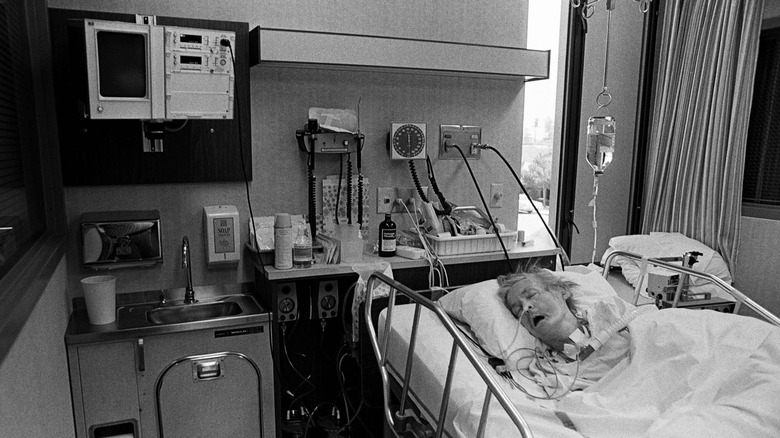
Some deaths are sudden, like those caused by traumatic accidents or the sting of a box jellyfish, which is one of the worst ways to die. On the other hand, many people die from disease or old age and may spend their last days in a hospice setting, with caregivers monitoring their pain and vital signs.
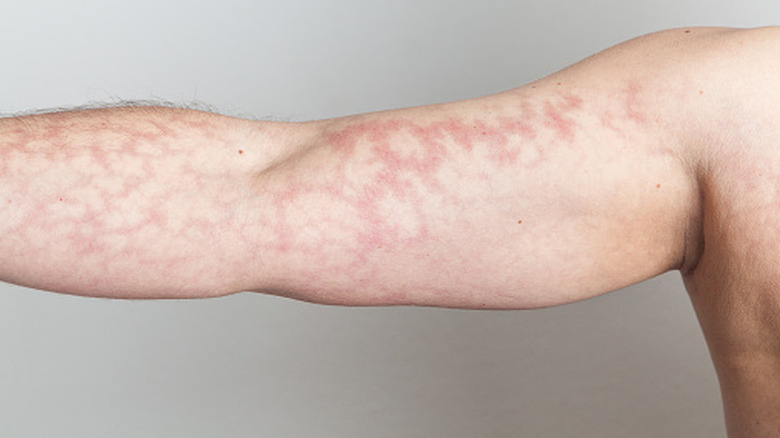
Around two days before death, some of these patients develop a condition called mottled skin, a net-like pattern that is caused by reduced blood flow or circulation in the small blood vessels in the skin. This reduced flow leads to less oxygen in the red blood cells, causing them to take on a purplish color in the skin's blood vessels. The medical term for this condition is livedo reticularis. Mainly affecting the arms and legs, mottled skin is caused by the heart no longer being able to pump blood effectively. At the end of life, this skin pattern may be accompanied by a drop in blood pressure, a cooling of the hands and feet, and breathing difficulties.
Mottled skin appears as red or purple marks streaks or spots. The exact color of these spots varies depending on skin tone. In people with lighter skin, mottled skin usually appears in shades of red, blue, or purple, while it may look like dark brown spots in people with darker skin tones.
But wait! Mottled skin is not always associated with death
Although mottled skin is a harbinger of death in some people, it may be a symptom of a treatable vascular or blood condition. One of these vascular conditions is vasculitis (inflammation of the blood vessels), which occurs in some people with rheumatoid arthritis (RA). In RA, the small arteries and even smaller arterioles that branch out from them can become inflamed, narrowing the blood vessels and restricting blood flow. Aside from that, a blood condition that is associated with mottled skin is antiphospholipid syndrome. The mottled skin pattern may also be a symptom of cardiovascular conditions with restricted blood flow in the arteries (cholesterol embolization) or veins (deep vein thrombosis).
Some medications can provoke an allergic reaction in certain people, resulting in mottled skin. Examples of such medications are antibiotics such as erythromycin, gemcitabine (a chemotherapy medication used to treat breast cancer), heparin, and amantadine (a drug used to treat Parkinson's).
The appearance of mottled skin is similar in people who are about to die and in patients with treatable vascular and autoimmune conditions. However, in dying patients, it is a sign of the body's blood circulation shutting down in a process that is irreversible. These patients are often very frail and unresponsive. In treatable conditions, skin mottling is a temporary sign of hampered circulation, with both the strange skin pattern and the underlying condition being reversible by medical intervention.
Other signs of impending death

Although mottled skin may occur in patients who are close to death, it is just one of many signs that are common during the dying process. The presence of one or more of these signs can alert healthcare professionals, especially in a hospice setting, to the possibility of impending death.
According to an article in Support Care Center, these signs may be either subjective or objective. Subjective signs are pain, shortness of breath when resting, anxious or depressed mood, confusion or delirium, general weakness, nausea, poor appetite, and more time spent sleeping. The increased need for sleep is the body's attempt to conserve energy as systems start shutting down, and is part of how it physically feels like to die.
Objective signs include a drop in blood pressure, fever, low amounts of oxygen in the blood (known as low oxygen saturation), and death rattle. Among these, the most reliable predictors of approaching death are a drop in blood pressure and low oxygen saturation. These two events may or may not be accompanied by mottled skin. When caregivers and healthcare professionals observe these signs in dying patients, they can alert family members so they are able to spend the precious time with their loved one and make preparations for their passing. Such death rituals, which are observed even in elephants, help relatives to aid in their loved ones' transition as well as mourn and remember them after death.