

The Familiar Mammals That Emerged During The Age Of The Dinosaurs
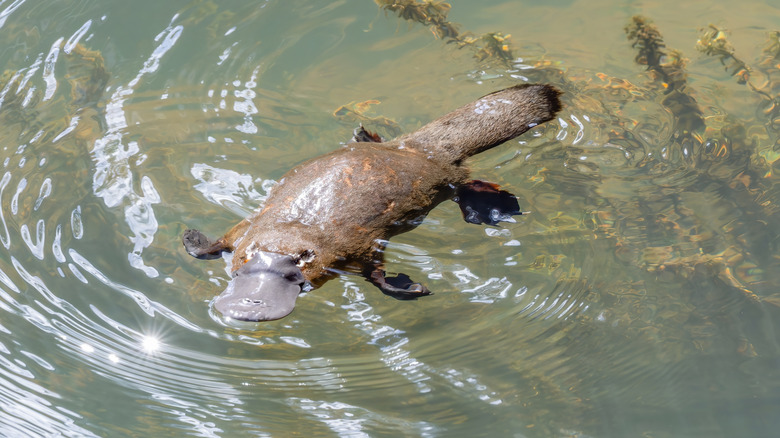
The Australian continent is rich in biodiversity. Some of the most peculiar animals reside there, and the first one you probably think of is the kangaroo or koala. However, research published in 2024 suggests that before marsupials dominated Australia, an even more unusual order pervaded the land: Monotremata. Currently, the only living monotremes (egg-laying mammals) are the platypus and echidnas (spiny anteaters). These unique mammals have been the source of much speculation and curiosity, but this recent study suggests that their ancestors were vaster and more diverse than previously thought.
Researchers investigated fossils that had been located in the Lightning Ridge opal fields of New South Wales and unveiled three extinct monotreme species that had never been identified before. Among these fossils were also three species of monotremes that were already known, meaning that a total of six different species were characterized from this one area. All of these fossils originated from the Cretaceous period, one of the time periods that dinosaurs lived in, occurring 100 million years ago.
Among these three newly-discovered species was Opalius splendens, which became colloquially referred to as "echidnapus," a title that combines echidna and platypus. This name arose from the morphological similarities between both groups of living monotremes, suggesting that it could be a common ancestor. Other new species included Dharragarra aurora, which is thought to be the earliest known species of platypus, and Parvopalus clytiei, which is one of the tiniest monotremes known thus far.
Evolutionary origins
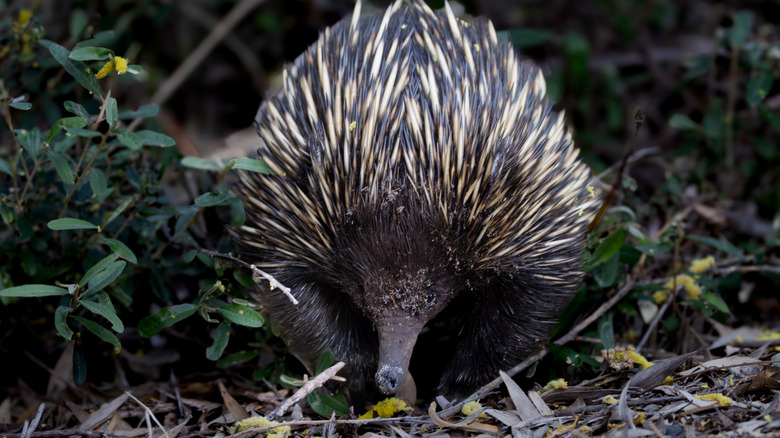
Discoveries surrounding the evolution of monotremes continue to emerge. Although they share several unique traits, echidnas and platypi diverge in dwellings. While the platypus is semiaquatic (meaning that they are terrestrial but spend a significant amount of time in water, like an otter or seal), echidnas dwell strictly on land. This particular discrepancy has led to much speculation regarding the evolutionary origins of these peculiar creatures, with many previously theorizing that their ancestry lay in a land-dweller. However, a recent study uncovered evidence to suggest that their common ancestor was, in fact, semiaquatic.
The Kryoryctes cadburyi is a prehistoric species known only through a humeral bone and a partial premolar. Discovered in the 1990s in what is known as Dinosaur Cove in Australia, this humerus is an estimated 106 million years old. Early similarities between this bone structure and that of present monotremes like the platypus led to the revelation of this evolutionary ancestor. However, apart from external analysis of morphology, little was understood about this curious species.
By analyzing the interior components of this bone, researchers were able to determine that the K. cadburyi spent a lot of time in the water. They came to this conclusion due to the thick bone walls that resemble those of a platypus. The result is a heavier material that would help these animals dive. Both of the studies described above illustrate how much knowledge can be gained from fossils and emphasize that much remains to be uncovered regarding monotremes.