

The 'Melatonin Hangover' Phenomenon Is Easily Explained By Science
If you're having trouble falling and staying asleep at night, you might be desperate for solutions. Some of these may include reducing stress, limiting screen usage near bedtime, maintaining a sleep schedule, and timing your coffee consumption to well before bedtime. You might also try melatonin supplements, but before you take that step, it could be helpful to understand the science behind one of the possible side effects: melatonin hangover.
Like a traditional hangover from drinking too much alcohol, a melatonin hangover can leave you with grogginess, nausea, and a pounding headache when you wake up. That's because the supplements contain much higher doses than what the pineal gland in your brain naturally produces in response to darkness to prepare for sleep and maintain the body's circadian rhythm. From early life to adolescence, this gland produces 0.5 to 0.8 milligrams of the hormone daily before tapering to 0.3 milligrams throughout adulthood. This natural production can decline even more depending on age, diet, and lifestyle, but the most common dose of melatonin supplements is still 10 times that at 3 milligrams.
On top of that, taking melatonin too late can have the same groggy effects. That's because synthetic hormone supplements, especially extended-release formulas, can linger in the blood for nearly 10 hours, according to a study published in the Journal of Pineal Research. As a result, the melatonin could still be working after you wake up, creating the grogginess and, potentially, the other hangover-like symptoms you feel.
How to avoid a melatonin hangover and potential alternatives
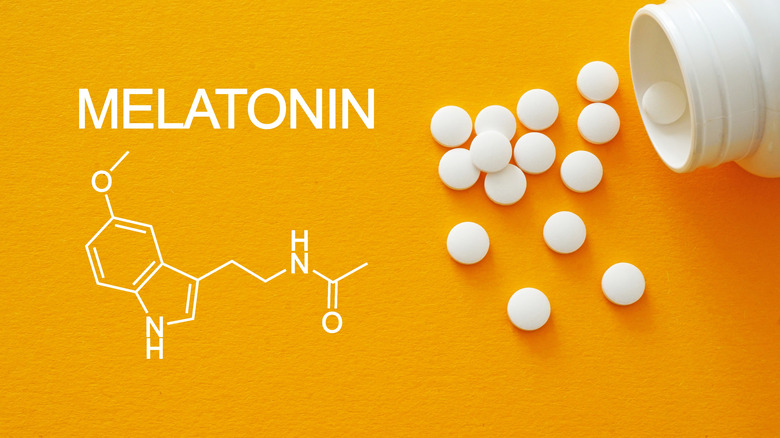
Although melatonin hangover is a side effect of taking these hormone supplements, sleep medicine physician Jocelyn Y. Cheng tells Sleepopolis that it can be avoided. If it feels impossible to wake up to your alarm clock, one option is "to use melatonin cautiously and at the lowest effective dose." "Anything more than 3 mg of melatonin is considered a hefty dose," according to Sleepopolis medical advisor Shelby Harris, who notes "A dose between 0.5 to 3 mg usually does the trick."
It's also important to choose a trusted brand because "the contents of over-the-counter melatonin are not regulated, so the actual amount being taken, as well whether other substances contaminate it, is a major risk," Harris added. According to a 2023 study, some products have been found containing up to 347% more than on their labels. Echoing that advice, Cleveland Clinic Sleep Disorders Center director of behavioral sleep medicine Michelle Drerup told Verywell Health, "Look for testing and certification" by independent organizations other than the manufacturer, such as ConsumerLab, NSF International, or USP Verified.
If you prefer not to take the chance or you experience a melatonin hangover even after reducing your dose to the minimum, it might be best to choose an alternative, such as magnesium. Pumpkin seeds are one of the best foods that science says can help you sleep because they contain 37% of your daily need of the mineral, which calms the nervous system by activating the neurotransmitter gamma-aminobutyric acid. Other alternatives include adaptogenic herbs — like kava or ashwagandha — which support the nervous system and reduce stress by hindering the release of the stress hormone cortisol.