

Scientists Tried To Explain The Ozempic Muscle Loss Phenomenon But Were Surprised By What They Found
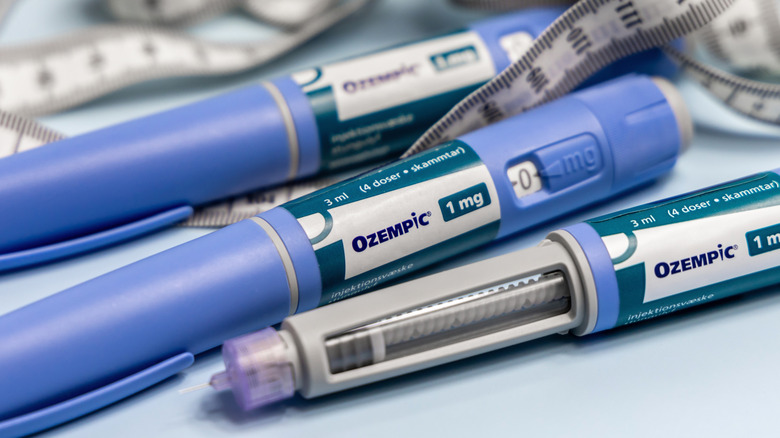
As a GLP-1 receptor agonist, Ozempic (semaglutide) is a relatively new medication, having only been approved by the FDA in 2017. It's considered an effective and safe weight-loss drug, and it's already used by a wide array of people, including celebrities. However, there are some unfortunate side effects, like the "Ozempic face" phenomenon and "Ozempic feet" phenomenon that Oprah Winfrey is rumored to have. Another side effect is the loss of lean mass. Upon further investigation, though, researchers were surprised to find that it's not actually muscle mass that's changing much.
Publishing their findings in Cell Metabolism, scientists at the University of Utah tested the effects of GLP-1s like Ozempic on mice to determine the effects it had on their muscle mass. Their study found that lean mass — non-fat body weight — decreased by about 10%, but only about 6% of that was skeletal muscle. Some of this loss is simply the body returning to baseline after gaining muscle mass along with fat since it has to work harder to move around as weight increases.
The other about 4% loss occurred "in metabolically active organs, such as the liver," said co-first author and U of U nutrition and integrative physiology research instructor Ran Hee Choi, PhD, in a news release. Like with muscle weight, though, organ size can fluctuate with weight gain and loss without causing function problems. According to co-first author and U of U Molecular Medicine Program postdoctoral researcher Takuya Karasawa, PhD, "It's unlikely that the observed lean mass loss represents a serious adverse effect." That doesn't mean the loss of muscle mass doesn't pose a risk at all, though.
The potential risk of losing lean mass for some Ozempic patients
GLP-1 receptor agonists are one of the best peptides to improve your body, specifically for losing weight. However, the loss of lean tissue poses a particular risk for elderly patients (those aged 60 and older) who are taking it. That's because the U of U researchers found in the mouse study that, although the loss of muscle mass is typical, it's accompanied by some weakness.
When the mice were tested to see how much force their muscles exerted, decreased strength was detected in some of the muscles as they lost weight. There was even some strength lost in the muscles that remained about the same size. However, the strength in some muscles remained unchanged. It's unpredictable how that could translate to humans, but seniors are already at a risk of losing muscle and mobility as they age.
Senior author and U of U College of Health associate professor of nutrition and integrative physiology Katsu Funai, PhD, noted in the statement, "The loss of physical function is a strong predictor of not just quality of life but longevity." He also added that clinical trials are needed to monitor muscle strength in people using Ozempic and other weight-loss medications, including those planned to release in the coming few years.
Meanwhile, other researchers are studying the effectiveness of ketone supplements in counteracting the muscle loss and heart shrinkage from GLP-1s. In a mouse study published in European Journal of Preventive Cardiology, a team at the University of Alberta found that a drinkable supplement of ketone ester is converted to ketones in the body, raising blood ketone levels and protecting cardiac and skeletal muscle mass loss. While it could potentially fine-tune the weight-loss therapy, more research is needed.