

The First Thing You Should Do If You Find A Snake's Shed Skin In Your Yard
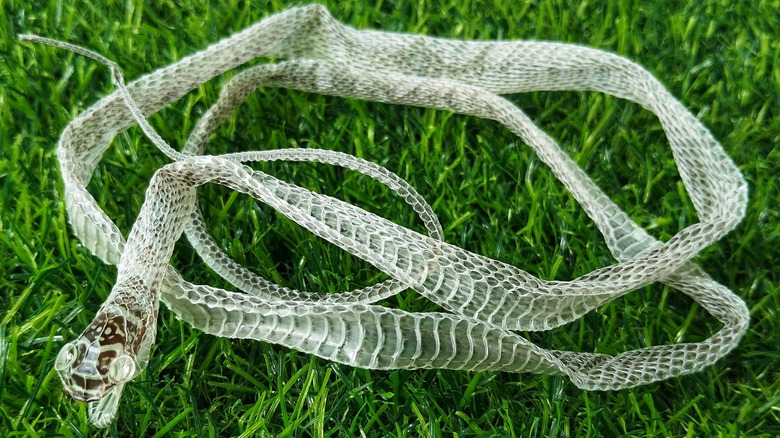
In some way or another, skin shedding or molting is something that all animals do. Even bugs shed their skins, and humans do, too, albeit the latter occurs daily and involves millions of skin cells. When snakes molt, however, the top layer comes off in one long piece. This process is specifically called ecdysis because the purpose is to facilitate the reptile's growth. While you might be curious to inspect a shed snakeskin in your yard, there are some precautions to take first.
For safety and peace of mind, it's important to avoid excessively handling shed snakeskin with your bare hands. That's because traces of bacteria or venom could be on the skin. According to the Humane Wildlife Control Society, Salmonella bacteria live on 15% to 90% of shed skins. Wearing gloves or using a plastic bag will protect your skin from infection risk.
After scanning the area to make sure the snake is no longer hiding nearby, you can attempt to identify the snakeskin. There's at least one trick that you can use to tell whether or not the snake is venomous. If you see the leftover impression of a double row of scales leading from to the tail, the snake is non-venomous. A single row indicates a venomous snake, and it might be wise to call a wildlife expert to remove it and any others safely from your property.
What happens when a snake sheds its skin
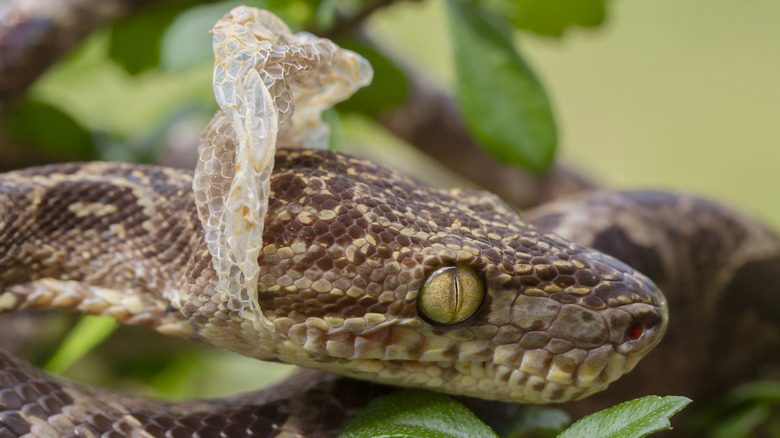
One of the similarities between snakes and lizards is that they both shed their skin. But while most lizards shed their skins in multiple pieces, snakes shed their skin all at once. It's not a comfortable process for the slithering reptiles either, potentially making them irritable and aggressive, so avoiding them during this time is important.
Because their epidermis (the top layer of keratin scales) is very tough, it doesn't expand as the animal grows. That's why a second layer of keratin scales grows underneath it. In preparation of molting the top layer when the second is ready, a fluid is secreted to loosen that outer shell.
Starting near the mouth and peeling backward, the molting process itself can take days to weeks. The snakes may rub against rough surfaces, such as rocks, to aid with the skin falling away. For the most part, though, they try to stay hidden because shedding leaves them vulnerable.
The frequency of this cycle depends on numerous factors — such as age, diet, humidity, reproduction, temperature, and species. For instance, some snake species first shed within hours of birth, while others don't shed for the first time until a couple of weeks afterward. Subsequent molting events may occur every four to six weeks until they reach adulthood, at which point they shed every couple of months or so.