

This Fruit Has More Potassium Than A Banana
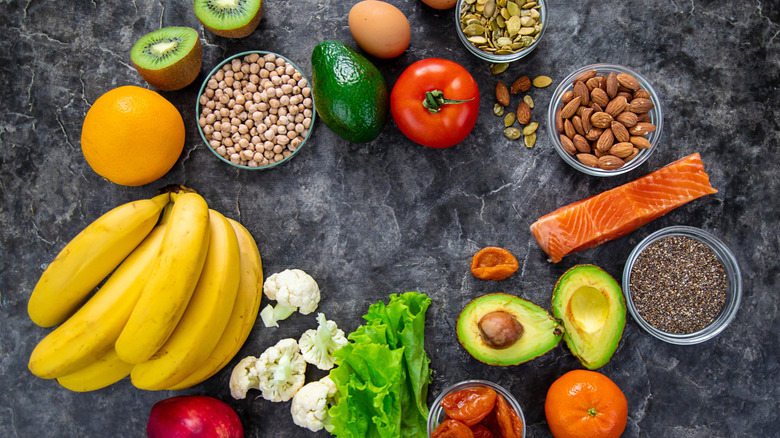
We've all heard that bananas are great for us because they have tons of potassium, which is required for all cells to function properly. But if you don't like eating bananas or don't want to eat the same fruit over and over, here's some good news. It turns out many fruits and vegetables contain potassium and some have even more of this essential ion than bananas. One such fruit is the avocado, which packs more than twice as much potassium (975 mg) as a medium-sized banana (422 mg).
Potassium is essential for a very important function in our body's cells. A high concentration of potassium is found inside the cell, while a much lower concentration resides outside the cell. This gradient forms the basis of the sodium-potassium transport channels, through which fluids flow into and out of the cell. This flow of fluids is needed for our nerves, muscles, bones, and kidneys to work properly. Potassium is also important for maintaining glucose metabolism, with potassium deficiency being associated with insulin resistance and type 2 diabetes.
According to the National Institutes of Health (NIH), an adult man needs 3,400 mg of potassium per day, while an adult woman needs 2,600 mg per day. Women who are nursing may need slightly more than this, around 2,800 mg per day. The required amount for children varies depending on their age, ranging from 2,000 mg daily for children aged 1 to 3 years to 3,000 mg for teen boys aged 14 to 18 years. A National Health and Nutrition Examination Survey conducted in 2017–2018 found that almost all Americans aren't consuming enough potassium.
Other foods that are dripping with potassium
If you're not a fan of either bananas or avocados, don't despair. You're not condemned to live a potassium-deficient existence. A whole slew of fruits, vegetables, diary, and other foods contain substantial amounts of potassium. The National Kidney Foundation categorizes foods with 200 mg or more of potassium as "high potassium" foods.
Consider adding to your diet other fruits like guava, soursop, apricots, and prunes, or vegetables such as sweet potatoes, water chestnuts, parsnips, and broccoli rabe. Boosting your potassium is just one of the benefits of consuming fruits, though; another one is the potential effects of a tropical fruit in slowing down aging.
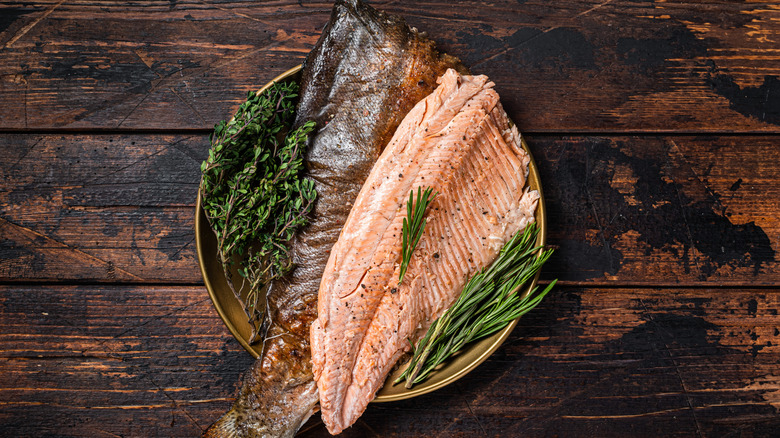
Eating beans such as lentils, kidney beans, and soybeans, as well as dairy products like milk and yogurt are also a good way to bump up that daily potassium intake. Fish is a good source of potassium, too, with rainbow trout, black cod, salmon, pollock, and white fish packing over 400 mg per 3.5 oz serving.
Eating a diet that includes such potassium-rich foods may be even more important for people with conditions that lower their potassium levels. These conditions include inflammatory bowel disease (which includes ulcerative colitis and Crohn's disease) and pica (compulsion to eat non-foods like clay). People taking laxatives may also have lower potassium levels and could benefit from eating more avocados, bananas, or any of the foods above.
What can potassium do for your health?

The question should really be what can't potassium do for your health and well-being? Having sufficient levels of potassium can boost almost all aspects of your health, including heart, bone, kidney, and metabolic health.
Together with sodium, potassium is a key factor in maintaining blood pressure. Since many people have a lot of sodium from salt in their diet and low potassium levels, the imbalance can lead to high blood pressure, which increases the risk of heart disease and stroke. (Other things like this breakfast habit can also increase the risk of heart disease and early death.) Having sufficient potassium helps to keep a healthy blood pressure, which in turn helps to prevent heart attacks and stroke, though another popular supplement that can help reduce high blood pressure is magnesium.
Potassium is also essential for healthy bones because it prevents calcium from leaching out of bones and may increase bone mineral density, which protects against osteoporosis. By the same mechanism, potassium may also reduce the risk of developing kidney stones, which form when calcium accumulates in the urine. Although not conclusive, potassium appears to aid in maintaining healthy blood glucose levels and staving off the onset of insulin resistance and type 2 diabetes.
However, as beneficial as potassium can be in healthy people, it can be harmful (even at recommended levels) in people with chronic kidney disease, type 1 diabetes, liver disease, or congestive heart failure, or in those using medications such as angiotensin converting enzyme (ACE) inhibitors and potassium-sparing diuretics. For people without these conditions, though, consider adding the humble avocado to your grocery haul on your next trip to the supermarket.