

What To Do If You Get Sea Lice From The Beach
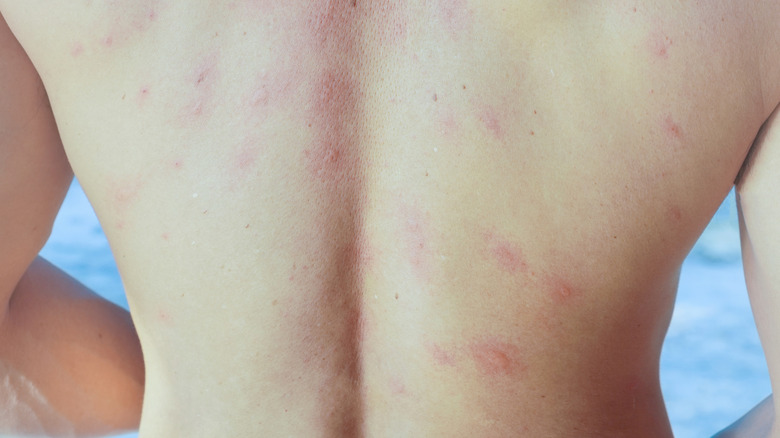
Going to the beach is a popular vacation destination, or it can make up a casual day out if you live near one. Along with finding seashells in the sand, you might also get starfish on the beach. There's a possibility, though, that what you find is a little more harmful — such as bug bites from beach sand caused by biting midges (no-see-ums) or sand fleas. Similarly, sea lice in the water can cause a rash called seabather's eruption. Fortunately, you can get rid of them and treat the rash.
It's important to note that this type of sea lice isn't like the head lice that you get in your hair. Instead, it's actually larvae from the thimble jellyfish and sea anemone. These parasites typically feed off fish, but while swimming in the ocean, they can become trapped in your bathing suit or hair. When they rub up against your skin, they release a venom that triggers an inflammatory allergic reaction that often appears as an itchy, red rash but may also involve lesions.
Applying calamine lotion or a topical corticosteroid a few times a day and/or taking an oral antihistamine is all it takes to reduce that itch and inflammation. Although it's not common for complications to arise, severe reactions and secondary bacterial infections are possible. You should seek medical attention if you experience flu-like symptoms, such as nausea, fever, and vomiting.
How to avoid getting a rash from sea lice
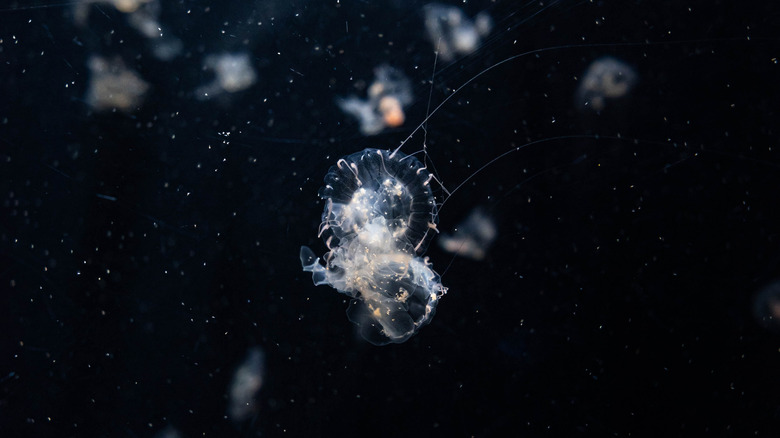
The only sure-fire way to avoid getting sea lice in your swimsuit is to stay out of the ocean or sea. That's because the larvae are transparent and only about 2 to 3 millimeters in length. That makes them one of the smallest living creatures in the ocean and impossible to see with the naked eye. If you decide to get in the water anyway, there are a couple of things that you can do to reduce your exposure.
The first thing you can do is avoid areas that are known to have strong jellyfish larvae populations. For instance, Florida is a common locale and puts out purple flags to warn swimmers that stinging critters (like jellyfish larvae) are present in the water. The larvae are common in the Caribbean as well. Secondly, you can limit your time swimming at the beach to periods when the larvae population is lower. The population generally rises in the months of March through August but peaks in May and June. A third prevention strategy is to wear a bathing suit that's smooth and fits tightly so that it's less likely for the larvae to get inside.
After swimming in these areas and during those times, removing your swimwear as soon as possible is the best way to limit your exposure to the larvae. You should also wash that swimwear with hot water and detergent to clean away any residual stinging cells called nematocysts and venom.