

What To Do If You Find A Snake In Your Yard
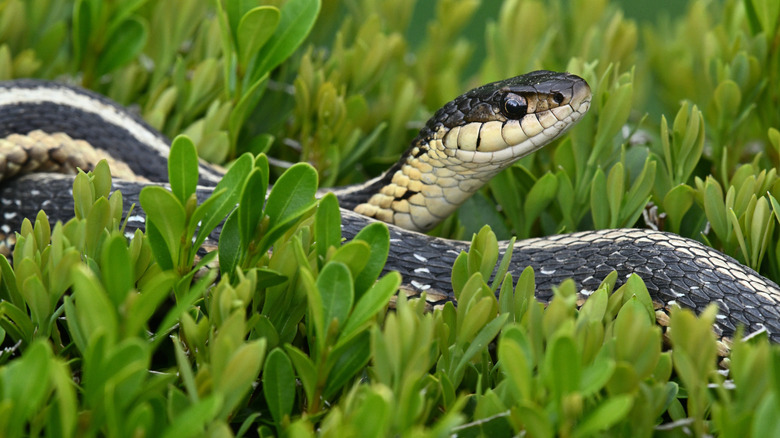
You step outside ready to do some gardening or maybe sit in a lawn chair with a book and refreshing drink and then you see it. A snake in your yard. Whether it's slithering across the grass or sunning itself on a rock it's certainly unexpected. But don't panic. The majority of the snakes you find in a typical back yard are harmless and even beneficial. Most of the time, if you leave it alone, a snake will leave on its own, but if its injured, sick, or simply won't go away, you might need help from a professional.
Snakes come out of hibernation in warmer weather looking for food and mates. You're most likely to find snakes near areas where they would find food like in tall grass or bushes, near rocks and woodpiles, or around bodies of water. You might also find evidence of snakes, like droppings or shed snake skins, which you can sometimes use to identify a snake.
Regardless of whether you see a living snake or signs that snakes are around, the thing to remember is that snakes want to avoid humans and will likely go away on their own. The best choice is to move slowly, keep your distance, and keep kids and pets away.
Who slithers there?
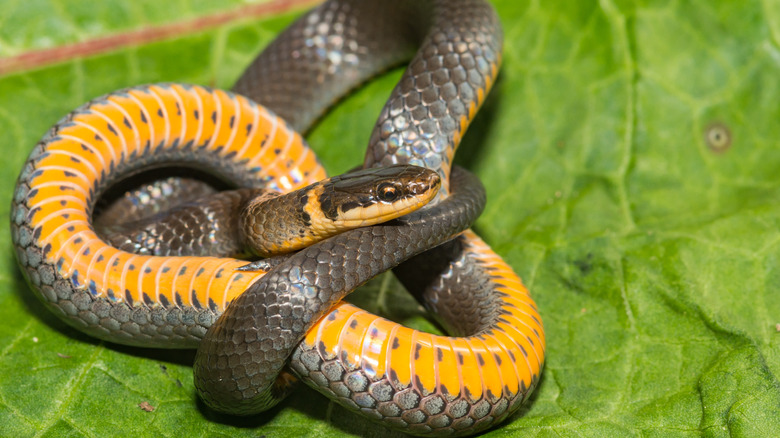
If you're curious about what kind of snake you're seeing, a good choice is to snap a picture with your smart phone from a distance. A few common types of snake you might find in your yard include garter snakes, rat snakes, ring-necked snakes, and black racers. These snakes typically eat insects, slugs, small rodents, frogs, and lizards. Some snakes like the ring-necked snake are most active at night, while black racers move around most in the hottest part of the day. Each of these snakes can be readily identified by their size, color, and patterns. For example, rat snakes can grow up to six feet long, black racers have black and shiny bodies, and ring-necked snakes have a ring of color around their necks and bright red or yellow bellies.
Most of the snakes you'll find in your yard are harmless creatures, however, sometimes people will encounter a venomous snake like a copperhead. These snakes often hang out in leaf litter and are well camouflaged. However, like all other species of snake you might find, they are only dangerous when they feel threatened. That said, somewhere between 7,000 and 8,000 people are bitten by venomous snakes in the United States each year, so the best bet is keep your distance and leave relocation of snakes to trained professionals.
Snake proofing your yard
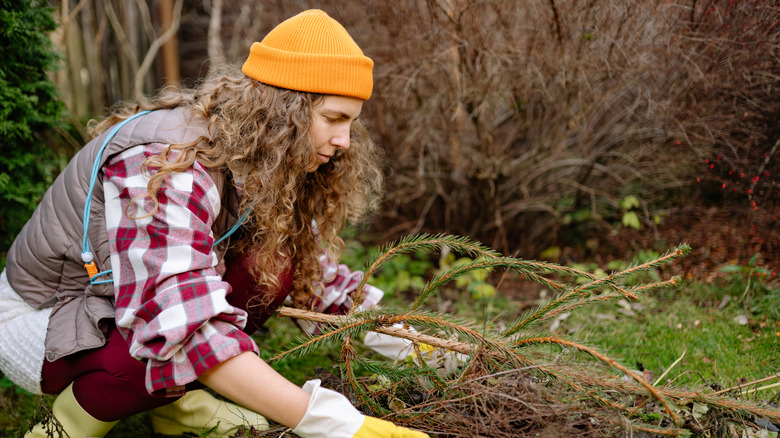
While you should give snakes in your yard a wide berth, there are some things you can do to make an encounter less likely. If a snake is in your yard it's likely looking for food, a mate, or a place to call home. Keeping insect and rodent populations under control and keeping your lawn from becoming overgrown can make your yard less attractive. If you're concerned about snakes you can remove piles of logs, large rocks, standing water, and other potential snake habitats. You can also plant marigolds and lemongrass in your yard. These plants can repel snakes.
These steps can reduce the chances that you'll run into a snake. This can be helpful if having snakes around causes fear or anxiety and for people who keep chickens or ducks in their yards. However, there are some benefits to having snakes in your backyard. Because they mostly feed on insects, slugs, and rodents, snakes can be a form of natural pest control. Snakes are also important for habitat biodiversity.
Finding a snake in your yard can be a surprise, but the rare encounter shouldn't be cause for alarm. Keeping your lawn maintained and controlling pest populations can make encounters less likely. But the thing to remember is that snakes want to avoid humans as much as possible. If you see one, it's best to keep your distance and let it move along on its own.