

Ocean Experts Reveal Why Some Beaches Are Safer Than Others
Whether you're heading there for a day or for a week, the beach is a pretty popular place where millions of people spend their free time every year. Beaches are generally safe for exploring, whether you're searching for starfish on the sand or swimming in the waves. Not all beaches are created equal, though. Sometimes, dangers arise that make them unsafe for doing certain activities.
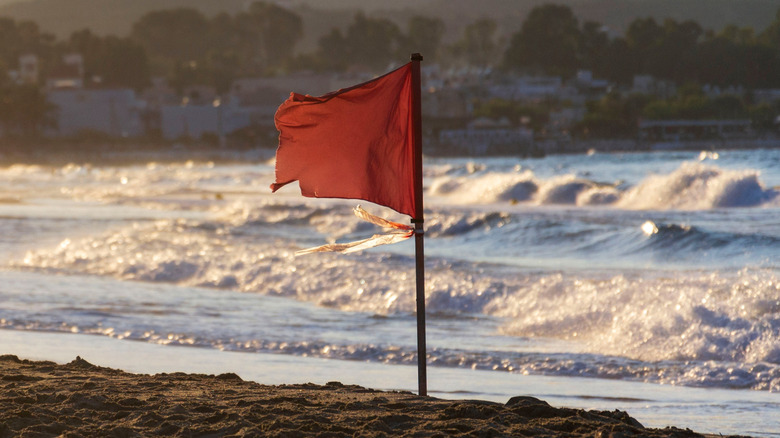
Marine life — specifically jellyfish and sharks — are dangers that might come to mind first. However, there could be something lurking in the water when the beach is closed, such as algal blooms, water pollution, and rip currents. These dangers are usually indicated by dedicated signage, purple, red, and yellow flags flying on the beach, and public status updates posted online by local governments or safety organizations. Despite that, it helps to understand why these dangers exist, effectively making some beaches more dangerous while others remain safer.
Harmful algal blooms
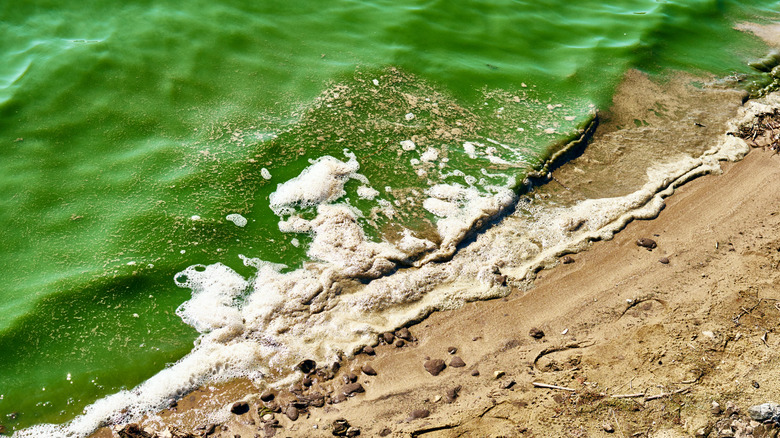
Algae are of ecological importance, with most kinds being beneficial for the environment. Half of the photosynthetic activity that occurs on Earth is due to single-celled algae, while phytoplankton serve as the main food source for fish and other marine life. However, there are a few species that produce toxins. When those grow out of control, they're referred to as harmful algal blooms (HABs). That can happen because of interactions between chemical and physical factors like water salinity, pH, temperature, nutrient load, and light availability. Under the right conditions, they can span across a massive area.
An HAB caused by cyanobacteria (or blue-green algae) only occasionally affects marine water environments. Along with producing skin and nerve toxins, they most commonly produce microcystin liver toxins that can kill animals and make humans sick. Diatoms and dinoflagellates are other algae that, when they develop into HABs, can cause respiratory irritation and different types of shellfish poisoning. As a result, HABs in general can mean that swimming isn't allowed at affected beaches. They can also disrupt the supply of drinking water and the economy by hindering commercial and industrial fishing.
Contaminated and poor quality water
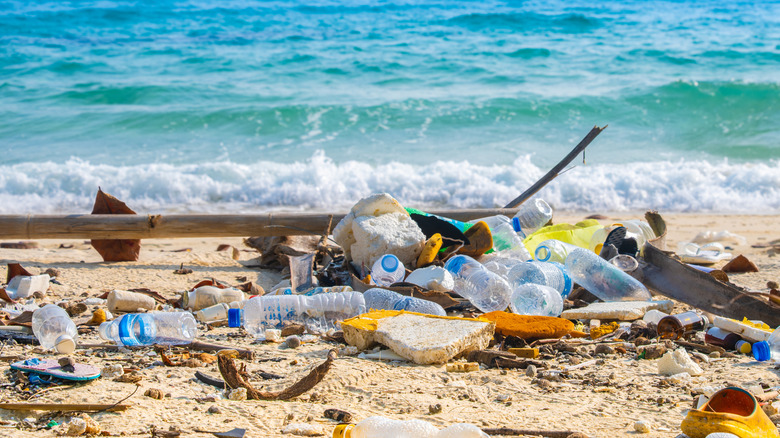
When the sea water splashing up on the beach is contaminated, it becomes a public health risk, so authorities will close the beach to prevent people from getting sick. Unfortunately, there are many kinds of things that can pollute beach water.
One beach pollutant is sewer overflow, which contains a mix of storm water, industrial wastewater, and raw sewage. Similarly, runoff from nearby land and paved surfaces, like parking lots and rooftops, can send animal waste, chemicals, fertilizer, gasoline, motor oil, and more into the ocean. Both of these cause poor water quality, but since they happen when mother nature dumps a ton of rain or melts the snowcaps, they can be tricky to control.
Even though the Environmental Protection Agency controls discharges from marine vessels, accidental and intentional discharges still pollute the water. Trash that doesn't make into the proper receptacles can also end up in the ocean and eventually ride onto beaches with the tide, bringing unsafe chemicals with them. Oil spills can cause even bigger problems, though. While most spills are small, they can still cause damage to the environment and public health. The toxic compounds threaten local wildlife, make seafood unsafe to eat, and lead to severe health issues. When the spill is large, the effects can spread for miles and miles.
Jellyfish stings
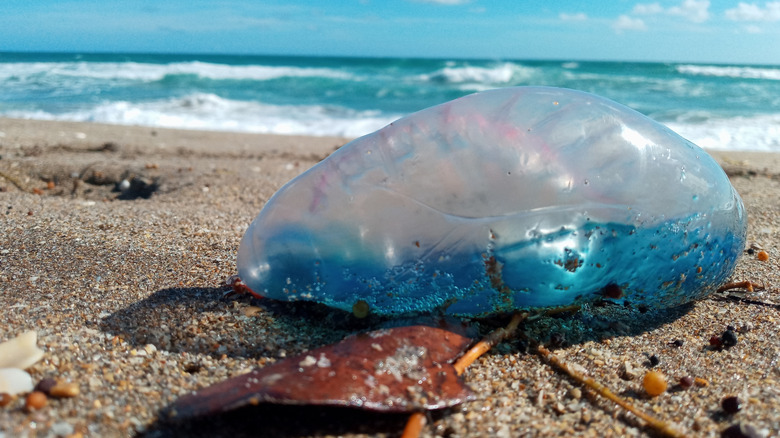
It's widely known that jellyfish can hurt people with their tentacle stings, but what's surprising is that some species can kill people in just minutes. In fact, death by box jellyfish is one of the worst ways to die. That's why it's alarming when signage and authorities warn beachgoers to stay out of the water at certain beaches and watch out for these sea creatures on the sand.
For the most part, jellyfish drift with changes in wind and ocean currents. A study published in Current Biology, however, found that some species can swim against sea currents. In either case, a study published in Frontiers in Ocean Sustainability explains that these activities lead to jellyfish swarms or blooms, in which hundreds of millions of jellies gather for several months. Other environmental factors play a role as well. While jellyfish can thrive in a wide range of water temperatures, their reproductive rate increases in warm waters, allowing populations to grow fast.
Certain human activities bring jellyfish closer to shore, too. For example, structures built in the water — such as artificial reefs, marinas, and piers — provide hard surfaces where polyps can attach and grow. Throwing fish feed and waste into the water can lead to eutrophication, which is essentially an overload of nutrients in coastal waters and estuaries. That nutrient pollution, which can also develop from land runoff, provides the perfect feeding ground for jellyfish. On top of that, overfishing creates a favorable habitat for these creatures by eliminating predators. Beaches near such environmental and human factors are more likely to get jellyfish warnings.
Shark attacks
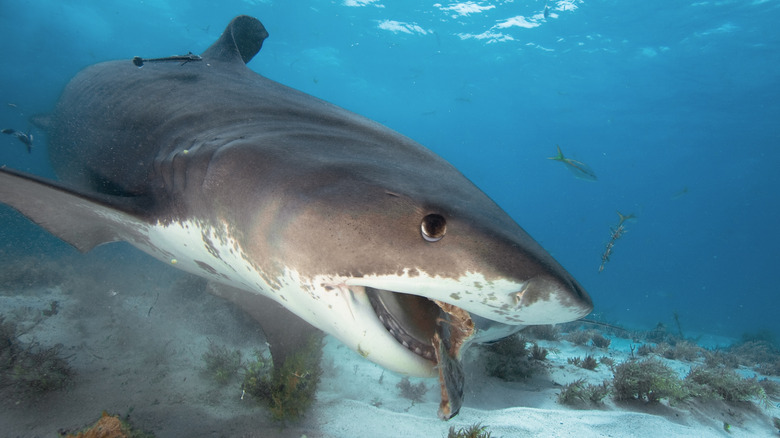
Sharks evolved millions of years before the existence of humans, so people aren't part of their natural diet. While most shark species prey on small fish and invertebrates, some large species eat sea lions, seals, and other oceanic mammals. It's only when they get confused or curious that attacks on humans occur; "it's almost always a case of mistaken identity," says Woods Hole Oceanographic Institution marine ecologist and shark expert Camrin Braun. While such encounters are one in 4.3 million, there are some environmental factors and human activities that bring sharks close to some beaches.
One of the environmental factors is warming ocean temperatures. As their sources of food move with these temperature changes, it's only natural for the sharks to follow. Like with jellyfish, shark movements can also adjust with changes in water currents, which may bring them closer to the coast than usual. And among the human activities that can affect shark movement, the most influential may be fishing because these sea creatures are attracted to any bait and fish left to linger. Fish farming and aquaculture (the cultivation of aquatic wildlife) also provide a convenient feeding ground for sharks.
On top of that, there are a few surprising factors that can attract sharks while swimming. One of the biggest is wearing high-contrast swim gear and shiny accessories; uneven tans and tattoos can even provide enough contrast for sharks to take notice. Since sharks are attracted to contrasting colors, diving gear is generally black or dark blue, though other swimming activities that grab their attention include excessive splashing and low-frequency noise. Fortunately, it's possible to "hypnotize" a shark by flipping it over if it gets too close.
Rip currents
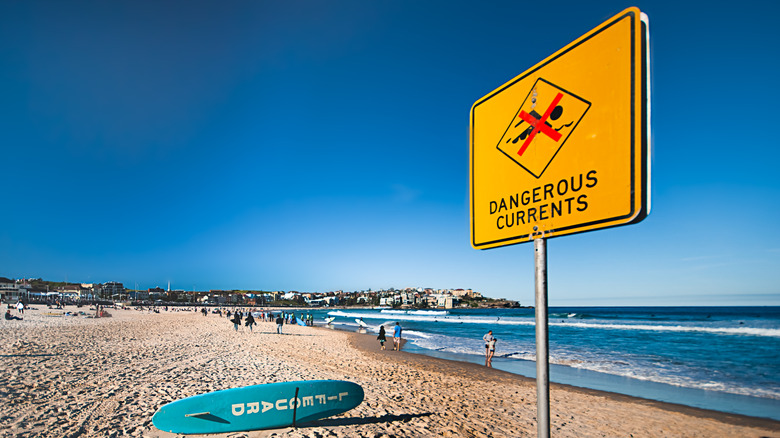
According to a scientific review of data from 1997 to 2016 and published in Natural Hazards and Earth System Sciences in 2019, more than 100 people die in the United States because of rip currents every year. They can develop at any beach, including those along the Great Lakes, making them a danger everywhere. Understanding what these types of water currents are and how they develop can make that danger clearer.
Basically, rip currents are powerful, channelized flows of water that move away from the shoreline. They can form at breaks or low spots near piers, jetties, or other structures, as well as around sandbars, starting as the waves push water toward the beach. When that shift of water creates an imbalance in the surf zone, it needs a way out. The path of least resistance is typically a break in the seafloor or sandbar, resulting in the water rushing as fast as 8 feet per second back through the surf. While rip currents usually end shortly after the breakline of waves, some can continue for hundreds of yards.
It can be hard to identify a rip current while swimming at the beach, especially if the water is rough. However, they can be spotted better from high viewpoints, often as churning, foamy dark channels of water surrounded by calmer water. Getting caught in rip currents is dangerous because it's challenging to remain afloat and swim to land, whether that's because of exhaustion, fear, poor swimming skills, or panic. But if you do find yourself in danger the best way to get out of such a situation is to swim parallel to land rather than straight toward it.