

Could The Deadly Virus Outbreak That Killed Cruise Passengers Spread To Land?
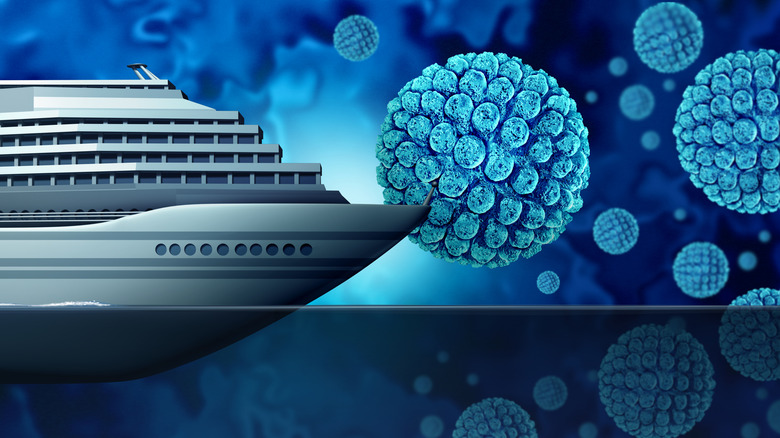
Traveling comes with an inherent risk of contracting an illness. According to an analysis of research published in the Journal of Travel Medicine, up to 79% of travelers who regularly visit developing countries get sick. Among the reported infectious disease outbreaks on cruise ships, the Centers for Disease Control and Prevention (CDC) Yellow Book estimates that about 30% to 40% are respiratory illnesses, such as influenza. Hantavirus is a rare occurrence no matter the location, but it has emerged on the MV Hondius cruise ship, resulting in three deaths and quarantine protocols to keep it from spreading.
The World Health Organization (WHO) has reported that seven of the 147 passengers aboard the ship sailing in the South Atlantic Ocean contracted an illness between April 6 and 28. As of May 4, three of them were suffering mild symptoms, one was in critical condition, and three others had died. Lab tests confirmed that at least two of the cases are hantavirus, a rare RNA virus in humans with just 890 cases reported in the U.S. between 1993 and 2023 (per the CDC). It's usually transmitted by coming into contact with infected rodent feces, saliva, or urine — one reason why it's important to take safety precautions while identifying rodents by their droppings.
An investigation is still underway, but it's possible that the species of hantavirus responsible is Andes virus (ANDV). This particular species is associated with causing hantavirus pulmonary syndrome, a zoonotic respiratory virus that's fatal in almost four of 10 cases (per the CDC). However, what's more concerning is whether the current outbreak was transmitted from person to person — as it has in the past — and could make its way to land.
The potential risk of human-to-human transmission of hantavirus spreading to land
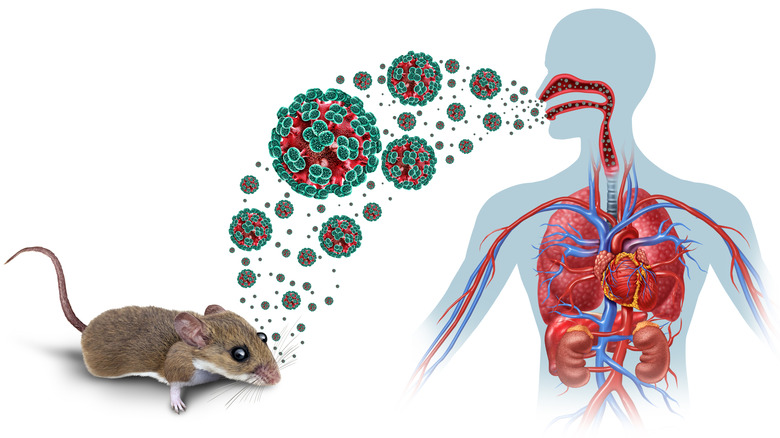
Hantavirus is already rarely transmitted from rodents to humans, and it's even rarer for humans to pass it to each other. The transmission of rodent-borne infectious diseases could be possible because of the genetic similarities between rodents and humans, which is also why scientists use mice to do experiments while researching treatments for human illnesses. But there is some evidence of ANDV in particular being passed from human to human. One study published in Emerging Infectious Diseases found person-to-person transmission in three cases in 2014 in Argentina. Another study published in PLOS Neglected Tropical Diseases reviewed the transmission of ANDV between people in 2018, which involved 34 cases and 11 fatalities.
In a news conference on May 5, WHO director of epidemic and pandemic preparedness and prevention Maria Van Kerkhove said, "We do believe that there may be some human-to-human transmission that's happening among the really close contacts, the husband and wife, people who've shared cabins." She noted that it's possible the husband and wife contracted the virus while seeing wildlife in Argentina prior to boarding the MV Hondius.
However, the ship also visited several islands along Africa — some with lots of rodents. Because of that, Van Kerkhove acknowledged that it's possible the infection is already on land. Since human-to-human transmission requires extended close contact to occur, CBS News medical correspondent Dr. Céline Gounder added that the situation on the cruise ship "is not a pandemic kind of virus."