

The Most Eye-Opening Earth Facts Scientists Have Figured Out In 2026 So Far

Researchers continue to explore facts and possibilities across all fields of science. From medical and weather prediction enhancements to new species discoveries and de-extinction, there were a lot of big scientific breakthroughs in 2025. These mouth-dropping findings aren't slowing down, though. As NASA continues its big plans to return humans to the moon and explore the cosmos, scientists have made some eye-opening revelations about our home planet so far in 2026.
In particular, researchers have uncovered that giant structures in the Earth's core are causing changes in the magnetic field and that a critical ocean current is slowing down. They've also found that a rare metal is responsible for making early life possible, the lower stratosphere of the atmosphere consists of newly discovered nanoparticles, and the Sturtian glaciation wasn't purely a freezing period. While these discoveries have largely made scientists rethink a few "facts" they thought they knew, they could also have implications for future climate change. Let's dig into the research for each of these.
Giant rock formations in the Earth's core are shaping the magnetic field
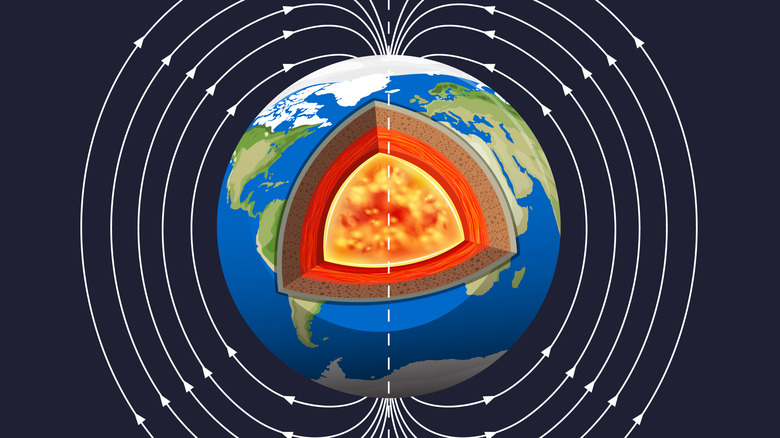
When you think of the Earth's magnetic field, you likely picture a giant, invisible shield that remains static as it encircles the planet. However, the Earth's magnetic field works in fluctuation, the mechanism of which has stumped scientists for decades. Researchers from the University of Liverpool and the University of Leeds, though, have finally concluded that the planet's inner core is the culprit and have published their findings in Nature Geoscience.
First, it helps to understand that the constant swirling of liquid iron in the Earth's outer core is what produces the magnetic field — similar to how electricity is generated by wind turbines. The researchers combined ancient magnetism and supercomputer models to determine that two colossal, super hot structures called large low-velocity provinces have been manipulating the iron liquid below them for millions of years. By triggering sharp thermal contrasts in the liquid iron, these rock formations — located about 1,800 miles underneath Africa and the Pacific Ocean — have been shaping the magnetic field.
University of Liverpool professor of geomagnetism and study author Andy Biggin explained in a press release that, based on averages of long-term magnetic field data, scientists assumed that it acted like a bar magnet and was aligned with Earth's rotational axis. The data from this study's numerical models, which allowed the researchers to observe the magnetic field's behavior over 265 million years, indicate that they may have been wrong. "These findings also have important implications for questions surrounding ancient continental configurations — such as the formation and breakup of Pangaea — and may help resolve long-standing uncertainties in ancient climate, palaeobiology, and the formation of natural resources," Biggin added.
Early life on Earth wouldn't have survived without a rare metal

Believe it or not, scientists are still exploring some big unanswered questions about how life began on Earth, such as how difficult it was for early life to survive. What researchers at the University of Wisconsin–Madison have found is that early life wouldn't have survived 3.4 billion years ago without molybdenum. This metal — which was scarce at the time — is essential for numerous biochemical processes, such as nitrogen fixation. Since molybdenum speeds up the chemical reactions for these processes, they wouldn't happen fast enough for life to survive without it.
It was previously believed that ancient microbes first used tungsten, which acts similarly in chemical reactions, then moved on to molybdenum when it became more abundant. For the study published in Nature Communications, though, the researchers traced the prevalence of the metal through time to confirm otherwise. The finding demonstrates that life can find a way, and it serves as a reminder that life beyond Earth could exist under similar conditions where vital metals are rare.
UW–Madison professor of bacteriology and study co-author Betül Kaçar said in a press release, "Our work shows that both molybdenum- and tungsten-using enzyme systems have Archean roots, which suggests that early life likely worked with both metals rather than following a simple 'tungsten first, molybdenum later' story." She explained that hydrothermal vents — which are a strange place life has been found in the Pacific Ocean — could have contained enough of these and other vital metals. "Molybdenum may have been worth 'choosing' because it enables catalysis across a broad range of substrates and redox conditions," she added.
An ocean current system critical for climate regulation is slowing down
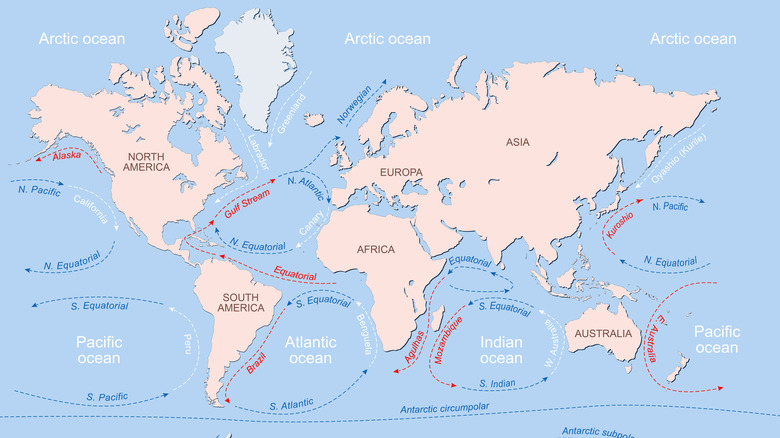
Scientists have long known that ocean currents affect weather. Largely created by surface winds, they work like conveyor belts to distribute heat and moisture across the planet. The currents generally flow clockwise in the northern hemisphere and counterclockwise in the southern hemisphere, transporting warm water from the equator to the poles and cold water from the poles to the equator. Because of their vital role in the climate, there have already been concerns about what would happen if ocean currents stop. Those concerns have grown now that researchers have discovered that a critical system has been getting slower over the last two decades.
The Atlantic meridional overturning circulation (AMOC) plays a crucial role in the temperate climate enjoyed by Iceland and Northern Europe because it transports heat to the Arctic from the tropics. Using long-term ocean monitoring data, researchers published an analysis in Science Advances with findings that illustrate this current is weakening. The western edge of the AMOC, in particular, has shown a consistent decline, and the extent of the trend indicates a basin-wide change instead of a temporary oscillation.
Physical oceanographer and co-author Shane Elipot said in a press release, "A weaker AMOC can shift weather patterns, potentially leading to more extreme storms, changes in rainfall, or colder winters in some regions." He explained that the sea level can also rise because of this, which would have an impact on coastal communities and their infrastructure. Pointing out some silver lining, he added, "This research helps scientists better predict how the climate may change in the coming decades — information that governments, businesses, and communities use to prepare for future environmental conditions."
Previously undetected nanoparticles are surprisingly widespread in the lower stratosphere
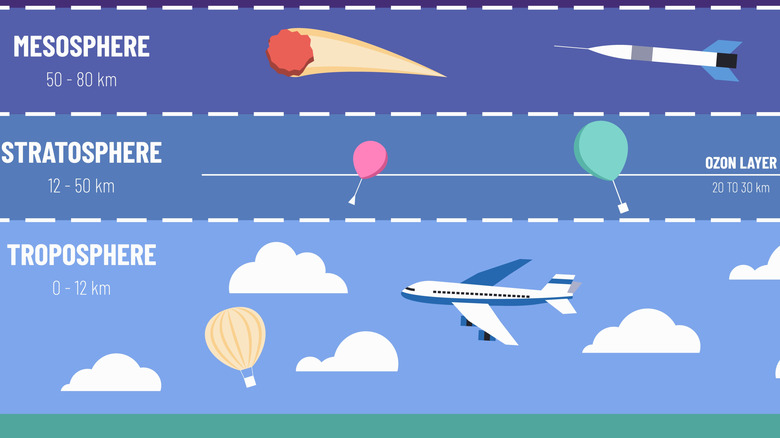
When it comes to facts about Earth's atmosphere, it has long been established that there are five distinct layers, each with its own chemical composition, density, movement, and thermal attributes. It seems that scientists are far from fully understanding and discovering everything about our planet's atmosphere, though. A team of researchers from the National Oceanic and Atmospheric Administration (NOAA), NASA, and various universities has discovered a class of ultrafine, organic-rich aerosol particles after a series of high-altitude research flights over the Arctic.
The team used advanced instruments built by NOAA scientists and installed in a WB-57 aircraft from NASA with the ability to detect particles as small as 0.003 micrometers in diameter. Publishing in Science, the researchers reported that these previously unrecognized particles are just 0.11 micrometers. According to a NOAA Research press release, they account for up to 90% of the total aerosol surface area in the lowest parts of the stratosphere. Lead author Ming Lyu also noted that, because of this abundance, these particles "can have a big impact."
Most other instruments and satellites simply haven't noticed these nanoparticles because they're 100 times smaller than dust, highlighting the insufficiency of current monitoring methods. However, they can affect how fast certain chemical reactions happen and play a crucial role in Earth's climate. The scientists also found an association between the ultrafine particles and increased nitrous oxide levels from human activity on the ground. Before, it was believed that all small particles are essentially derived only from sulfate. Discovering that organic chemicals also contribute means that "how we simulate particle growth, air chemistry, and aerosol radiative impacts" is errored, added Lyu.
Earth still experienced extreme hot cycles during the Sturtian glaciation

In the timeline of Earth's history, the planet went through at least two periods of glaciation near the end of the Proterozoic eon. The Sturtian glaciation was the first of these and occurred during the Cryogenian period — about 717 to 635 million years ago — during the Neoproterozoic era. For years, scientists have been stumped as to how this episode, which meant the planet was entirely frozen for 56 million years, went on for longer than climate model predictions. A new study published in Proceedings of the National Academy of Sciences suggests that the episode was interrupted by intervals of ice-free "hothouses."
The extent of the Cryogenian period's glaciation episodes — nicknamed the "Snowball Earth" states — were previously supported by glacial deposits and rocks found near the equator and that formed during the period. Combining the ancient climate and carbon cycle in simulations, Harvard researchers found fierce basalt weathering in the Franklin large igneous province, a sizable volcanic region in Northern Canada which is believed to have erupted just before the Sturtian glaciation. When that fresh rock was exposed to the air, it depleted a big chunk of carbon dioxide from the atmosphere.
The event is more likely to have triggered a repeat cycle: The atmospheric carbon dioxide was rebuilt, the climate warmed and exposed fresh basalt, weathering depleted the carbon dioxide, and the climate cooled. Because of that, "snowball" and "hothouse" fluctuations could be naturally sustained for tens of millions of years and may have been the reason atmospheric oxygen didn't collapse despite the extreme climate changes. Graduate student and lead author Charlotte Minsky noted in a press release, "This could help explain how aerobic life persisted through such an extreme interval."