

The Greatest Scientific Discoveries Of 2026 So Far
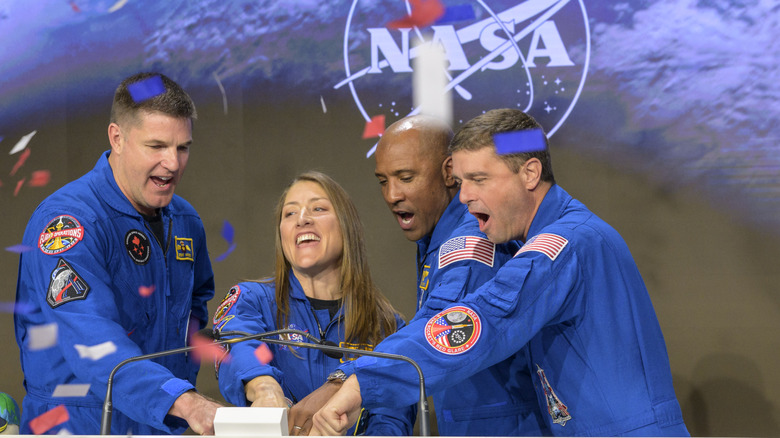
This year has seen some groundbreaking scientific discoveries and triumphs. We followed the Artemis II astronauts as they lived aboard a lunar spacecraft for 10 days in a journey to the moon. A Cambridge lab revealed how an experimental mistake could lead to a revolutionary finding. Over 100 new marine species have been identified, giving us an even richer view into the biodiversity of our fascinating planet. The events of 2026 thus far have boosted the interests of children in STEM careers, and it will be exciting to see how these interests play out in the next generation of scientists and engineers.
However, we cannot discuss these discoveries without first acknowledging the setbacks that have slowed scientific progress. Anti-science policy decisions have skyrocketed within the past couple of years, likely resulting in consequences the scale of which we won't be able to fully grasp for many years to come. A report released earlier this year revealed that over 10,000 U.S. science experts left or lost their jobs in 2025, meaning that we are working with a significantly reduced workforce. Nearly 8,000 grants were terminated or suspended as well, and funding was pulled for important research that could lead to breakthroughs in cancer and infectious diseases. If the budget proposed by the Trump administration is followed, even more research projects will be terminated. So, while we celebrate the progress made, it is hard not to reflect on the progress lost. Nonetheless, scientists have made 2026 a year to remember.
Artemis II
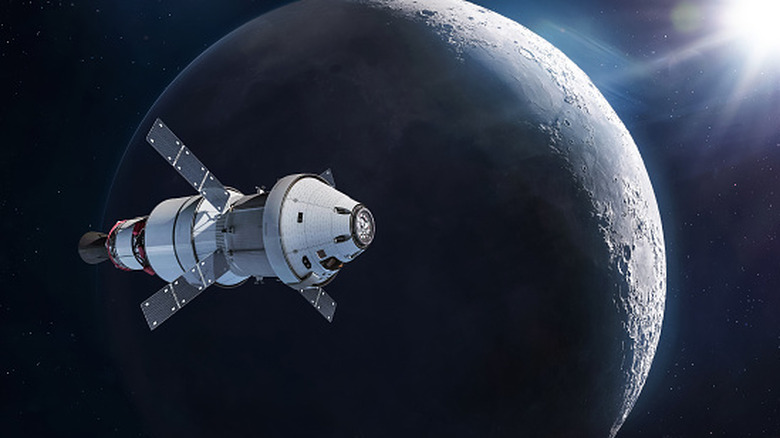
In April, four astronauts made the first journey back towards the moon since 1972. While this is a fantastic feat in itself, the Artemis II crew returned with unexpected findings about the moon. These astronauts were the first to view the far side of the moon without the use of a telescope. By looking at the moon with the naked eye, they were able to see rays of different colors. While this might just sound like an aesthetically pleasing experience, information like this will actually help inform researchers about the origins of the moon. Such observations can indicate certain chemicals or minerals residing on the moon's surface.
The astronauts also identified two new craters that were previously undiscovered. One of these craters was given the name Carroll to honor the late wife of Reid Wiseman (the mission's commander), Carroll Taylor Wiseman; in 2020, Carroll passed away from cancer when she was only 46 years old. In a video shared by PBS News, astronaut Jeremy Hansen said, "It's a bright spot on the moon. And we would like to call it 'Carroll.'"
In addition to these major findings, more discoveries are sure to follow. While on this mission, the astronauts participated in five experiments that will inform health sciences research. For instance, the astronauts brought along chips that simulate human organs to study the effects of deep space on health. This information could also be incorporated to study the effects of radiation, which will be useful for cancer research.
Anti-Friedel–Crafts
A publication in the journal Nature Synthesis revealed an exciting technique that has the potential to revolutionize the formation of new medications, and it's all because of an accident. David Vahey is a Ph.D. candidate at the University of Cambridge. Vahey works in a lab that studies how light can be used to convert materials, including waste products and water, into fuel. When testing a photocatalyst, which accelerates a chemical reaction through light, he ran an experiment in which the photocatalyst was not included as a control. Surprisingly, the reaction worked really well without the catalyst. While a result like this might generally be discarded as a mistake, Vahey wanted to investigate it.
The formation of carbon-carbon bonds is important for creating a compound in drug development. These bonds essentially form the skeletal framework of the drug. Traditionally, the bonds are generated through a Friedel–Crafts reaction. The problem is that these reactions take place under really harsh conditions and use very strong chemicals, thereby restricting this process to the beginning of drug design. However, the experiments performed by the Cambridge research team found that they could use an LED light at room temperature to trigger a chain reaction that causes new carbon-carbon bonds to form. This circumvents the need for harsh chemicals, flipping the Friedel–Crafts reaction in its head. Hence, they termed the discovery Anti-Friedel–Crafts. Such a process enables the alteration of carbon-carbon bonds later in drug design, allowing for structural changes to be made along the way.
New Species in the Coral Sea
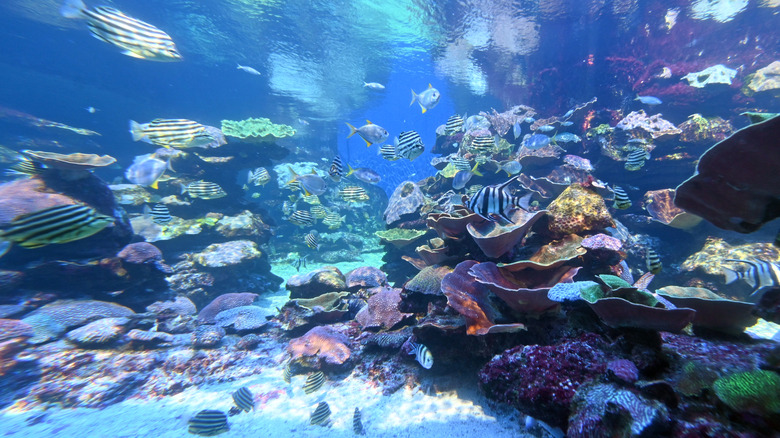
A research team explored the deep waters of the Coral Sea Marine Park off the coast of Queensland, Australia. Over the course of 35 days, the team would collect specimens from the benthic zone, which is the lowest area of a body of water — the space along the sea floor. In a press release from The Commonwealth Scientific and Industrial Research Organisation (CSIRO), Chief Scientist of the expedition, Will White, said, "We'll be exploring the deepest habitats where some of the most interesting and least known species of fish and invertebrates live." One can only speculate whether he predicted that the research team would end up identifying over 110 new species.
In April of 2026, CSIRO announced the classification of over 110 newly discovered species of fish and marine invertebrates (organisms without a spinal cord). These species ranged from sea anemones to rays to crabs to sponges. And this is only the beginning, as experts estimate that further research could reveal around 200 species. The Coral Marine Sea Park is Australia's largest span of protected waters at roughly 1 million square kilometers, and it is mostly unexplored.
One new discovery was a species of chimaera, which are often referred to as "ghost sharks." They are ancestral relatives to sharks and rays, similarly possessing cartilaginous skeletons. Highly adapted to deep-sea conditions, these creatures have a reflective tissue over their eyes, making them appear to glow, and can grow even longer than 6 feet.
The killer CRISPR
Clustered regularly interspaced short palindromic repeats (CRISPR)-Cas9 has been a revolutionary tool in biomedical sciences since its potential as a gene editor was revealed in 2012. CRISPR was found to be a protective element of the immune responses of bacteria and archaea. Essentially, when a bacterial cell is infected with a virus, the bacterium will incorporate some of the intruder's DNA into its own. CRISPR then uses this sequence as a template to form guide RNA, through which it can identify the virus in the future. Then, when the guide RNA binds with the viral sequence, it signals for the destruction of the virus.
Researchers found that they could repurpose this for gene editing. By combining CRISPR with Cas9, an enzyme that can cut DNA, a chosen sequence of DNA could be removed. These molecular scissors, which can edit DNA, presented a promising way to treat diseases that result from known and limited mutations, such as sickle cell anemia. However, things like cancer are more challenging because they often involve many varied mutations.
Now, scientists seem to have found a CRISPR-based assassin, as opposed to an editor. A recent Nature publication revealed CRISPR-Cas12a2 shreds DNA after a targeted sequence is identified, leading to cell death. In cell culture, these researchers were able to target an RNA sequence specifically associated with cancer, resulting in the death of cancerous cells. This finding is incredibly significant because healthy cells survived the experiments, which is something we do not see with currently available cancer treatments.
Communicating artificial neurons
Neurons are brain cells that communicate throughout the brain and body via electrical signals. They receive input from branching structures known as dendrites, and if this input is above a particular threshold, an action potential is triggered, essentially conducting information that will become available to the corresponding cells. These are the basis for how we feel, think, and function. While this may sound like simple signal transduction, neurons are highly specialized and coordinate within a complex network.
A paper published this year in Nature Nanotechnology described an attempt at creating a model for artificial neurons that resembled the complexity of activity in the brain. And how were these neurons made? They were printed. Shreyash S. Hadke and colleagues used electronic inks with graphene (electrical conductor) and molybdenum disulfide (semiconductor) printed on a polymer surface. Because the polymer can interfere with electric conductivity, it is usually removed. However, this research group elected to partially decompose the polymer instead. Sending a current through the device then leads to further degradation, creating barriers that prevent conductivity from straying beyond a narrow path. Such a narrow channel allows for conductivity that much more closely resembles what we see in the brain.
Where this study became particularly interesting was when the researchers introduced these artificial neurons to active tissue from a mouse brain. The printed neurons were actually able to generate a response in the mouse neurons. This could lead to enormous improvements in technologies like prosthetics.
mRNA flu vaccine

The U.S. Federal Drug Administration (FDA) approved an mRNA-based influenza vaccine for adults aged 50 and above on August 5. Moderna's mRNA-1010 vaccine (also known as mFLUSIVA) marks the first flu vaccine that is mRNA-based to receive FDA approval. As flu season approaches, this presents a more effective prevention for older patients, who are generally most vulnerable to the detrimental effects of influenza.
The approval arrived on the heels of a phase 3 trial that rendered promising data as published in the New England Journal of Medicine. Researchers performed a double-blind study with nearly 50,000 participants above the age of 50. They found that mRNA-1010 was 26.6% more effective than the traditional flu shot.
This breakthrough could solve a couple of challenges that currently face flu prevention. First, it could significantly speed up the manufacturing process. Traditionally, flu shots are made from viral strains that have been grown in fertilized chicken eggs. This is an incredibly long manufacturing process and takes between five and seven months to complete. Conversely, mRNA-1010 can be produced in roughly six weeks.
Such a timeline could solve another problem posed by the current flu shot: the need to predict the correct strain months prior to vaccine development. In February or March, experts typically provide three predictions for which strains will be most prevalent by the next flu season, beginning in October. A faster manufacturing process could enable researchers to better adjust to common flu strains as they evolve.
Lab-grown immature sperm cells
Roughly one out of seven couples experience infertility, and male infertility plays a role in about half of those situations. Such circumstances can lead to stress for individuals hoping to conceive. A common cause of male infertility is improper development of sperm, and therapeutic options are limited. Therefore, researchers have studied ways in which sperm development could potentially be artificially accomplished.
A study published in Cell Stem Cell has presented promising results towards this goal. The authors collected blood cells from a donor and used those to form human induced pluripotent stem cells. Essentially, they transformed the red blood cells into a sort of blank slate and then programmed them to act as embryonic cells, which can differentiate into eggs and sperm. Those cells were then mixed with somatic (non-reproductive) testicular fetal mouse cells that could offer the nutrients required during sperm cell development.
Because such cells did not continue to mature beyond the fetal stage, the researchers elected to transplant them into the kidneys of immunodeficient mice. After six months, the cells had become spermatogonia, which are essentially immature sperm cells. The authors then recreated these results in non-human primates.
However, the spermatogonia did not develop into mature sperm cells. While these experiments did not render mature sperm from human blood cells, a significant amount of progress was made towards lab-aided human reproduction. Additionally, future studies will be able to use this foundation to investigate the root causes of male infertility, which largely remain unknown.